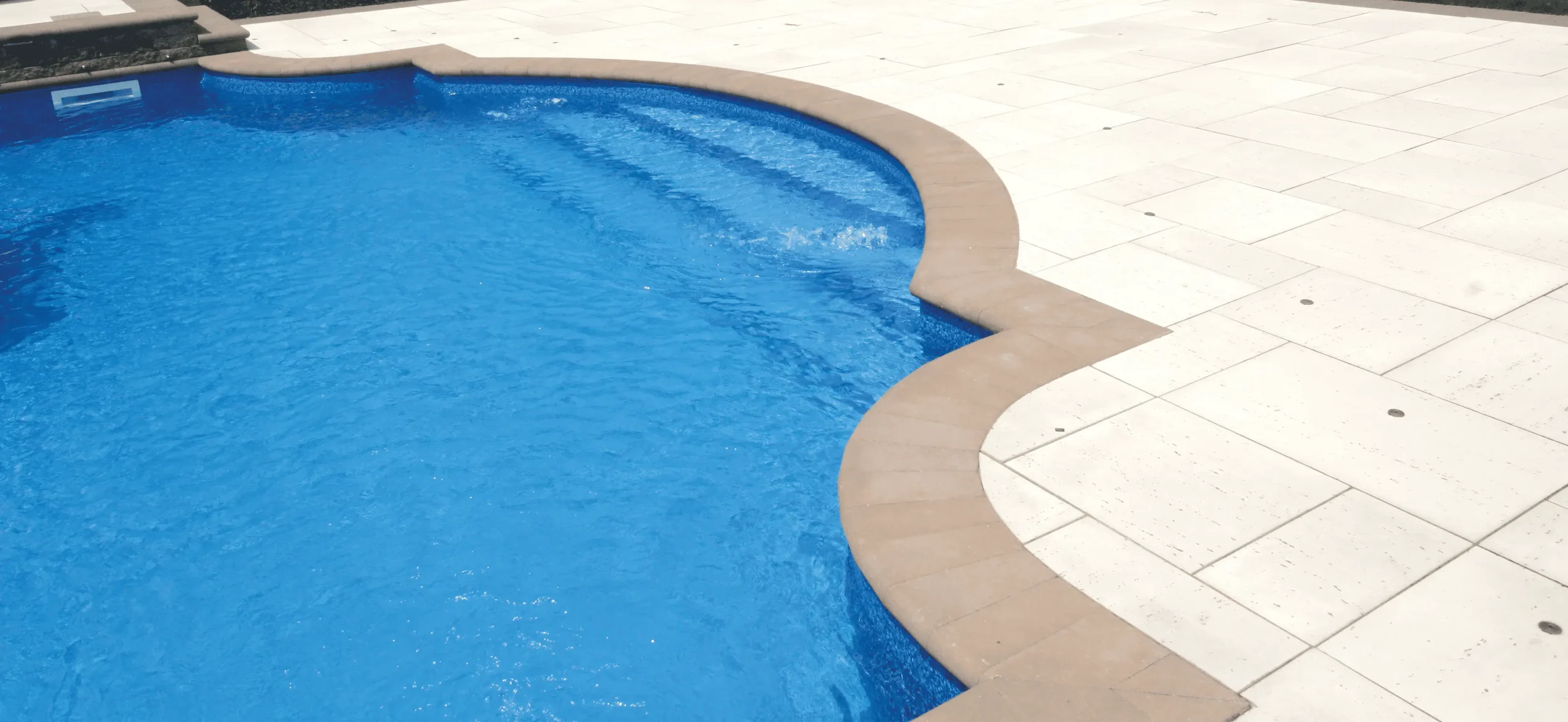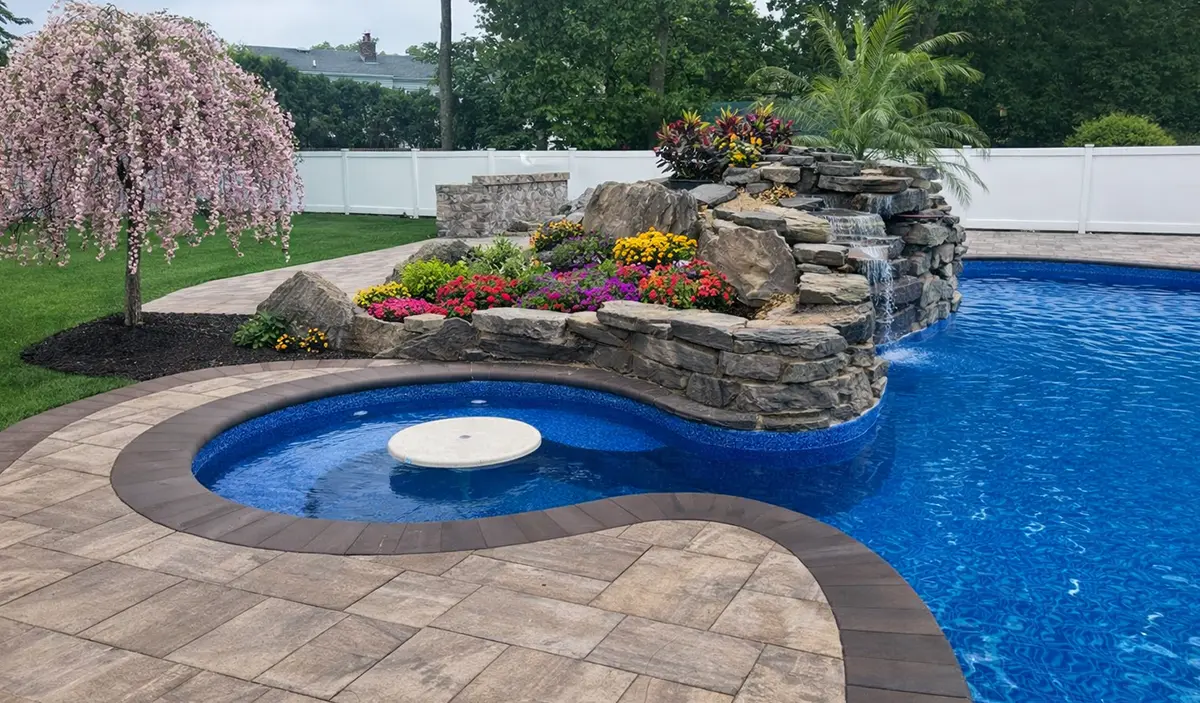
A beautiful pool can still be frustrating if the patio around it does not work.
That sounds dramatic, but it happens all the time.
The pool looks great. The water sparkles. The shape is right. The backyard finally has the feature everyone wanted. Then summer comes, and people realize there is not enough room for chairs. The walkway feels awkward. The patio gets crowded fast. The grill is too far away. The landscaping looks unfinished. Someone is always dragging furniture across the wrong spot.
That is when homeowners start to understand something important.
The patio is not just the surface around the pool. It is where people actually live when they are outside.
It is where they sit, walk, dry off, eat, talk, watch the kids, move in and out of the sun, drop towels, set drinks down, and spend most of the afternoon while the pool is being used. If the patio is too small, too hot, too slippery, too crowded, or poorly placed, even a beautiful pool can become harder to enjoy.
This article is not about choosing a pool contractor. It is about the part of the backyard that often gets underestimated: the patio.
For Long Island homeowners planning a custom pool, patio design should be part of the conversation early. Not after the pool is built. Not after the furniture arrives. Early.
Here are the pool patio mistakes that can make a backyard less comfortable, less practical, and less enjoyable than it should be.
Mistake 1: Treating the Patio Like Leftover Space
The most common mistake is designing the pool first and letting the patio fill whatever space is left.
That can create a backyard that looks fine from a distance but feels awkward up close.
The pool may be beautiful, but the area around it does not support real life. There may not be enough room to walk comfortably. There may not be a natural place for lounge chairs. The dining area may feel squeezed in. The landscaping may end up in odd leftover corners.
A pool patio should not feel like an afterthought. It should feel like part of the design.
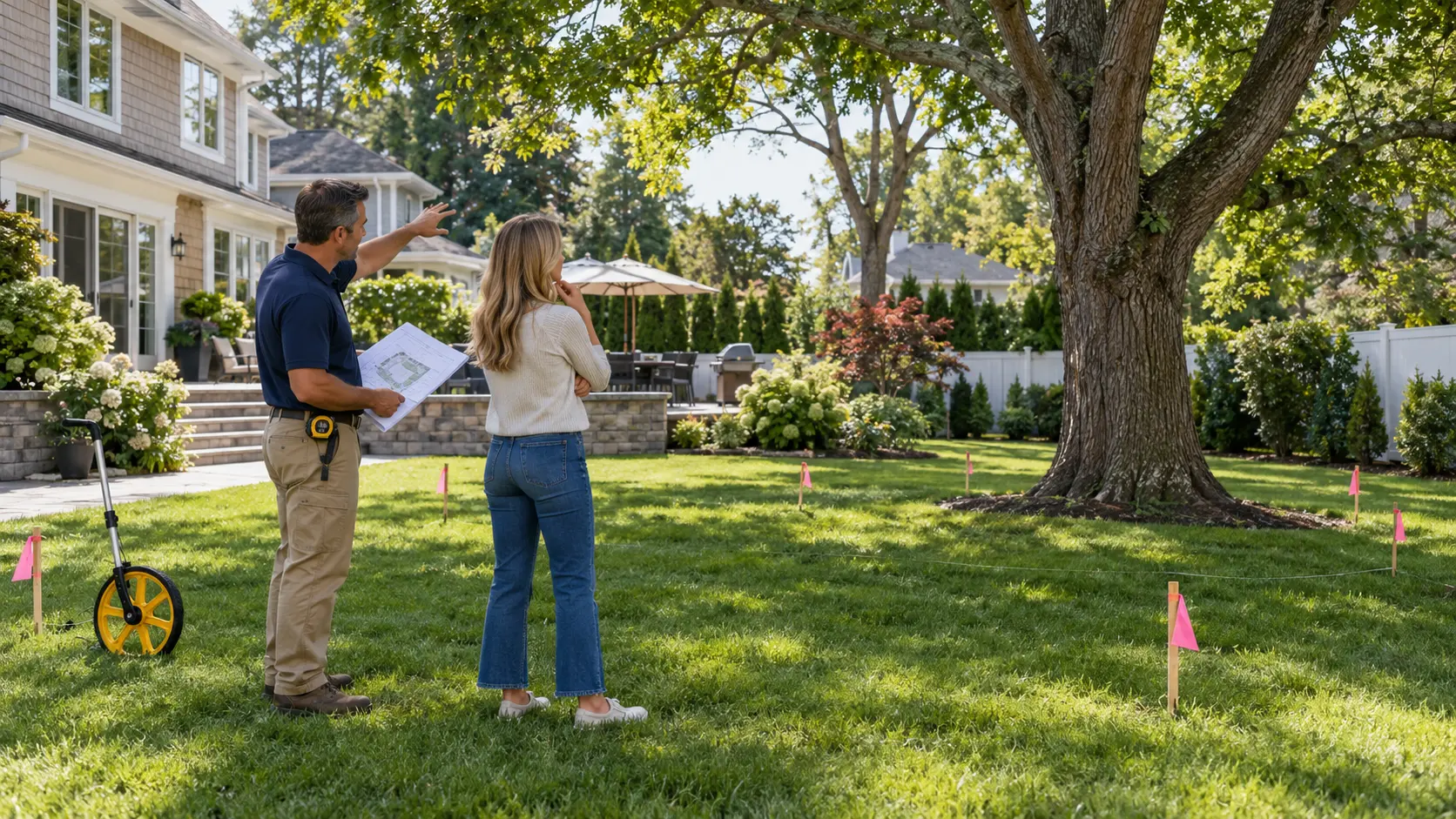
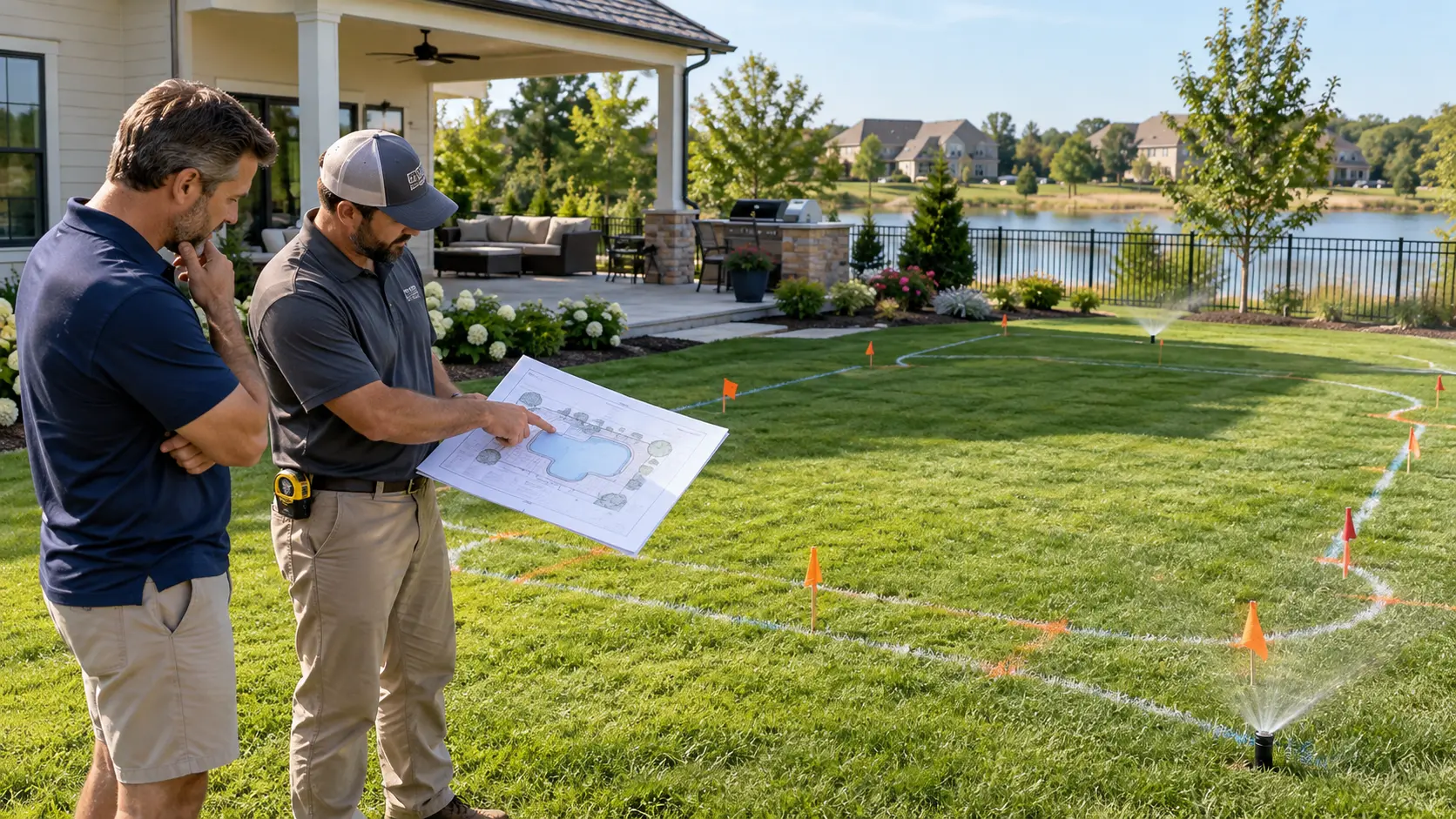
The better approach is to think about how the patio will be used before the final layout is set. Where will people sit? Where will they walk? Where will towels go? Where will the shade be? Where will guests gather when they are not swimming?
Those questions help shape a patio that feels comfortable once the pool is being used, not just pretty on installation day.
Mistake 2: Making the Patio Too Small
A small patio can look perfectly reasonable on a plan.
Then the furniture arrives.
Lounge chairs take up more space than people expect. So do tables, umbrellas, coolers, planters, towels, pool floats, and people walking around with wet feet. A patio that seemed big enough during planning can feel tight once the backyard is actually in use.
This matters even more if the pool area will be used for entertaining. When guests come over, everyone needs somewhere to stand, sit, pass through, and gather without stepping over each other.
The patio does not need to be oversized. It needs to be honest.
If you want lounge chairs, there should be room for lounge chairs. If you want outdoor dining, the table should not block the main walking path. If kids will be running in and out of the pool, there should be enough open space to keep the patio from feeling chaotic.
A pool patio should be sized for the way the backyard will actually be used, not just for how it looks in a design rendering.
Mistake 3: Forgetting Where Wet Feet Will Actually Go
This is one of the most practical parts of patio planning, and it is easy to miss.
People getting out of a pool do not move neatly. They drip water. They grab towels. They walk to chairs. They head toward the house. Kids run back and forth. Someone carries snacks out. Someone else walks barefoot to the grill.
The patio has to support that movement.
If the main path from the pool to the house is narrow, slippery, or blocked by furniture, the space becomes annoying fast. If there is no natural spot for towels, people drop them wherever they can. If the step-out areas around the pool are too tight, the pool edge can feel crowded.
A smart patio layout thinks about where wet feet will actually go.
There should be comfortable space around the pool for people to get in and out. There should be clear walking paths to seating, shade, and the house. There should be room for people to move without cutting through landscaping or squeezing behind furniture.
The best patios make pool-day movement feel easy.
Mistake 4: Designing the Patio Without Furniture in Mind
A patio is not finished when the surface is installed.
It is finished when the furniture is in place and people can use it comfortably.
That is why furniture planning should happen before the patio layout is finalized. You do not need to know every exact chair or table right away, but you should know the basic zones.
Where will the lounge chairs go? Will they face the pool, the house, the sun, or the view? Is there space for a dining table? Will an umbrella fit without getting in the way? Can people walk behind the chairs without stepping into plant beds or squeezing past the pool edge?
These questions matter.
A patio that does not account for furniture can make a backyard feel smaller than it is. It can also make certain areas feel unusable because they are too tight, too exposed, or too inconvenient.
A well-designed patio gives furniture a place to belong.
Mistake 5: Not Creating Separate Patio Zones
One large patio area is not always enough.
The best pool patios usually have zones, even if they are subtle. There may be a lounge zone near the pool, a dining area closer to the house, a shaded sitting area, a walkway, and a clear open space for movement.
Without zones, the patio can feel like everything is competing for the same space.
Chairs get dragged into walkways. The table blocks the easiest path to the pool. People sitting in the shade are too far from the conversation. The grill area feels disconnected. Towels land everywhere because there is no natural drop zone.
Patio zones help the backyard work better.
They do not have to be formal. They just need to make sense. A place to relax. A place to eat. A place to pass through. A place to dry off. A place to sit in shade. A place that keeps the pool area open enough to breathe.
That is what makes the patio feel usable, not just finished.
Mistake 6: Choosing a Surface Without Thinking About Bare Feet
Patio materials affect more than appearance.
They affect how the surface feels under bare feet. They affect how hot the patio gets in the sun. They affect traction. They affect maintenance. They also affect the style of the whole backyard.
A material may look beautiful, but if it becomes uncomfortable in full sun or feels slick when wet, it may not be the right choice around a pool.
Homeowners should think about how the patio will feel during a real summer day. Not just how it looks in photos.
Will people be walking barefoot? Will the patio get full sun for most of the afternoon? Will kids be running from the pool to the chairs? Will the surface feel comfortable near the steps, seating areas, and main walkways?
The right surface depends on the design, the property, the pool style, and how the space will be used. It should feel comfortable, practical, and visually connected to the rest of the backyard.
That is why patio planning should be part of the overall pool design and construction conversation.
Mistake 7: Putting Seating Where No One Wants to Sit
A patio can technically have enough room for furniture and still not work well.
Why?
Because the seating is in the wrong place.
Maybe the lounge chairs are in full sun all day with no shade nearby. Maybe the seating faces a fence instead of the pool. Maybe the dining area feels too far from the house. Maybe the best view of the pool is from a spot where there is no room to sit.
People naturally gather where they feel comfortable.
That means seating should be planned around sun, shade, views, privacy, conversation, and access. A chair that looks good in a layout may not be the chair anyone wants to sit in at 2 p.m. on a hot Long Island summer day.
Before finalizing the patio, think about where people will actually want to spend time.
The best seating areas feel natural. They have enough space. They are easy to reach. They give people a reason to settle in.
Mistake 8: Ignoring the Path From the House to the Pool
The way people move through the backyard matters more than most homeowners realize.
If the path from the house to the pool feels awkward, the whole space feels awkward. People will cut across grass, walk around furniture, step through landscaping, or use the patio in ways that were never intended.
The best pool patios have natural flow.
There should be a comfortable path from the house to the pool. If there is an outdoor dining area, grill, waterfall, spillover hot tub, or sitting area, those features should connect in a way that feels easy. People should not have to squeeze through one narrow opening every time they move from the back door to the pool.
This is especially important for Long Island homes where backyard layouts can vary so much. Some yards have wide open space. Others need smarter planning because of fences, slopes, existing patios, trees, or tight access points.
A good patio layout makes the backyard feel effortless.
Mistake 9: Not Planning for Shade
A sunny pool is wonderful.
A patio with no shade at all can be exhausting.
Shade makes a pool area more comfortable, especially during long summer afternoons. It gives people a place to cool down without going inside. It also makes the backyard more useful for people who want to be near the pool but not in direct sun all day.
Shade can come from umbrellas, pergolas, nearby structures, trees, or thoughtful landscape design. The right choice depends on the yard and the style of the project.
The mistake is waiting until later to think about it.
If shade is planned early, the patio can be designed with room for it. Umbrellas need space. Pergolas need placement. Trees and plantings need to be chosen carefully so they add comfort without creating constant debris in the pool.
A good pool patio gives people options. Sun when they want sun. Shade when they need a break.
Mistake 10: Letting Landscaping Fight the Patio
Landscaping should make the patio feel better.
It should not make the patio harder to use.
Sometimes planting beds are placed too close to seating areas. Sometimes privacy plantings crowd the walking path. Sometimes shrubs make the pool area feel tighter than it is. Sometimes trees are placed where they create too much mess near the water.
Good landscape design supports the patio.
It can create privacy around seating areas, soften hard edges, add shade, guide movement, and make the pool area feel more finished. It can also help frame the view from the house, so the backyard looks good even when no one is swimming.
The key is planning the patio and landscaping together.
That does not mean every plant needs to be installed right away. It means the patio design should leave room for planting areas, lighting, privacy screening, and future outdoor living features without making the pool area feel crowded.
When landscaping and patio planning work together, the backyard feels more complete.
Mistake 11: Forgetting About Waterfalls, Hot Tubs, and Feature Access
Waterfalls and spillover hot tubs can make a custom pool feel more personal.
They can also change how the patio needs to work.
A spillover hot tub needs comfortable access. People need somewhere to step in and out. They need a place nearby for towels, seating, and safe movement. A waterfall changes the visual focus of the pool area. It may affect where people sit, how the patio is shaped, and how landscaping frames the feature.
If these features are discussed too late, they can feel squeezed into the design.
The better approach is to plan custom features early so they fit naturally into the pool and patio layout. The goal is not to add as much as possible. The goal is to add the right features in the right places.
A waterfall, hot tub, or outdoor living feature should make the backyard easier to enjoy, not harder to move through.
Mistake 12: Overlooking Drainage and Grading
Drainage is not the glamorous part of a pool patio, but it is one of the most important.
Water needs to move properly. The patio should not create puddles, runoff problems, or soggy areas around the yard. Grading matters. So does the relationship between the pool, patio, house, lawn, and landscaping.
This is one of those things homeowners may not notice until there is a problem.
A patio can look great and still perform poorly if drainage is not planned correctly. Water may collect where people walk. It may run toward the wrong part of the yard. It may affect planting areas or nearby hardscaping.
Long Island properties can have different grading and drainage challenges depending on the lot. That is why the site needs to be evaluated carefully before the pool and patio are built.
A beautiful patio should not create a headache every time it rains.
Mistake 13: Leaving No Room for Future Upgrades
Backyards evolve.
A homeowner may start with the pool and patio, then later want a pergola, outdoor kitchen, fire feature, expanded seating area, lighting, or more landscaping. That is normal.
The problem is when the original patio layout leaves no room for anything to grow.
Future upgrades are much easier when they are considered early. Even if they are not part of the first phase, the patio can be designed in a way that allows for them later. Walkways can be placed thoughtfully. Seating areas can leave room for expansion. Landscaping can be arranged so future work does not feel forced.
This does not mean homeowners need to build everything at once.
It means the first phase should not block the next one.
A little future planning can prevent a lot of regret.
Mistake 14: Designing for Photos Instead of Everyday Life
Some patios are designed to photograph well.
That is not the same as being easy to live with.
A pool patio should look beautiful, of course. But it also needs to work on a regular Tuesday afternoon. It should make sense when kids are swimming, guests are visiting, someone is grilling, towels are everywhere, and people are moving between the house and the pool.
That is the difference between a pretty backyard and a usable one.
The best patios are designed for real life. They make room for people. They support the way the family spends time outside. They connect the pool to the rest of the yard. They leave space for landscaping, shade, seating, and future upgrades.
When the patio is designed well, the pool becomes easier to enjoy.
The Patio Should Make the Pool Better
A custom pool can be the centerpiece of a backyard, but the patio is what makes the space usable.
It is where the pool becomes part of daily life. It is where people gather, relax, eat, watch, dry off, and settle in for the afternoon. When the patio is too small, too awkward, too hot, or disconnected from the rest of the yard, the pool can still be beautiful but less enjoyable.
That is why pool patio planning matters from the start.
For Long Island homeowners, the best projects usually happen when the pool, patio, landscaping, walkways, water features, shade, seating areas, and outdoor living spaces are designed together. That way, the finished backyard feels natural instead of pieced together.
Specht-Tacular Pools helps homeowners plan custom pools with patios, landscaping, waterfalls, spillover hot tubs, and outdoor living features that work together. Because the goal is not just to build a beautiful pool.
The goal is to create a backyard people actually want to use.
Frequently Asked Questions
The right amount of patio space depends on how the backyard will be used. If you want lounge chairs, outdoor dining, umbrellas, a grill area, or room for entertaining, the patio should be planned around those needs before construction begins.
The patio affects pool placement, traffic flow, furniture layout, shade, drainage, landscaping, and outdoor living areas. Planning it early helps the pool and surrounding space feel connected instead of awkward or unfinished.
One of the biggest mistakes is making the patio too small. A patio that looks fine on a plan can feel cramped once furniture, towels, guests, umbrellas, and everyday pool activity are added.
Yes. You do not need to choose every exact piece of furniture, but you should know where lounge chairs, dining areas, umbrellas, and seating zones will go. This helps prevent crowded walkways and awkward furniture placement.
The path from the house to the pool affects how easy the backyard feels to use. A good layout lets people move comfortably between the home, pool, seating areas, dining space, and outdoor features without squeezing through tight areas.
Yes. Landscaping should be part of the patio planning process because it affects privacy, shade, views from the house, walkways, lighting, and how finished the pool area feels.
Yes. If a spillover hot tub is part of the project, it should be planned early so the patio has enough space for access, seating, towels, and safe movement around the feature.
Yes. A waterfall can change the focal point of the pool area and may affect seating, landscaping, patio shape, and how people move through the space. It should be included in the design conversation early.
The best patio material depends on the pool design, sun exposure, comfort under bare feet, traction, maintenance, and the overall look of the backyard. Homeowners should choose a surface that works well in real summer use, not just in photos.
Drainage matters because water needs to move away from the right areas. Poor drainage can cause puddling, runoff issues, soggy lawn areas, and problems around landscaping or hardscaping.
Sometimes it can, but it is better to plan for future expansion before construction begins. Early planning can help avoid awkward transitions, mismatched materials, drainage issues, or layouts that limit future outdoor living improvements.