A hilly backyard can make homeowners hesitate. They may picture a pool only working in a perfectly flat, open yard. They may wonder if the slope will make the project too complicated, too awkward, or too limited. But a sloped backyard does not automatically rule out a custom inground pool. In some cases, it can make the finished backyard more interesting.
A slope can create opportunities for levels, stonework, raised patios, waterfalls, landscape tiers, and a pool area that feels custom to the property. The key is thoughtful planning. A hilly yard needs more than a basic pool layout. It needs a design that works with the grade, drainage, access, patio space, and way the homeowner wants to use the backyard.
For Long Island homeowners, this matters because backyards are rarely one-size-fits-all. Some properties are flat and simple. Others have slopes, mature trees, tight side yards, older patios, privacy concerns, or grade changes that affect how the pool should be placed. A challenging yard does not mean settling for less. It means the pool design has to be smarter.
A Sloped Backyard Can Still Work for an Inground Pool
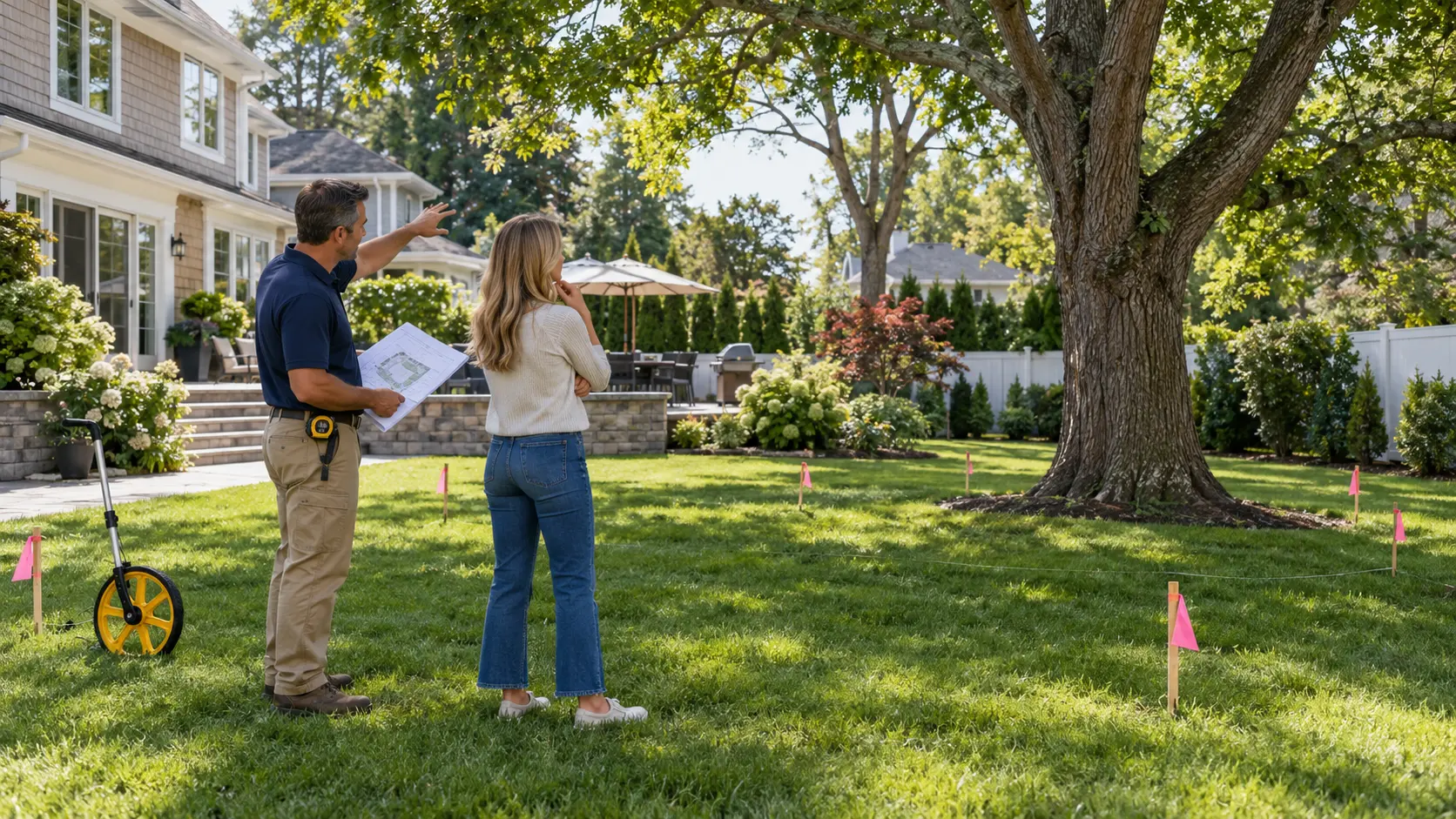
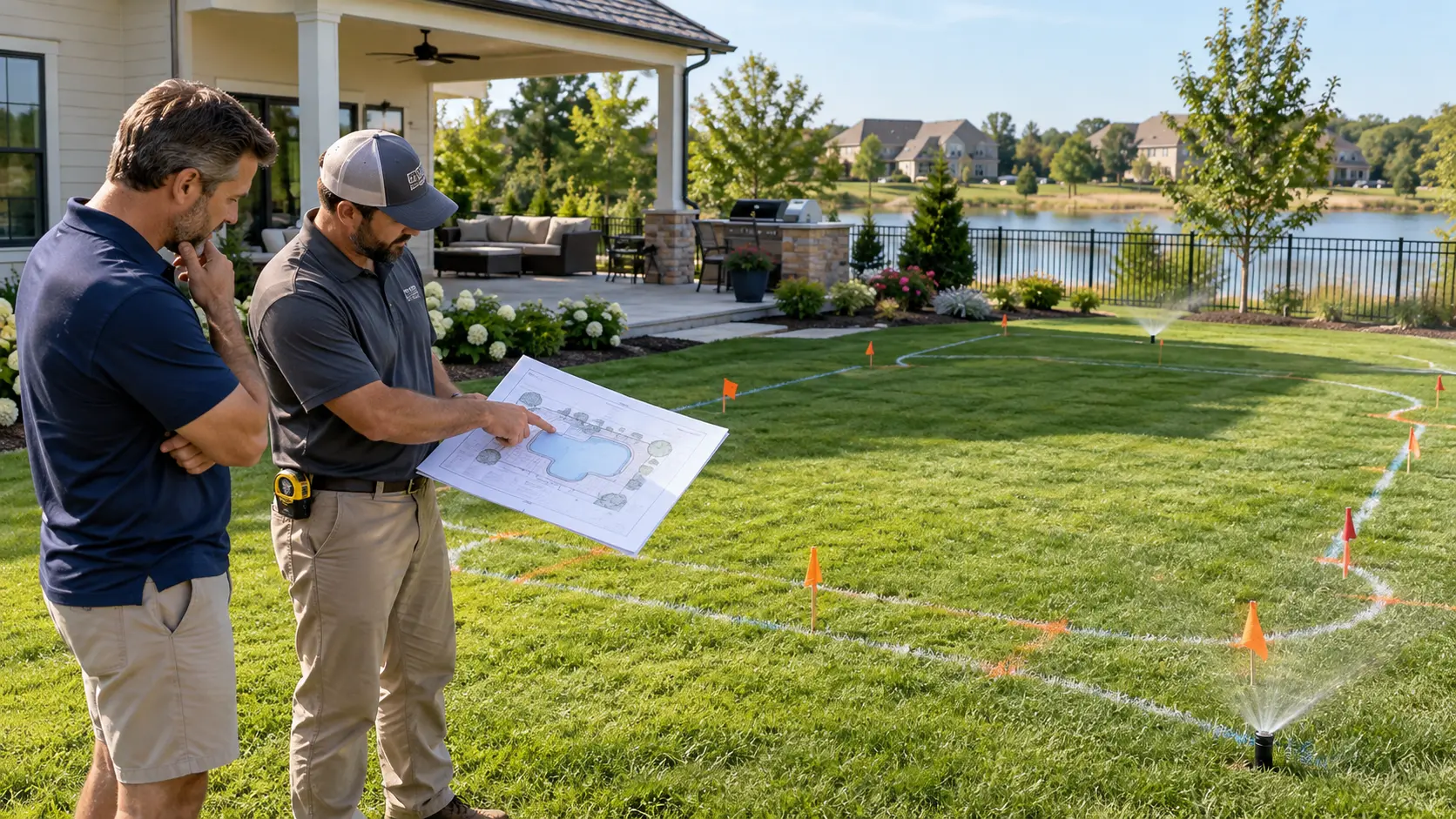
 A sloped backyard may need extra planning, but it can still be a strong candidate for an inground pool. The first question is not simply, “Can a pool fit here?” The better question is, “What kind of pool design makes sense for this yard?”
A gentle slope may only affect patio placement and grading. A steeper slope may require more detailed planning around retaining walls, steps, drainage, and how the pool connects back to the house. In some yards, the pool may sit on one level while the seating area, patio, or landscape features sit on another. That can create a beautiful, finished space.
Instead of fighting the slope, the design can use it to create structure. A hilly yard may allow for a raised patio, a dramatic waterfall, a lower pool area with privacy, or a multi-level backyard that feels more like a resort than a standard pool installation. The important thing is to plan the whole backyard together.
Use the Slope to Create Levels
One of the best ways to design around a hilly backyard is to use levels. A flat yard often has one main pool area. A sloped yard may naturally lend itself to two or more zones. For example, the upper level could connect to the house, outdoor seating, or dining area. The lower level could hold the pool and surrounding patio. Steps, stonework, plantings, and lighting can help connect the two. This can make the backyard feel intentional instead of uneven.
Levels also help define how the space will be used. One area can be for lounging. Another can be for swimming. Another can be for entertaining. When each zone has a purpose, the yard feels more comfortable and easier to navigate. The goal is not to make the slope disappear. The goal is to make it feel like part of the design.
Consider a Raised Patio Near the Pool
A raised patio can work beautifully in a sloped backyard. If the house sits higher than the pool area, a raised patio can help connect the home to the pool. It can create a natural overlook, a comfortable seating area, or a place where guests can relax while still feeling connected to the water. This is especially useful when the yard drops away from the house.
Without a planned transition, the pool may feel too far away or disconnected. A raised patio, steps, and surrounding landscaping can make the pool area feel like an extension of the home.
A raised patio can also make the backyard more useful. Homeowners can have a dining or seating area on one level, with the pool and lounge space below. That gives the yard more function without making everything feel crowded. For hilly Long Island properties, this type of planning can make a big difference.
Add Steps That Feel Natural
Steps are often necessary in a hilly backyard, but they should not feel like an afterthought. The way people move through the yard affects how enjoyable the pool area feels. If the steps are awkward, too steep, poorly placed, or disconnected from the patio, the backyard can feel inconvenient. If they are planned well, they can become part of the design.
Steps can connect the house to the pool. They can lead from a patio to a lower seating area. They can move through landscaping. They can also help create a more finished transition between levels. Materials matter too.
Stonework, pavers, lighting, and plantings can make steps feel intentional. Instead of looking like a practical fix for a sloped yard, they can become part of the backyard’s character. Good movement through the yard makes the pool easier to use.
Turn the Grade Into a Waterfall Opportunity
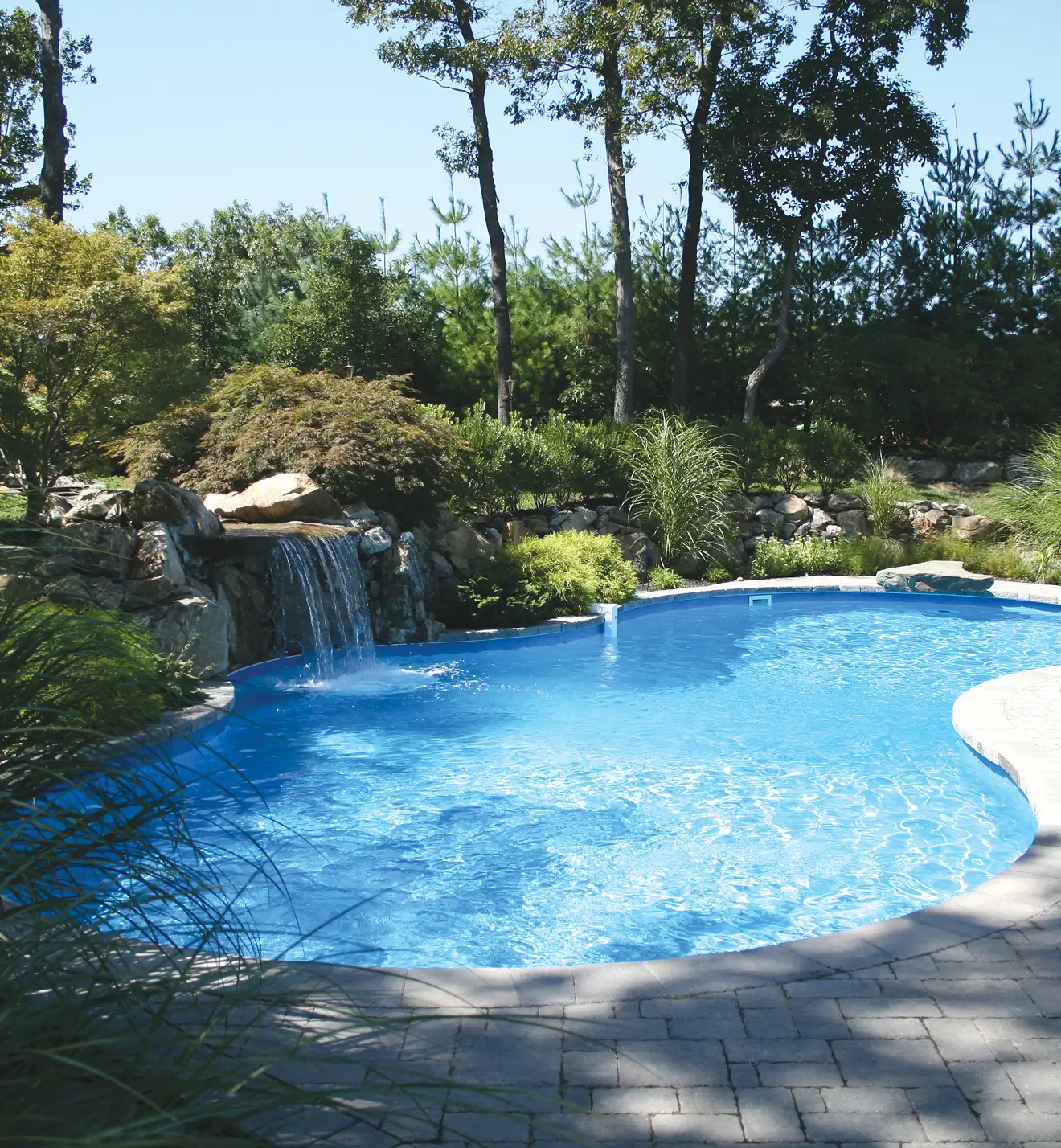
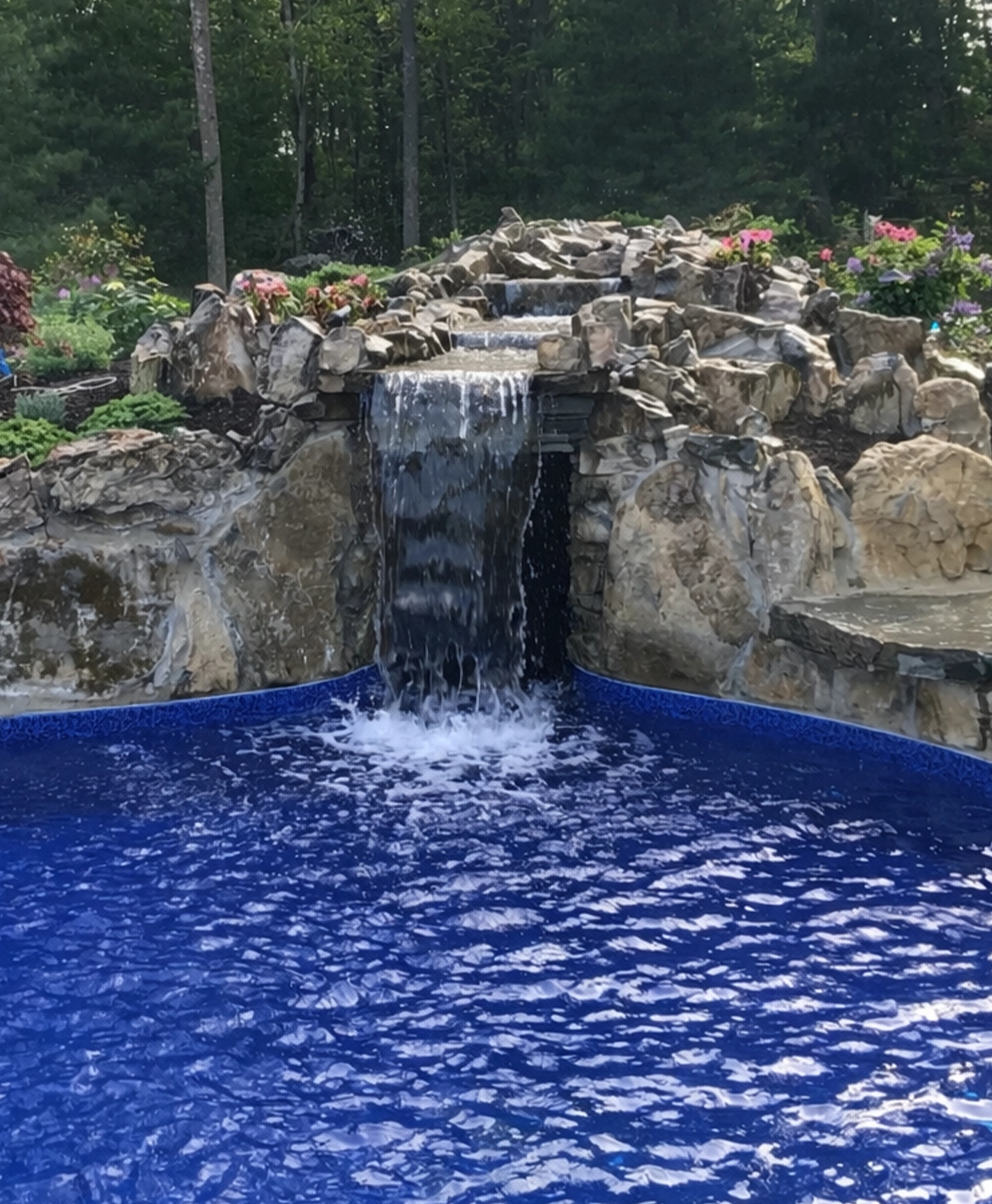
A hilly backyard can be a great setting for waterfalls. Because the yard already has a change in elevation, a waterfall may feel more natural than it would in a completely flat space. The design can use the slope to create movement, sound, and a focal point near the pool.
A waterfall can help anchor the pool visually. It can also make the backyard feel more private and relaxing by adding the sound of moving water. The key is restraint.
A waterfall should fit the size and style of the yard. It should not overwhelm the pool or make the backyard feel too busy. In a sloped yard, the best waterfall designs often look like they belong to the landscape, not like they were added separately. When planned with the pool, patio, and landscaping, a waterfall can turn a challenging grade into one of the backyard’s best features.
Think Carefully About Retaining Walls
Some sloped backyards may need retaining walls. Retaining walls can help manage grade changes, support patio areas, define levels, and make the pool area feel more usable. They can also become part of the design if the materials, placement, and surrounding landscaping are handled thoughtfully. A retaining wall does not have to feel harsh or purely functional.
It can frame the pool area. It can support a raised planting bed. It can help create privacy. It can also separate one outdoor zone from another. But retaining walls need careful planning. They affect the look, function, drainage, and construction of the backyard. They should be considered early, not added at the end because the slope became a problem. A hilly yard needs a complete plan before construction begins.
Drainage Matters More on a Hilly Property
Drainage is important for any pool project, but it becomes even more important when the backyard slopes. Water naturally moves downhill. If the pool, patio, and landscaping are not planned correctly, rainwater may collect where it should not. It may move toward the house, wash over patio areas, or create soggy sections of the yard. That is why drainage should be part of the pool design conversation from the start.
A sloped yard may need grading adjustments, proper patio pitch, landscape planning, and a smart layout that directs water where it should go. The goal is to make the pool area comfortable and usable, not just attractive.
A beautiful pool will not feel as enjoyable if the surrounding space does not function well after a storm. For Long Island homes, where yards can vary widely in grade and soil conditions, drainage should never be treated as a small detail.
Pool Placement Should Connect Back to the House
In a sloped backyard, pool placement is especially important. If the pool is placed too low in the yard without a clear connection to the house, it can feel detached from the rest of the property. If it is placed too close to the house without enough patio or transition space, the layout may feel cramped or forced. The right placement depends on the grade, views, access, privacy, and how the backyard will be used.
Homeowners should think about what the pool will look like from inside the house. They should also think about how people will walk from the house to the pool, where they will sit, where furniture will go, and how the patio will connect everything.
A custom inground pool should feel like part of the home. That is even more important when the yard has elevation changes.
A Sloped Yard Can Create More Privacy
A hilly backyard can sometimes offer more privacy than a flat yard. A lower pool area may feel tucked away from the house or neighboring properties. A raised landscape bed, retaining wall, or tiered planting area can help frame the pool and create a more private setting.
This can be especially valuable on Long Island, where neighboring homes may be close and backyards may not feel fully secluded. Privacy does not always require a wall of tall trees.
Sometimes it comes from smart placement, elevation, landscaping, and seating orientation. A pool can be positioned so the main activity area feels more protected. Landscaping can soften views from nearby homes. A waterfall or planting area can create a stronger focal point inside the yard. A sloped yard gives the designer more tools to work with.
Keep the Pool Shape Simple When the Yard Is Complex
A hilly yard already has movement and character. That means the pool shape does not always need to be complicated.
In many cases, a cleaner pool shape works better because the surrounding design is doing more of the visual work. Steps, levels, retaining walls, landscaping, waterfalls, and patios can create enough interest on their own.
A simple pool shape can make the backyard feel calmer and more organized. That does not mean the design has to be boring. It means every part of the layout should have a purpose. A clean-lined custom inground pool can look beautiful when paired with the right patio, stonework, planting, lighting, and water features. In a challenging yard, restraint can be a strength.
Plan the Patio Before the Pool Is Finalized
The patio is one of the biggest decisions in a sloped backyard pool design. It affects how people use the pool, where furniture goes, how guests gather, and how the pool connects to the house. On a hilly property, the patio may also need to account for steps, elevation changes, retaining walls, drainage, and usable flat space.
If the patio is not planned early, the finished backyard may feel awkward. There may be too little room for lounge chairs. The path from the house to the pool may feel inconvenient. Seating may end up on the wrong side of the pool. A grade change may make the patio feel disconnected from the rest of the yard. A good patio plan helps the pool feel complete. It turns the pool from a standalone feature into a usable backyard space.
Add Landscaping That Softens the Slope
Poolside landscaping can make a hilly backyard feel more natural and finished. Plantings can soften retaining walls, frame steps, create privacy, and help the pool blend into the property. They can also make different levels feel connected rather than separate. This matters because hardscape alone can sometimes feel heavy in a sloped yard.
Stone, pavers, walls, and steps may be necessary, but landscaping brings balance. It adds texture, color, privacy, and softness. It can also guide the eye through the yard and make the pool feel like it belongs in the setting. For a custom pool design, landscaping should not be treated as the last layer. It should be part of the plan from the beginning.
Consider Lighting for Safety and Atmosphere
Lighting matters in any backyard pool area, but it can be especially helpful in a sloped yard. Steps, level changes, walkways, patios, and retaining walls should be easy to navigate. Good lighting can make the backyard safer and more comfortable after dark. It also changes the mood of the space.
Soft lighting along steps, patio edges, walls, or landscape areas can make the pool feel more polished. It can highlight stonework, water features, plantings, and the shape of the pool. It can also help the backyard feel inviting in the evening, even when no one is swimming. A hilly yard gives lighting more surfaces and levels to work with. Used well, that can make the backyard feel dramatic without feeling overdone.
Make Room for Outdoor Living Features
A sloped backyard can still include outdoor living features, but they need to be placed carefully. A spillover hot tub, seating area, dining space, fire feature, waterfall, or outdoor kitchen area may all be possible depending on the yard. The question is how those features fit with the pool, patio, grade, and movement through the space.
In some yards, one strong feature is better than several competing ones. A spillover hot tub may work beautifully near the pool if the layout supports it. A waterfall may make more sense if the slope creates a natural backdrop. A seating area may belong on an upper patio if it has the best view of the pool. The features should support the backyard experience. They should not make the yard feel crowded or complicated.
A Hilly Backyard Needs a Custom Pool Plan
A hilly backyard is not the place for a one-size-fits-all pool design. The pool shape, placement, patio, steps, drainage, landscaping, retaining walls, water features, and outdoor living areas all need to work with the property. If one piece is planned without the others, the finished backyard may feel disconnected.
When everything is planned together, the slope can become part of what makes the space special. A hilly yard can have movement. It can have layers. It can have privacy. It can have a pool that feels tucked into the property instead of dropped onto it. That is the value of custom pool design.
Specht-Tacular Pools helps Long Island homeowners plan custom inground pools, patios, landscaping, waterfalls, spillover hot tubs, and outdoor living features around the way each backyard actually works. A sloped yard may need more thought. But with the right plan, it can become a beautiful place to build a pool.
Related Inground Pool Planning Articles:
Custom Vinyl Liner Inground Pools on Long Island
Vermiculite Pool Bottoms
Salt Water Inground Pool
Private Inground Pool Design
Pool Steps, Benches, and Tanning Ledges
Backyard Layout and Pool Design
What No One Tells You Before Building an Inground Pool
Frequently Asked Questions
Yes. Many hilly backyards can support an inground pool, but the design may need to account for grading, access, drainage, retaining walls, patio levels, steps, and how the pool connects to the house.
A sloped backyard can add complexity because it may require additional planning, grading, retaining walls, drainage solutions, or more detailed patio work. The cost depends on the specific property and pool design.
The best type of pool depends on the slope, available space, access, drainage, and how the homeowner wants to use the backyard. A custom inground pool is often the best approach because the layout can be designed around the property.
Yes. A hilly yard can have a pool patio, but the patio may need to be planned in levels or connected with steps, walls, and landscaping. Early patio planning helps the pool area feel more usable.
Some sloped yards may need retaining walls, but not all of them do. A pool builder can review the grade and explain whether walls are needed for support, patio space, drainage, or backyard layout.
Waterfalls can work very well in a sloped backyard because the grade can create a natural setting for moving water. The design should still fit the size, style, and layout of the yard.
Yes. A sloped yard can sometimes create more privacy by placing the pool area at a lower level, using landscape tiers, adding plantings, or positioning seating areas more carefully.
Drainage is very important in a hilly yard because water moves downhill. The pool, patio, grading, and landscaping should be planned so rainwater moves properly and does not create problems around the pool area.
It depends on the property. The pool should be close enough to feel connected to the home, but the final placement should also account for grade, views, access, patio space, privacy, and drainage.
A pool builder should review the slope, yard access, drainage, soil conditions, patio space, retaining wall needs, privacy, existing trees or structures, and how the homeowner wants to use the finished pool area.
Uneven terrain adds several layers of planning because the pool itself still needs to sit level, even when the surrounding yard does not. That can require additional grading, excavation and sometimes retaining walls to create a stable area for the pool and patio. Drainage also becomes more important on a sloped property. Rainwater naturally moves downhill, so the design has to control where that water goes and keep it from collecting around the pool, patio or foundation. Soil stability matters too, especially if part of the pool area will be built on fill or near a significant change in elevation. Access for excavation equipment can also be more challenging on a steep or confined lot. A pool builder may need to adjust how equipment enters the yard, how soil is removed and how materials are delivered. The goal is not simply to make room for the pool. It is to create a level, properly supported finished pool area that works with the slope of the property, manages water correctly and feels like a natural part of the backyard.