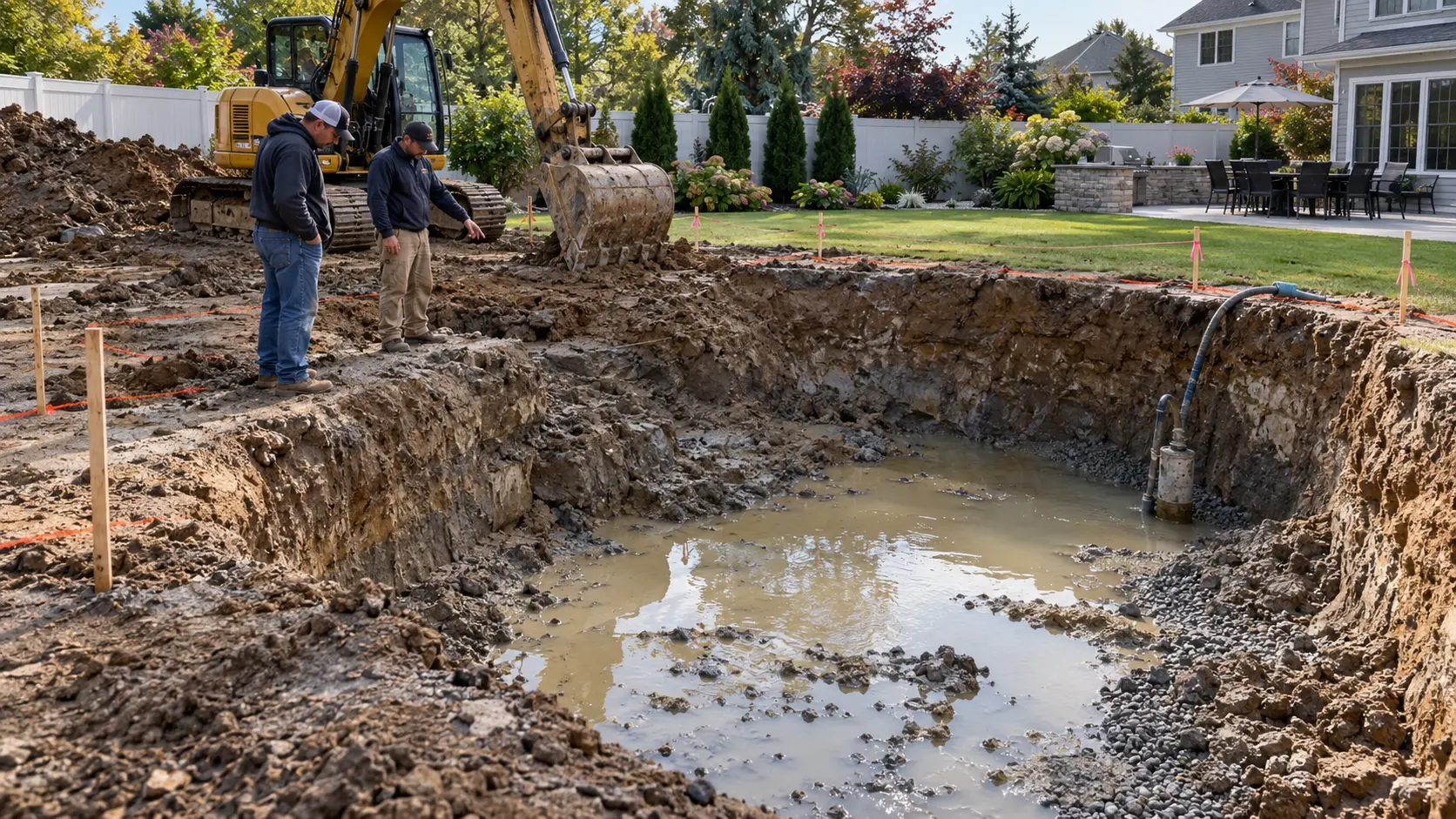
Excavation is one of the moments when the conditions beneath a backyard finally become visible. A property may look dry and straightforward at the surface, but digging can reveal conditions that were not obvious before construction began. Groundwater is one of those possibilities.
Finding groundwater during pool excavation does not automatically mean an inground pool cannot be built. It does mean the construction team needs to evaluate what is happening below grade and determine how the site conditions affect the work.
Why Groundwater Can Appear During Excavation
Groundwater exists below the land surface, and its depth can vary from property to property. On Long Island, underground conditions are influenced by factors such as elevation, soil characteristics, rainfall, proximity to water, and the local water table. The depth at which water appears may also change seasonally.
A backyard can therefore seem completely dry until excavation reaches a deeper elevation. This is one reason the conditions uncovered during excavation matter. The construction team is no longer evaluating only what can be seen from the surface.
Seeing Water Does Not Automatically Mean the Project Stops
Homeowners may be understandably concerned if water begins entering the excavation. The presence of groundwater needs to be evaluated, but it does not by itself mean the pool project has failed.
The builder needs to understand where the water is coming from, how much is present, what the surrounding soil is like, and whether the condition is temporary or more persistent. Those findings can affect how excavation proceeds and what site-management steps may be needed during construction.
Weather Can Change What Happens Underground
Recent weather can influence site conditions. Extended rain may saturate soil or contribute to water entering an excavation. A property that behaves one way during a dry period may look different after several days of heavy rainfall. That is one reason excavation conditions should be assessed in context rather than making assumptions based on a single observation.
Weather can also affect the construction schedule. If the site becomes too wet to work safely or effectively, some portions of the project may need to wait until conditions improve.
Soil Conditions Matter Too
Groundwater is only one part of what can be discovered during excavation. Different soil conditions can affect how the excavation behaves. Contractors may encounter loose material, dense soil, fill, buried debris, or conditions that were not visible before digging began. Groundwater combined with unusual soil conditions can require more attention than either issue alone.
The important thing is for the builder to evaluate the real site conditions rather than forcing the original plan forward without adjustment. This is part of why homeowners should work with a pool builder prepared to manage the construction process, not simply design the appearance of the finished pool.
Excavation May Need to Be Managed Differently
When water enters an excavation, the construction process may need to be adjusted. Depending on the site and the amount of water present, contractors may need to manage water temporarily so work can proceed safely and the pool structure can be constructed correctly.
The appropriate response depends on the property. There is not one groundwater solution that should be applied to every Long Island pool project. Homeowners should be cautious about generic online advice that assumes every wet excavation requires the same treatment.
Drainage Around the Finished Pool Is a Separate Issue
Groundwater during excavation and surface drainage after construction are related site-planning concerns, but they are not exactly the same thing. The finished backyard still needs a plan for rainfall and runoff around the pool, patio, house, and landscaping.
Grading should direct water appropriately rather than allowing it to collect where it can create puddling or erosion. Patio surfaces, planting areas, retaining features, and existing drainage systems may all need to work together. That broader drainage planning should be considered whether groundwater is encountered during excavation or not.
Groundwater Is Another Reason Pool Location Matters
Choosing the pool location is about more than fitting the desired pool shape into the yard.
Elevation and site conditions may make one portion of a property more suitable than another. On a sloped lot, for example, the difference between two possible pool locations can affect excavation, grading, retaining needs, access, and water management.
A thoughtful custom inground pool design should therefore consider the physical property as well as the homeowner’s preferred features.
Unexpected Conditions Should Be Discussed Early
No contractor can see every underground condition before excavation begins. That is why homeowners should ask what happens if unexpected conditions are discovered.
A good construction conversation should include how the builder communicates changes, how site conditions are evaluated, and what happens if additional work becomes necessary.
Groundwater is only one example. Buried materials, unusual soils, old structures, unknown utility conditions, weather, access problems, and inspection delays can also affect a project after work begins. Setting realistic expectations before construction can make those situations much easier to manage if they occur.
Experienced Construction Management Matters
Pool design often gets the most attention because it is the part homeowners can visualize. Construction management becomes just as important once excavation begins.
The project needs a team capable of responding to the property that is actually uncovered, not just the property shown on the original plan. That means evaluating conditions, communicating with the homeowner, coordinating the different stages of construction, and making appropriate decisions when circumstances change.
Groundwater Does Not Have to Derail a Pool Project
Finding groundwater can be unexpected, but it should be treated as a site condition that needs evaluation rather than an automatic reason to abandon the project. The best response depends on the amount of water, soil conditions, weather, property elevation, drainage, and the specifics of the pool being constructed.
For Long Island homeowners, this is another reason to choose a builder who understands both pool design and what can happen during construction.
Specht-Tacular Pools manages custom inground pool projects from planning through construction, helping homeowners account for the property, backyard layout, access, grading, patios, landscaping, and the conditions that can emerge as a project moves forward.
Frequently Asked Questions
Yes. Groundwater conditions can vary with rainfall, season, location, and other site conditions. A property that appears dry during one part of the year may have different subsurface conditions at another time. This is why homeowners should not assume that a dry lawn means excavation will also be dry several feet below the surface.
It can. If water or saturated soil makes excavation or another construction stage more difficult, the schedule may need to be adjusted. The amount of delay depends on the site conditions and what work is required. In some situations, the issue may be manageable with relatively little effect. More significant conditions can require additional site work or waiting for conditions to improve.
No. Groundwater exists below the surface, while poor backyard drainage generally refers to rainfall or runoff collecting or moving improperly across the property. A yard can have one issue without the other. Both should be considered during pool planning because excavation conditions and finished grading can affect different stages of the project.