A lap pool for exercise in a Long Island backyard does not have to match a competition pool, and it does not have to be 25 yards or 25 meters long. What it does need is a long, straight, uninterrupted swimming path, a width and depth that feel comfortable to swim in, and interior features that stay out of that path. Specht-Tacular Pools, based in Center Moriches, designs custom vinyl-liner inground pools, and a pool meant for swimming laps can be planned around your yard, your family, and the way you want to use the water.
If exercise is a main reason you want a pool, start with the swimming path, then fit the patio, steps, and seating around it. A long or narrow lot can often support that kind of layout. The goal is a pool you will swim in regularly, not a pool that only looks long on paper.
Start With a Clear Swimming Path, Not a Competition Length
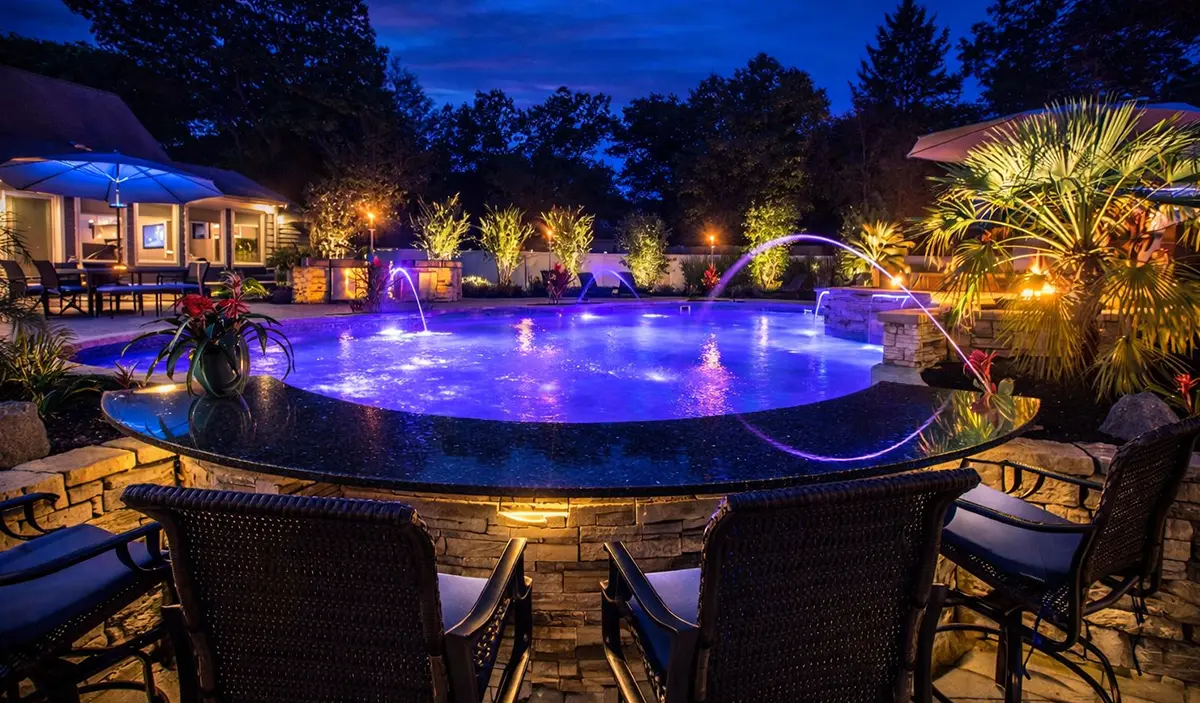
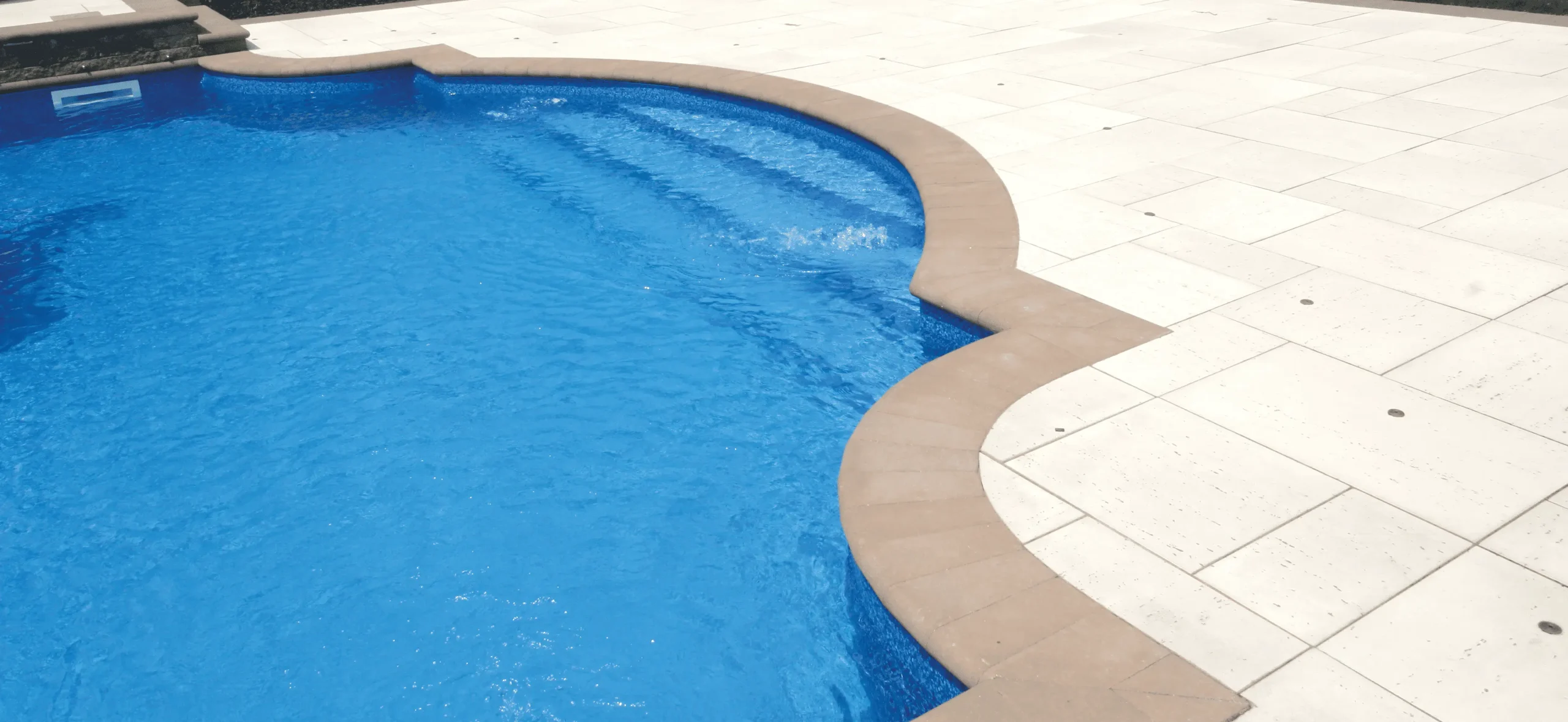
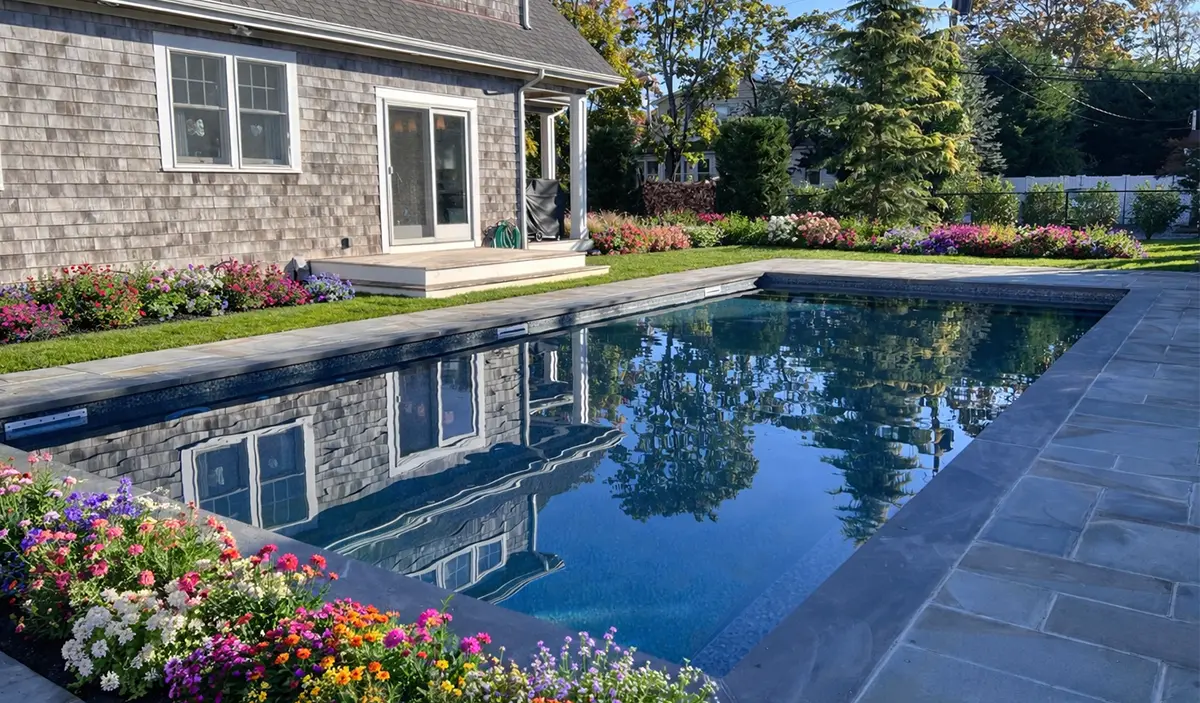
Shape matters as much as size. Someone who wants to swim laps may appreciate the straight, uninterrupted path of a rectangular pool. A freeform outline can still be beautiful, but curves and pinched midsections shorten the usable lane. For regular exercise, a geometric pool with parallel sides usually makes the swimming more consistent from end to end.
A backyard pool is not a racing course. USA Swimming defines a short course as 25 yards or 25 meters, and a long course as 50 meters (164 feet and 1/2 inch). Twenty-five meters is 82 feet and 1/4 inch. Those lengths are the standard for competition, not a requirement for a home pool. Many Long Island yards cannot fit a 25-yard or 25-meter pool and still leave comfortable room for a patio, walking space, and the setbacks your town requires. A shorter custom pool can still be a good place to swim. You will turn more often, and that is the tradeoff to weigh against the size of the yard.
Length, Width, and Depth for Swimming Laps
Length is the first number most swimmers care about, because it sets how many strokes you get before a turn. Add as much clear water as the usable backyard will support, then stop before the pool crowds out the patio and the path from the house. A familiar residential example is a 16-by-32-foot pool, which needs more backyard space than 16 by 32 feet because the area around the water matters too. If you want a longer swim than that, the property has to have the length, after setbacks, to support it.
Width should leave room for a full stroke without hitting the walls, including on your back. In competitive swimming, USA Swimming sets a minimum lane width of 7 feet for local competition, and championship lanes are at least 2.5 meters, or 8 feet 2-1/2 inches, wide. A backyard pool used by one swimmer can take those figures as a useful reference, not as a building requirement for a home pool. If two people will swim at the same time, or if the pool also has to work for play and entertaining, a wider interior is typically more comfortable than a single tight lane.
Depth should be planned with length and width, not copied from a photo. A design with more deep water can emphasize swimming, and not every inground pool needs a dramatic deep end. Our guide to how deep an inground pool should be explains how to balance standing areas, swimming areas, and floor transitions. For regular laps, many swimmers prefer a swimming depth that stays consistent along the lane, so the stroke does not change as the floor drops away. If you also want a place to stand and talk, that standing area can sit at one end or along a side, outside the main path. Diving is a separate design question and should not be assumed just because part of the pool looks deep.
Fitting a Lap Pool Into a Long or Narrow Yard
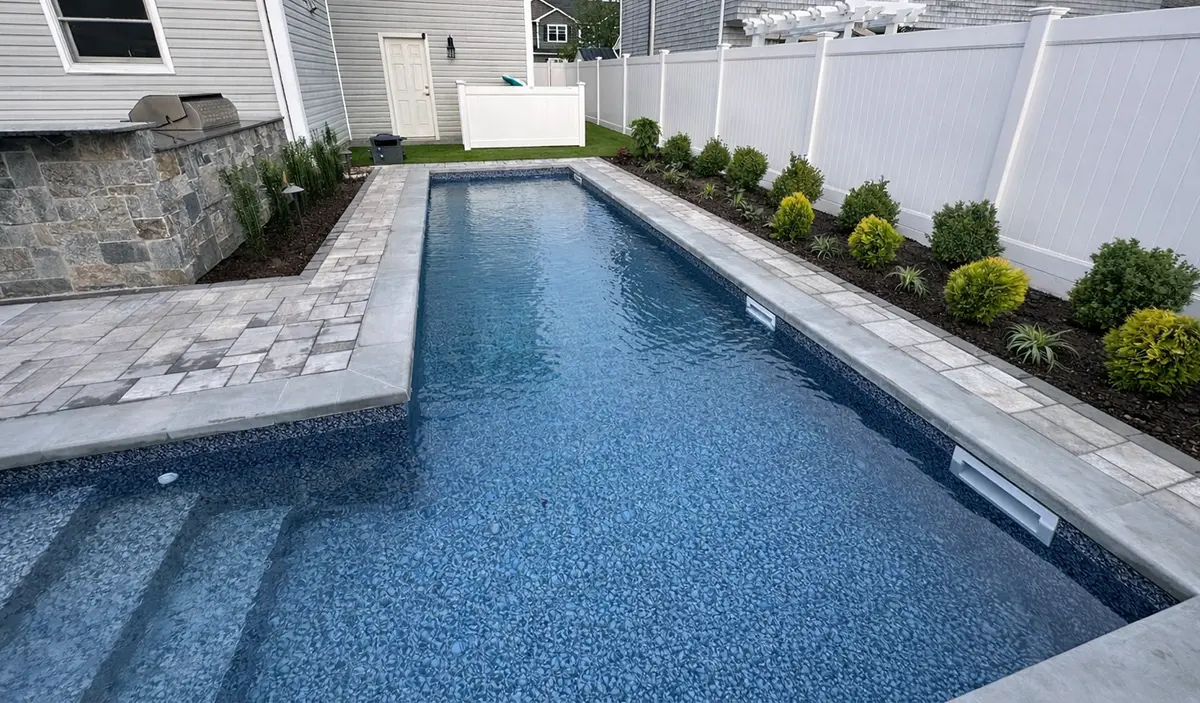
A long, relatively narrow property may work well with a geometric pool that follows the lines of the yard. That is often the most natural place for a lap-style layout on Long Island: the length of the lot becomes the length of the swim, and the narrower dimension keeps the width in check.
The pool still has to leave room to walk, sit, and get from the house to the water. Pushing the pool toward one permitted side of the usable area can leave a more generous patio or lawn on the other. Rotating the pool so the long axis follows the longest clear stretch of yard is often more useful than centering a shorter rectangle in the middle of the lawn.
Setbacks, access, trees, septic systems, and grade still decide how much of the yard is usable. Those limits belong in the first site visit, not after a length has already been chosen. The pool should look like it belongs in the yard, and it should still be a pool you can swim in.
Features That Help, or Get in the Way of, Lap Swimming
The features inside the pool can help daily use, or they can interrupt the lane. Steps, benches, and tanning ledges should be planned early and placed so they do not cut the swimming path in half. Wide entry steps often belong at one end or along the side nearest the patio. A bench can sit along a side wall, where someone can rest without standing in the lane. A tanning ledge can be a pleasure on a family pool, but if it takes a large bite out of one end, the usable lap length shrinks. If exercise is the priority, keep that ledge compact or place it beside the lane rather than across it.
A spillover spa or a water feature can still belong in the design. Keep it at an end or along a side so the swimming path stays straight. Lighting, coping, and the liner pattern can make a simple geometric pool feel finished without adding objects in the water.
If you plan to swim in the morning, after work, or earlier and later in the season, a heater is worth discussing while the equipment pad is being planned. Comfortable water is often what turns an exercise plan into a habit. That choice depends on how often you will swim and how warm you like the water, not on a single rule for every Long Island pool.
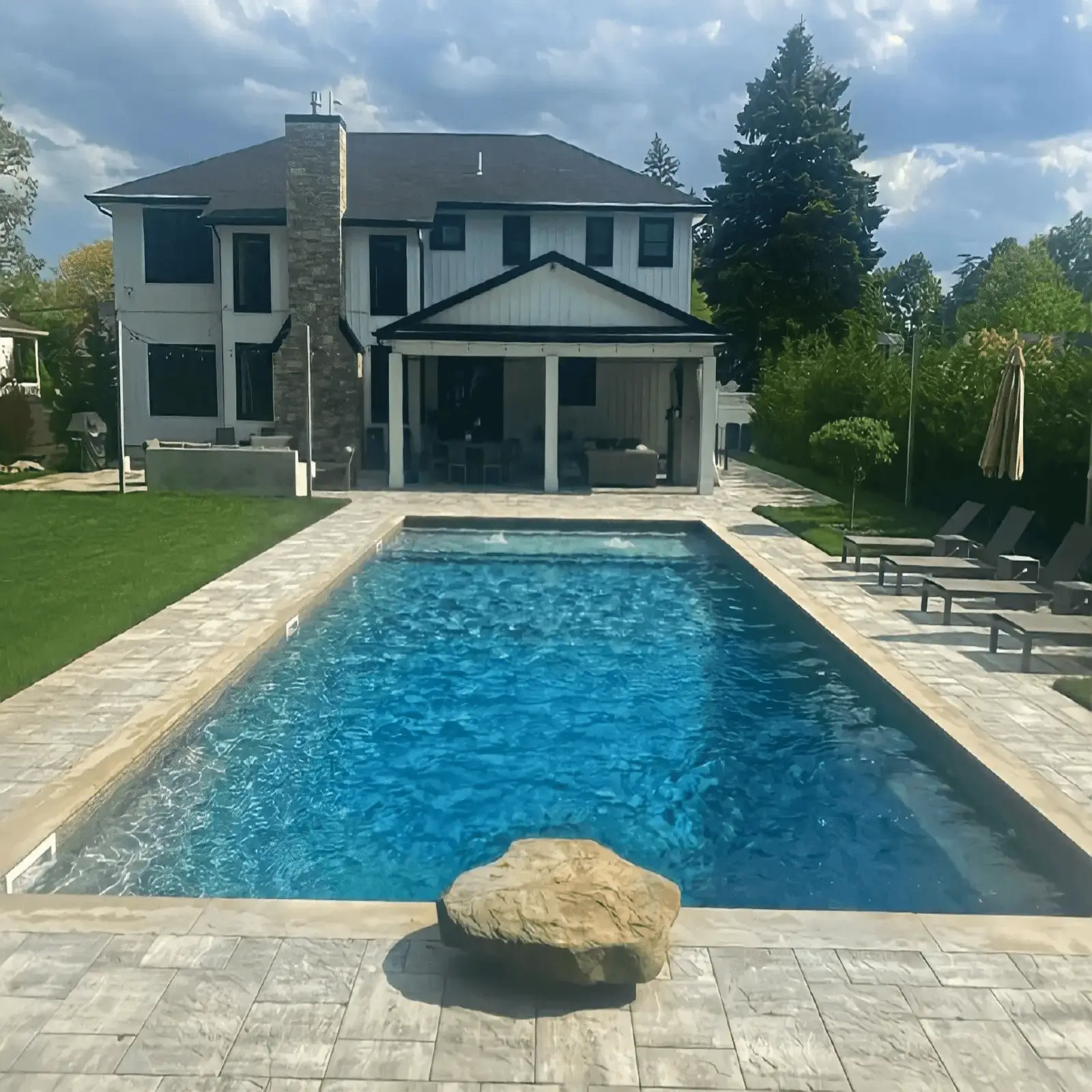
Plan the Exercise Pool With the Rest of the Yard
The best lap pool for exercise in a Long Island backyard is the one you will use: long enough for a satisfying swim, wide and deep enough to feel comfortable, and placed so the rest of the yard still works. Specht-Tacular Pools designs and builds custom vinyl-liner inground pools, with concrete walls and a vermiculite floor base, and we have served homeowners in Suffolk and Nassau County for 27 years. We can look at your property, talk through how you want to swim, and design a pool that supports that, together with the patio and outdoor living space around it.
If you are planning a new pool and want it to work for exercise, call Specht-Tacular Pools at 631-696-3900 and we can start with the layout of your yard.
Frequently Asked Questions
It does not have to match a competition pool. A longer, uninterrupted swim path means fewer turns, and the right length is the one that fits your yard and still leaves room around the water. USA Swimming defines a short course as 25 yards or 25 meters, and a long course as 50 meters. Those are competition lengths, not a minimum for a home pool. Many Long Island yards cannot fit a 25-yard or 25-meter pool plus patio and required setbacks. A shorter custom pool can still work for exercise. You will turn more often, which is the tradeoff to discuss when the property is measured.
Yes, if the swimming path stays clear and any steps, benches, or shallow lounging areas are placed so they do not cut the lane in half. A geometric pool can have a long, open swim area and still include comfortable entry, a place to sit, or a compact ledge along one side or at one end. The design gets harder when a large tanning ledge or a wide step system takes over one end of a shorter pool. If both exercise and family use matter, say that at the start so the length, width, and interior features are planned together.
No. Exercise swimming depends more on a clear path and a comfortable swimming depth than on a dramatic deep end. A more consistent depth along the lane can make each length feel the same from end to end. A standing area can still sit at one end or along a side if you want a place to talk or rest. Diving is a separate design question and should not be assumed just because part of the pool looks deep.
Often yes. A long, relatively narrow property can work well with a geometric pool that follows the lines of the yard, as long as patio space, setbacks, and access are planned with the water. The long axis of the pool should follow the longest clear stretch of usable yard, not automatically sit in the center of the lawn. The first site visit should confirm how much of that length remains after setbacks and other property conditions, because the water dimension is not the same as the space the project needs.
Place them at an end or along one side, outside the main swimming path, so entry is easy and the lane stays open. Steps nearest the patio are usually the most convenient, because that is where people come and go. A bench can follow the same idea and sit along a side wall. If a tanning ledge is in the plan, keep it from shortening the usable lap length by placing it beside the lane rather than across it.