A luxury inground pool can completely change the way you use your backyard. But it also represents a significant investment, which raises an understandable question for Long Island homeowners:
Is it worth spending more for a custom, higher-end pool instead of keeping the project simple?
The answer depends less on how many expensive features you can add and more on what you expect the finished backyard to do for you. A luxury pool should not simply be a standard pool with more upgrades attached to it. The real value comes from thoughtful design, better use of the property, quality construction and a finished backyard that feels like it was designed specifically for your home and the way your family lives.
For some homeowners, that means a dramatic freeform pool with a waterfall and spillover hot tub. For others, it might be a clean geometric pool surrounded by an elegant patio, privacy landscaping and comfortable outdoor living areas.
The best luxury pool is not necessarily the most elaborate one. It is the one that makes the investment feel worthwhile every time you walk into the backyard.
What Makes an Inground Pool a Luxury Pool?
The word “luxury” can be misleading because there is no single feature that transforms a pool into a luxury project. Size alone does not do it. A very large pool surrounded by a poorly planned patio can feel less impressive than a smaller custom pool that fits the property beautifully.
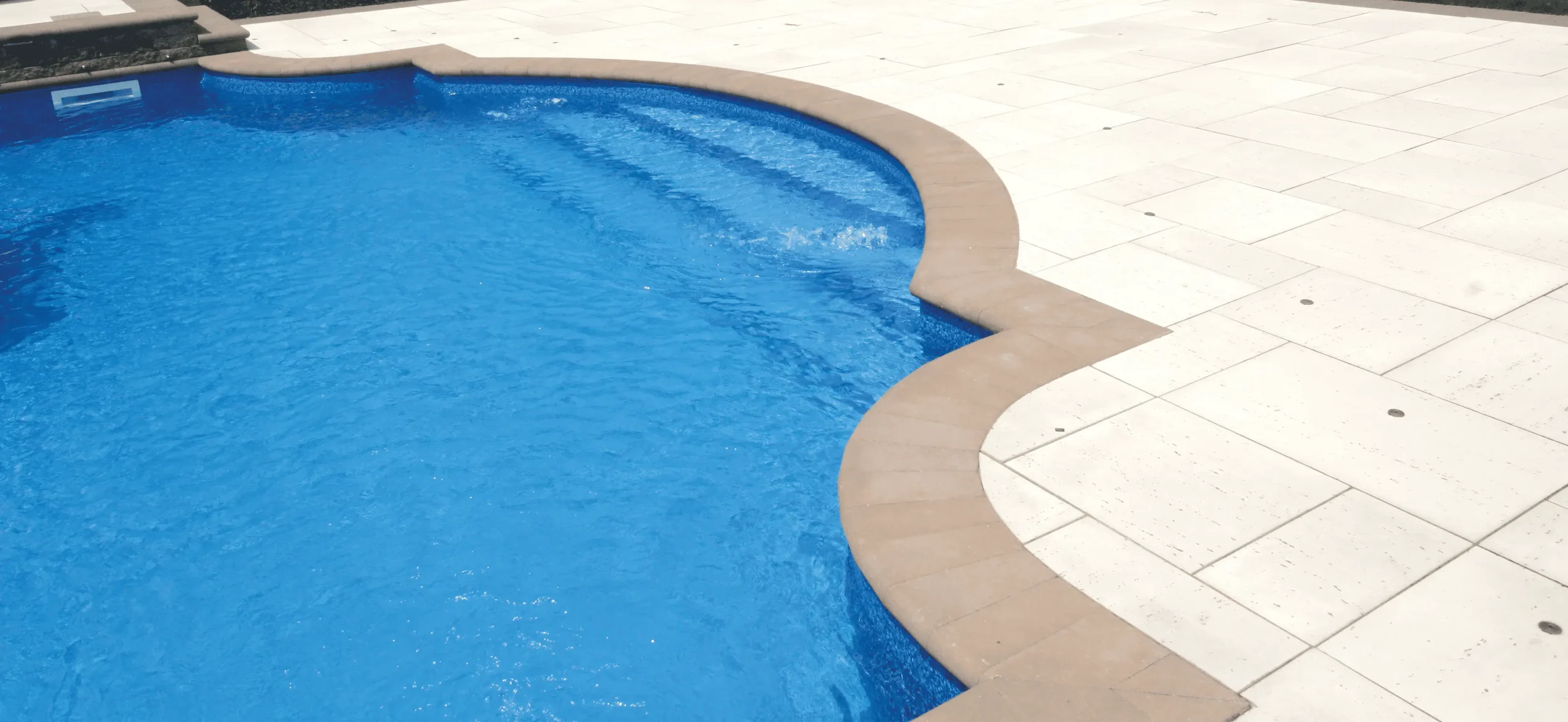
Luxury tends to come from the way the entire project works together. That can include the shape and position of the pool, steps and seating, a spillover hot tub, waterfalls, stonework, patio materials, lighting, landscaping, privacy and outdoor living areas. Just as important is what you do not immediately see.
The pool needs to be designed around the property’s grade, available space, drainage, access and existing architecture. The finished backyard should make sense from different viewpoints, including from inside the house.
That kind of planning is what separates a truly custom project from simply choosing a pool shape and adding options to it.
Is a More Expensive Pool Always a Better Pool?
No. One of the biggest mistakes homeowners can make is assuming that spending more automatically creates a better result. A more expensive project can include more features, more stonework or a larger pool, but those things only add value if they improve the way the backyard looks or functions.
For example, making the pool several feet larger may sound appealing. But if doing so eliminates comfortable patio space or makes the yard feel crowded, the additional expense may not improve the finished project.
The same applies to features. A waterfall can become an incredible focal point when it suits the pool and landscape. Add one simply because it appears on a list of luxury upgrades, however, and it may feel disconnected from everything around it. Luxury pool design is often about restraint as much as addition.
Where Does the Extra Investment Make the Biggest Difference?
If you are deciding where to put your budget, start with the parts of the project that are difficult to change later. The pool’s location, shape, depth and overall relationship with the property deserve careful thought from the beginning. So does the surrounding patio.
You will spend a great deal of time around the pool rather than in it. There needs to be enough comfortable space for walking, lounging, entertaining and moving between the house and backyard.
Landscaping is another area where thoughtful planning can make a significant difference. It can provide privacy, soften hard surfaces and make a new pool feel like a natural part of the property rather than something dropped into an open yard.
The quality of the underlying pool construction matters too. Specht-Tacular specializes in custom vinyl liner pools using concrete walls and a vermiculite bottom, allowing the pool to be designed around the property instead of forcing the homeowner into a limited selection of predetermined shapes.
Decorative features can always receive a lot of attention, but the fundamentals are what determine whether the finished project works.
Which Luxury Pool Features Are Worth Paying For?
There is no universal list. A feature is worth including when your family will use or appreciate it enough to justify its place in the project.
Spillover Hot Tubs
A spillover hot tub can create both a visual focal point and another way to enjoy the backyard beyond swimming. For homeowners who regularly use hot tubs, incorporating one into the pool environment may make considerably more sense than adding a completely separate unit later.
Waterfalls and Water Features
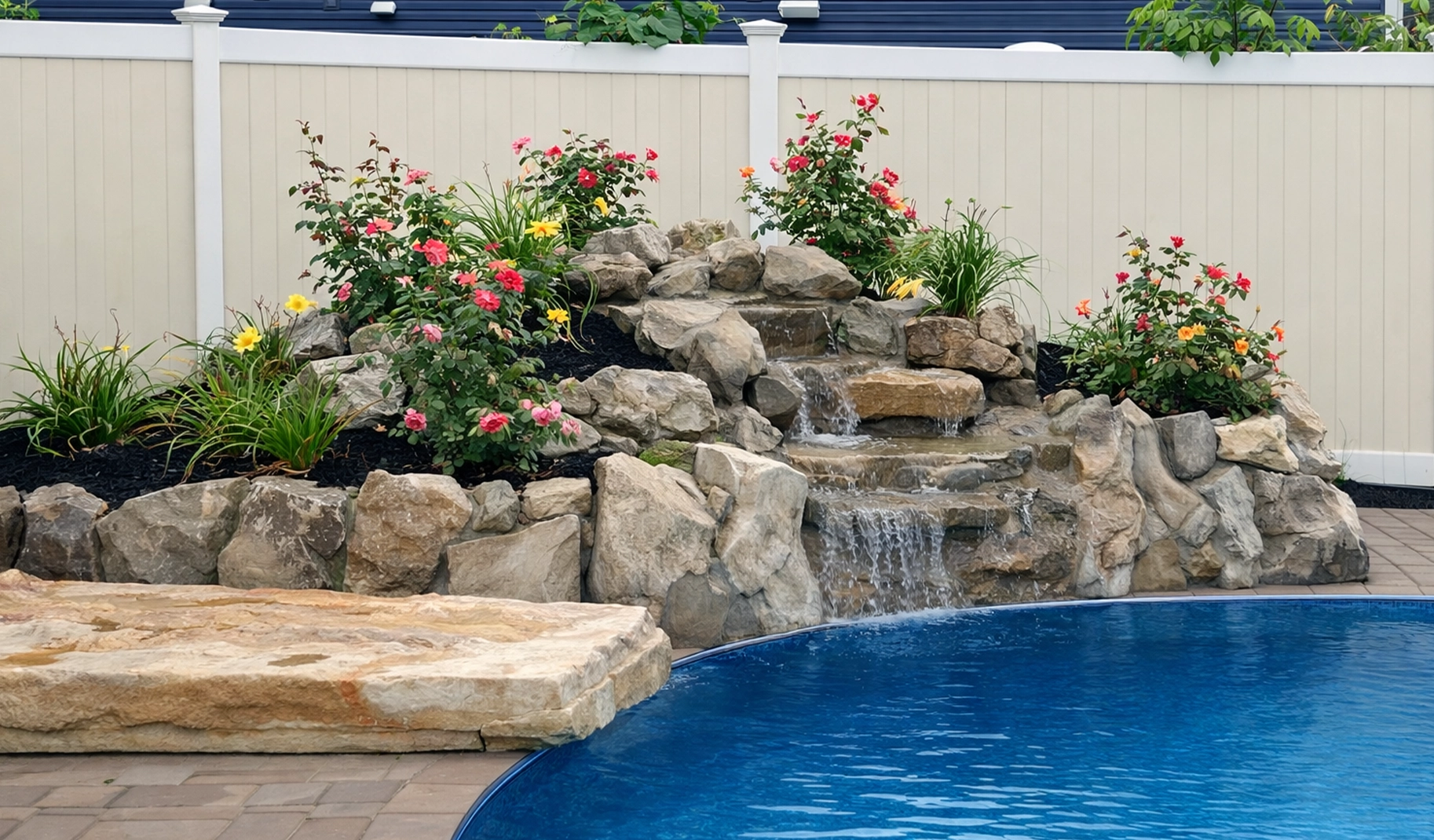
A well-designed waterfall can change the entire atmosphere of a backyard.
It can create movement, sound and a strong visual feature, particularly in a more natural or freeform pool design.
But the waterfall should look like it belongs there. Its size, location and materials should relate to the pool and surrounding landscape.
Steps, Benches and Tanning Ledges
Some of the most valuable pool features are also among the most practical.
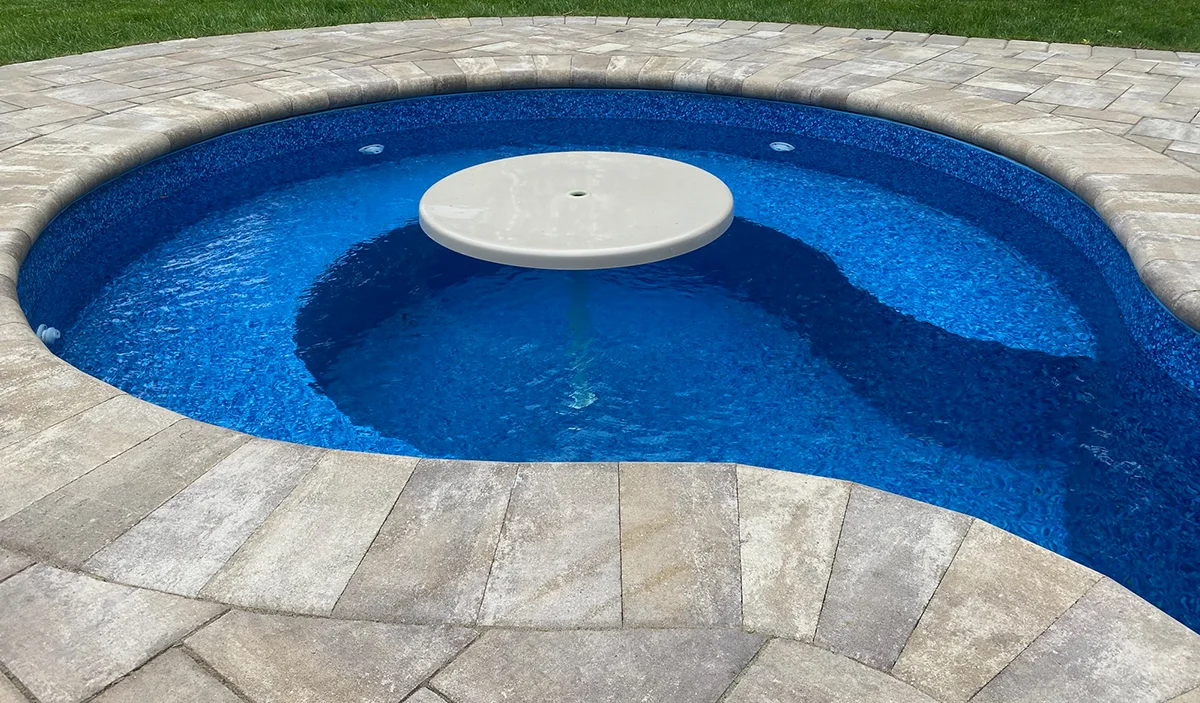
Integrated steps, benches and shallow lounging areas can create places for sitting, relaxing, supervising children or simply spending time in the water without swimming.
These features should be determined by how the pool will be used rather than by what happens to be popular when the project is designed.
Custom Lighting
Lighting can extend the visual impact of the backyard well beyond daylight hours.
A pool seen from the house at night becomes part of the view, even when nobody is swimming. Pool lighting combined with carefully planned landscape and patio lighting can make the entire outdoor space feel dramatically different after sunset.
Patios and Outdoor Living Areas
For many homeowners, the area surrounding the pool contributes just as much to the experience as the pool itself. Comfortable seating, dining areas, shade, outdoor kitchens, fire features and places for people to gather can transform the backyard from a swimming area into an outdoor living space.
That is why patios and outdoor living spaces should be considered early rather than treated as leftover space around the pool.
Is a Bigger Pool Worth the Extra Money?
Sometimes. But bigger is not automatically better.
The right pool size depends on what you want to do in the water and how much of the backyard you want the pool to occupy.
If you have children who will spend hours swimming, a larger pool may make sense. If your priority is relaxing, entertaining and enjoying the overall backyard, you may prefer a moderately sized pool with more space devoted to the patio, landscaping and seating.
A luxury pool should feel generous without overpowering the property. This becomes particularly important on Long Island, where backyard sizes and configurations vary considerably. A custom design can use the available space efficiently rather than trying to fit the largest possible pool into it.
Should You Spend More on the Pool or the Backyard Around It?
Think about them as one project. A beautiful pool can lose much of its impact if everything surrounding it feels unfinished.
The opposite is also true. A well-designed patio, landscape and outdoor living environment can make a relatively simple pool design feel far more impressive.
That does not mean every homeowner needs an outdoor kitchen, pavilion, fire pit and elaborate landscaping package. It means decisions should be made with the finished backyard in mind.
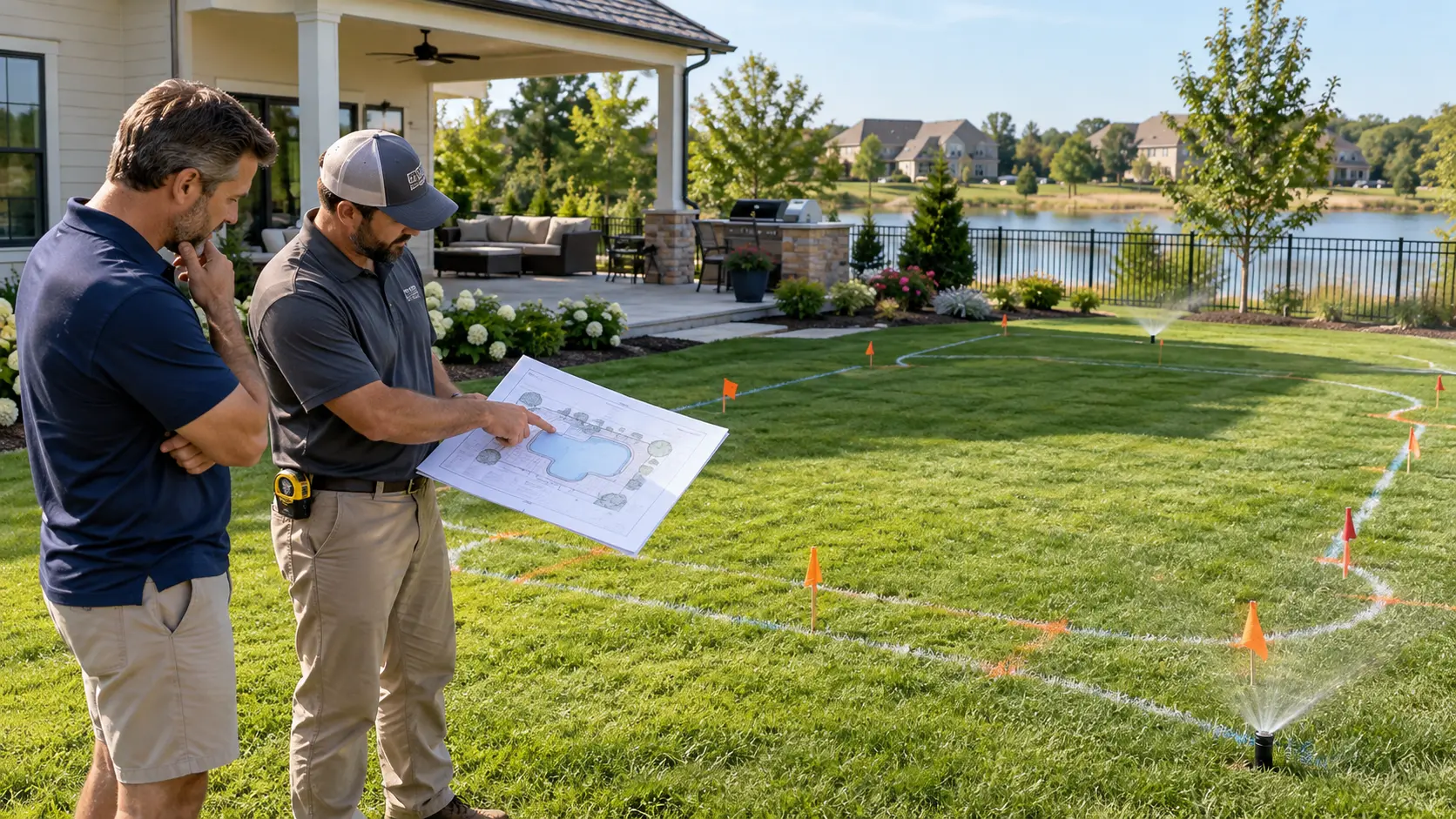
The pool design and construction process should consider how people will move through the space, where furniture will go, how much patio will be comfortable, which areas need privacy and what the backyard will look like from the house.
Planning those elements together can also help prevent decisions made during one stage from limiting your options later.
How Do You Decide Which Pool Upgrades Are Worth It?
Start with your daily life rather than a feature checklist.
Ask yourself:
- How will we spend most of our time outside?
- Do we entertain frequently?
- Will adults use the pool differently than children?
- Do we want places to sit in the water?
- Will we use a hot tub often?
- How important is backyard privacy?
- Do we want a quiet retreat or a backyard built for larger gatherings?
- What will we see when we look outside from the house?
These questions often lead to better decisions than asking which upgrades are the most popular.
A homeowner who entertains every weekend may place a high value on patio space and outdoor dining. Someone who wants a quieter backyard may prefer to invest more in landscaping, privacy and a waterfall. There is no reason those two pools should look alike.
Does the Entire Backyard Need to Be Designed at the Same Time?
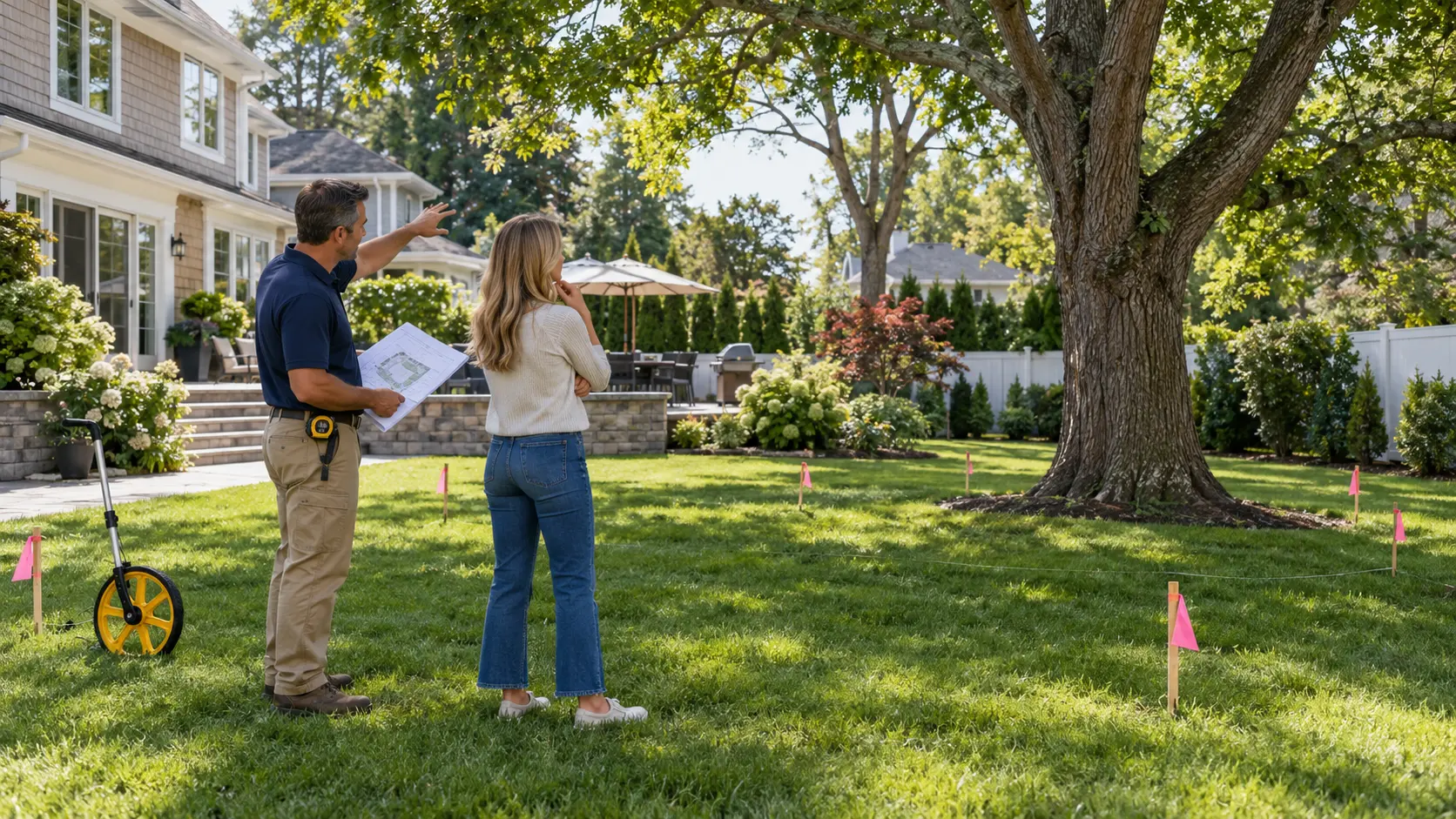
At a minimum, it should be planned at the same time. That distinction matters. You may decide to complete certain parts of the backyard later, but knowing where everything will eventually go can prevent expensive conflicts.
For example, future plans for an outdoor kitchen, pavilion or expanded seating area could influence the location of the pool and patio today. Landscaping and privacy plans may affect sightlines. Grade changes may determine where walls, steps or planting areas make the most sense.
Planning the entire property through landscape design can help ensure that today’s construction does not eliminate tomorrow’s possibilities.
Should You Design a Luxury Pool Around Trends?
Be careful with trends. Pool designs last much longer than most decorating trends. A feature you love today should still make sense years from now. That does not mean every pool has to be conservative. Bold designs can be spectacular when they fit the architecture of the house and the personality of the homeowner.
The difference is between choosing something distinctive because you genuinely love it and choosing it because it happens to be appearing everywhere at the moment. Long-lasting design usually starts with the property itself.
What Does a Luxury Pool Give You Beyond the Pool?
This may be the most important question of all. Homeowners sometimes evaluate a pool project as though they are purchasing an object. In reality, they are changing a substantial portion of their home.
A well-planned backyard can become the place where the family spends summer afternoons, where friends gather for dinner, where children bring their friends and where homeowners relax at the end of the day. It can also change what you see when you look outside every morning. That value is difficult to calculate on a spreadsheet.
You should certainly have a realistic budget and understand what you are spending. But the return from a luxury backyard is not measured solely by what another buyer might someday pay for the house. Part of the return is getting to use it yourself.
So, Is a Luxury Inground Pool Worth It on Long Island?
For the right homeowner, absolutely. But the investment is worthwhile when you spend money on the right things, not simply when you spend more.
A thoughtfully designed pool should fit your property, your home, your lifestyle and your priorities. Features should have a reason for being there. The pool, patio and landscaping should complement one another. That is where custom design becomes particularly valuable.
Specht-Tacular Pools has been designing and building custom inground pools and complete backyard environments across Long Island for more than 27 years. Rather than treating the pool, patio and landscape as unrelated projects, the goal is to understand what the homeowner wants from the entire property and design around that vision.
If you are considering a higher-end inground pool, the most useful first question may not be “How luxurious can we make it?” It may be: “What would make this backyard worth the investment for us?”
That answer is different for every homeowner. And that is exactly why a luxury pool should be custom designed.
Frequently Asked Questions
Yes. Setting an overall project budget first can help you make better decisions about where to invest. If the budget is considered only in terms of the pool itself, it can be easy to select features and upgrades before accounting for patio space, landscaping, fencing or other parts of the finished backyard. Establishing a realistic range for the entire project allows you and your designer to prioritize the elements that matter most while balancing them against everything else the property needs.
It depends on which approach will have the greatest impact on the way you use and experience the backyard. One substantial feature, such as an integrated spillover hot tub or a carefully designed waterfall, can sometimes create a stronger result than adding several smaller upgrades simply to have more features. In another backyard, practical improvements such as additional seating, lighting and better patio space may provide greater everyday value. The decision should be based on the finished experience rather than the number of upgrades included.
Look for a design that responds to your home and property rather than relying heavily on current trends. Pool shape, proportions, materials and surrounding landscape should have a logical relationship with the architecture of the house and the dimensions of the yard. Trend-driven details can still be incorporated, but they should not be the only reason the design feels special. A pool that looks as though it belongs with the property is less likely to feel dated when styles change.
Yes. Future possibilities should be considered even when they are not part of the initial construction. You may eventually want an outdoor kitchen, pavilion, expanded patio, fire feature or other improvement. Thinking about those possibilities during the initial site plan can preserve usable locations, circulation routes and utility access. A feature does not necessarily have to be built immediately for it to influence today's design decisions.
Compare the complete scope of work, not just the bottom-line number. Two proposals that appear to describe similar pools may include very different construction methods, materials, patio allowances, equipment, design services, landscaping, site preparation or responsibility for different stages of the project. Ask each builder what is included, what is excluded, which items are allowances and what situations could result in additional costs. Understanding the scope makes it much easier to determine whether you are comparing equivalent projects.