When homeowners start planning an inground pool, most of the attention goes to the pool itself. Size, shape, patio, steps and other features usually come first. But before construction can begin, there is another practical question that should be answered:
How will the equipment get into the backyard?
Pool construction requires much more access than people often expect. Excavation equipment, materials, soil removal and other parts of the project all require a workable path between the street and the pool area.
Limited backyard access does not necessarily mean you cannot build an inground pool. It can, however, affect how the project is planned, what equipment can be used and how efficiently construction can proceed.
How Much Backyard Access Does a Pool Builder Need?
There is no single access width that applies to every pool project. The amount of room needed depends on the equipment being used, the layout of the property and the type of construction taking place.
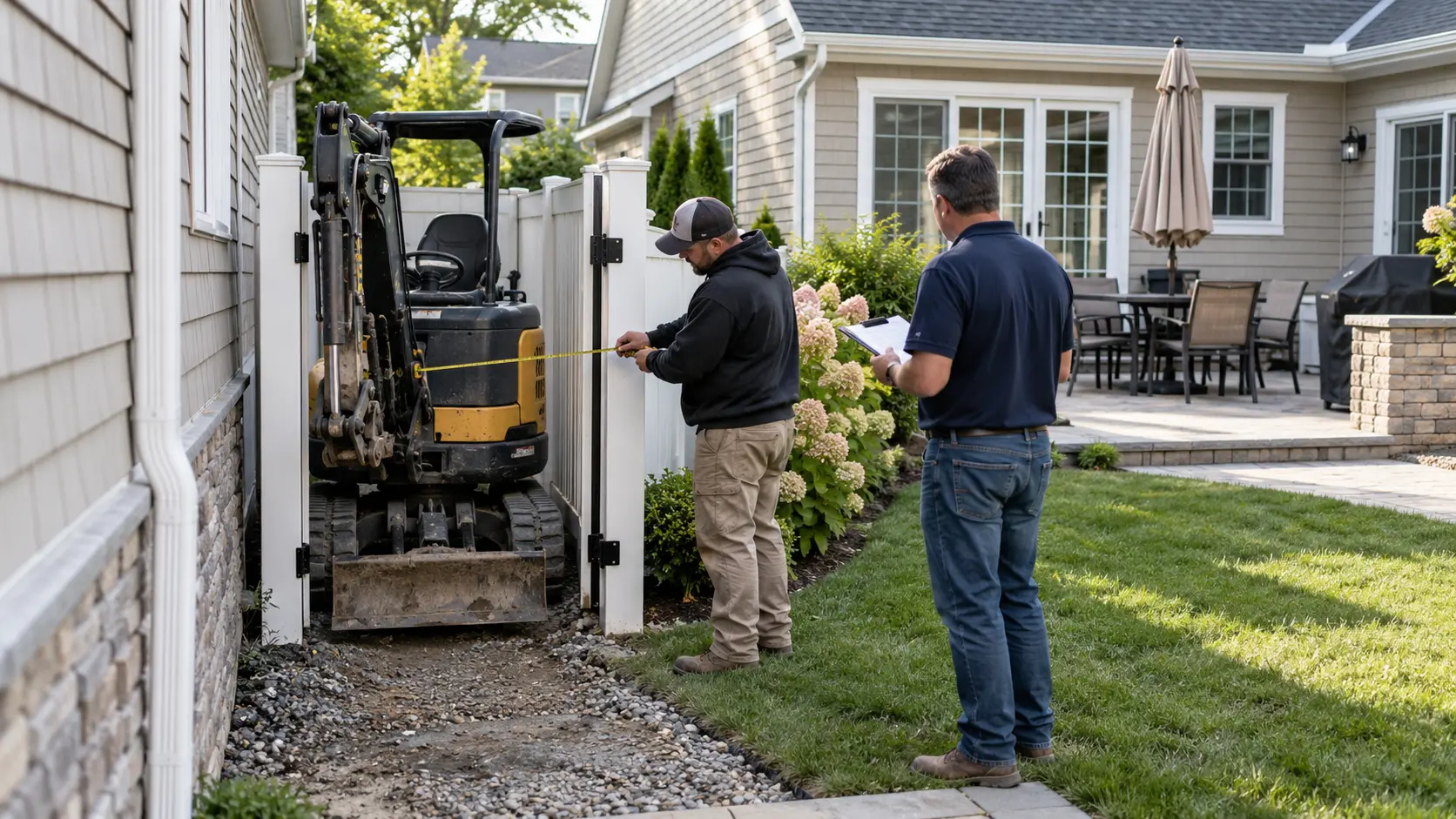
A large excavator can move soil quickly, but it requires significantly more clearance than compact excavation equipment. On properties where side-yard access is narrow, a builder may need to use smaller machines or approach the excavation differently. This is why access should be evaluated before the final pool layout is approved.
A builder needs to consider not only whether a machine can fit through an opening, but also whether it can safely travel between the street and the excavation area.
Can You Build a Pool With a Narrow Side Yard?
In many cases, yes. Long Island properties vary considerably in size and layout, and not every backyard has a wide, open route from the driveway. Compact equipment can often make construction possible where a full-size excavator cannot fit. Smaller machines may be able to travel through narrower access points while still handling much of the excavation work. The tradeoff is usually efficiency.
Smaller equipment may require more trips to remove soil and move materials. Excavation may take longer, and additional labor may be necessary. A narrow access route does not automatically rule out an inground pool, but it is something that should be identified during the planning stage rather than after construction begins.
What Can Restrict Access to the Backyard?
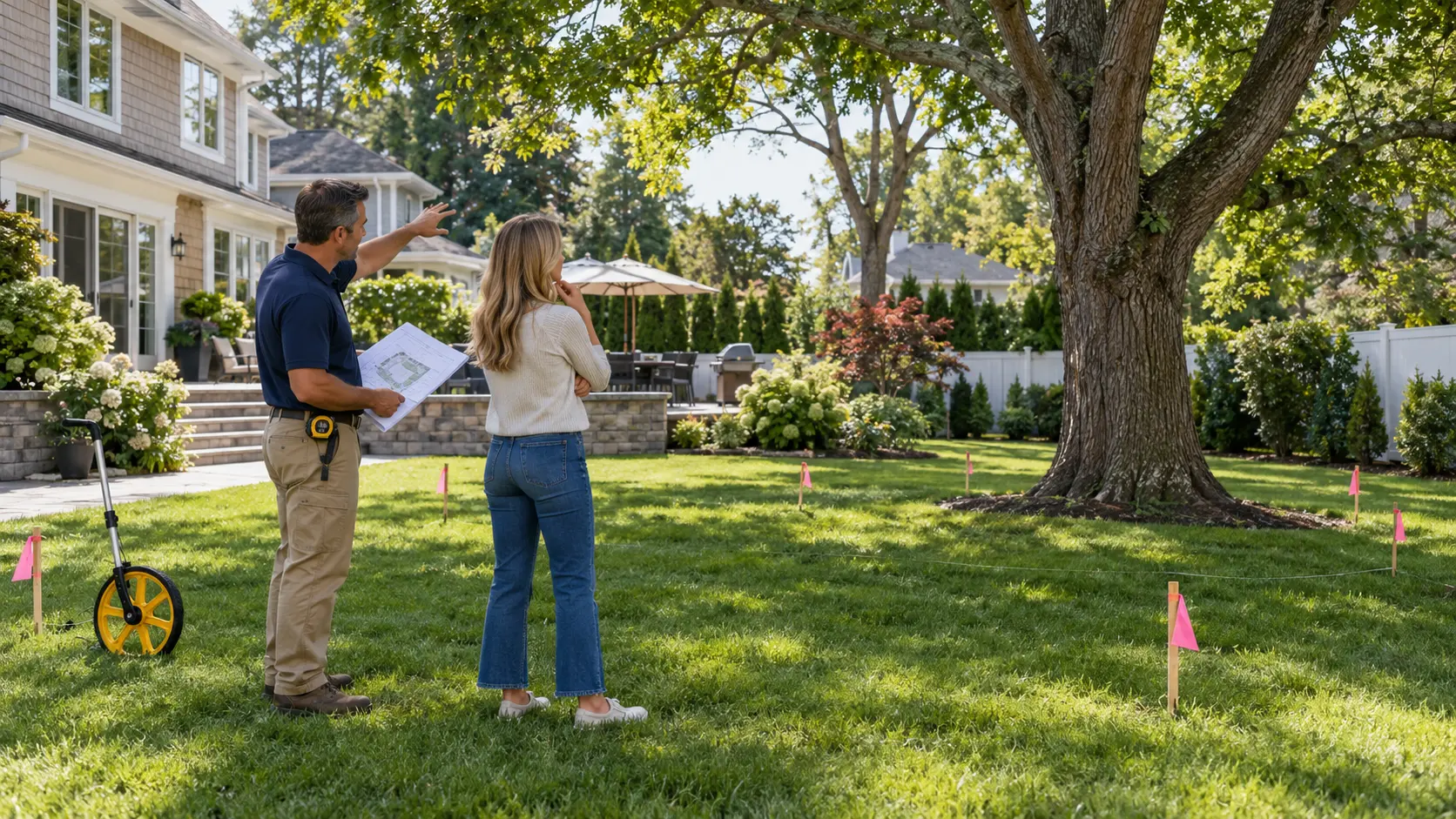
The width of the side yard is only one part of the equation. Pool builders also need to look at obstacles along the entire route to the construction area.
These can include:
- Gates that are too narrow for construction equipment
- Fencing that blocks the most practical access route
- Air-conditioning equipment located along the side of the house
- Utility meters or other mechanical equipment
- Retaining walls
- Steps or significant changes in grade
- Sheds or other permanent structures
- Tight turns between buildings
- Patios, walkways or finished surfaces that need protection
The narrowest point along the route usually determines what equipment can be used. A side yard might appear wide enough near the street but become much tighter closer to the backyard.
Does a Fence Have to Come Down During Pool Construction?
Sometimes. If an existing gate does not provide enough clearance, a section of fencing may need to be temporarily removed to provide construction access. That does not necessarily mean removing an entire fence. In many cases, only the portion needed to create a suitable opening has to be taken down. The fence can then be restored once heavy construction equipment no longer needs access to the yard.
This is one reason homeowners should discuss fencing early in the planning process. Knowing what needs to be removed and replaced helps avoid surprises once excavation is scheduled.
What Happens If Large Excavation Equipment Cannot Reach the Backyard?
A pool builder may have several options depending on the property. One is to use smaller excavation equipment. Another is to adjust how soil is moved out of the yard. Instead of loading large quantities directly into a truck, smaller machines may need to move material in stages.
The builder may also establish a temporary construction route designed specifically for the equipment that will be used. What matters most is identifying the limitation ahead of time. Trying to solve a major access problem after excavation has been scheduled can create unnecessary delays.
Why Access Matters for Soil Removal Too
Digging the pool is only part of excavation. A large amount of material comes out of the ground during construction, and that soil has to go somewhere. Some material may be reused for grading, depending on the project. Excess soil generally has to be transported out of the backyard and removed from the property.
On a property with wide access, equipment can move between the excavation and waiting trucks relatively efficiently. With limited access, soil removal may require smaller machines and more trips. This does not necessarily make the project impractical, but it can affect the amount of time and labor involved.
Can Limited Access Affect Pool Construction Costs?
It can. The pool itself may be exactly the same, but the method required to build it can be different. If access requires smaller equipment, temporary fence removal, additional labor or more time moving excavated material, those factors can affect project costs. The important thing is to identify them before construction begins.
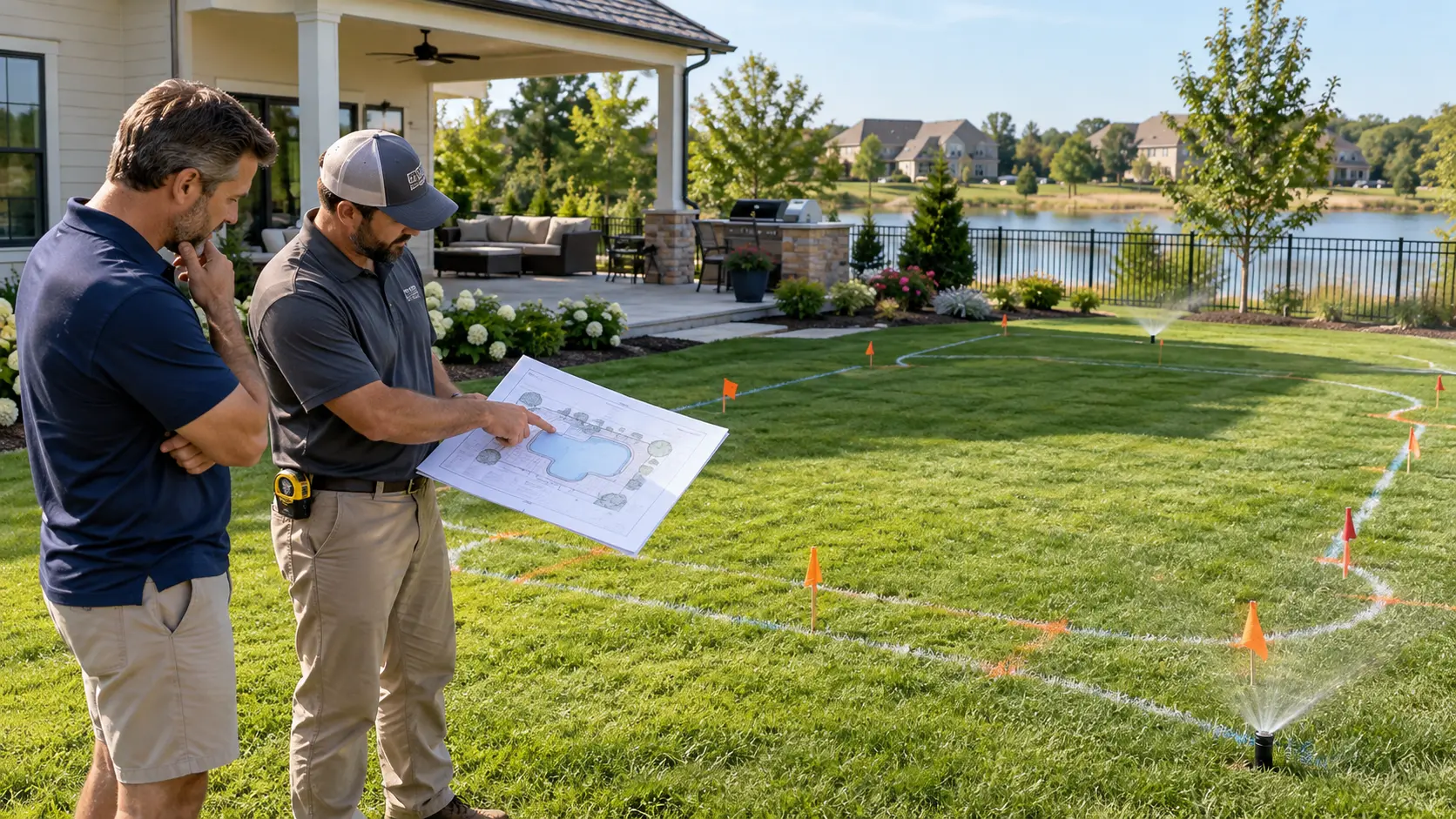
A site evaluation gives the pool builder an opportunity to understand the property and plan the equipment and construction sequence accordingly. That is much better than assuming standard access is available and discovering otherwise once excavation is about to begin.
Should Backyard Access Influence Where the Pool Goes?
Sometimes, but access should not be the only factor determining pool placement. The pool still needs to make sense for the property, available yard space, required setbacks, patio layout and how the homeowner intends to use the backyard. However, construction access is part of that planning process.
If two potential pool locations work equally well from a design standpoint, easier construction access may make one option more practical. This is another reason pool design and construction planning should happen together.
Plan the Construction Route Before the Pool Is Dug
Limited backyard access is common enough that it should be evaluated as part of normal pool planning. A narrow side yard or small gate does not automatically prevent a homeowner from building an inground pool. It may simply mean the builder needs to use different equipment or plan the construction process differently.
Before excavation begins, the builder should know:
- Where equipment will enter the property
- What the narrowest clearance is
- Whether fencing needs to be temporarily removed
- How excavation equipment will reach the pool area
- How soil will be moved out of the yard
- Whether existing surfaces or structures need protection
At Specht-Tacular Pools, we evaluate the entire property when planning an inground pool project, including how construction equipment and materials will reach the backyard.
If you are considering a new pool, learn more about our pool design and construction services and how we plan projects around the individual conditions of Long Island properties.
Frequently Asked Questions
Sometimes, but the driveway surface, equipment weight and construction route all need to be considered. Protective measures may be recommended if equipment must cross a finished driveway repeatedly during construction.
Potentially. The builder would need to evaluate whether another practical construction route exists and whether the available clearance can accommodate appropriate equipment. The solution depends heavily on the individual property layout.
It can happen on unusually difficult properties, but it should never be assumed. Using neighboring property would require permission from the property owner and careful planning regarding access, restoration and liability. Most projects are planned around access that remains entirely within the homeowner's property.
Heavy equipment can disturb grass and compact soil along the construction route. Builders typically establish a defined access path so the disturbance is concentrated in one area rather than spread throughout the yard. Lawn restoration can then be addressed once major construction is complete.
You can, but a rough homeowner measurement should not replace an on-site evaluation. The builder needs to consider the full route, including gates, turns, equipment clearances, grade changes and other restrictions that may not be obvious from a simple width measurement.