When homeowners picture a new inground pool, they usually think about the pool shape, patio, landscaping and where everything will fit in the yard. Drainage is less visible, but it can have a major impact on how well the finished space works.
A pool changes the way water moves through a backyard. There is new hardscape that cannot absorb rainwater, excavated soil that has been disturbed and, in many cases, changes to the existing grade. If all those elements are planned together from the beginning, rainwater can be directed away from the pool, the house and other areas where it could create problems.
For Long Island homeowners, drainage planning should be part of the overall pool layout rather than something added after the patio is installed.
The Pool Patio Changes How Water Moves Through the Yard
Before construction, much of a backyard may consist of lawn, planting beds or other surfaces that absorb at least some rainfall. Adding a pool patio creates a much larger area of hard surface. Rainwater that lands on the patio has to go somewhere.
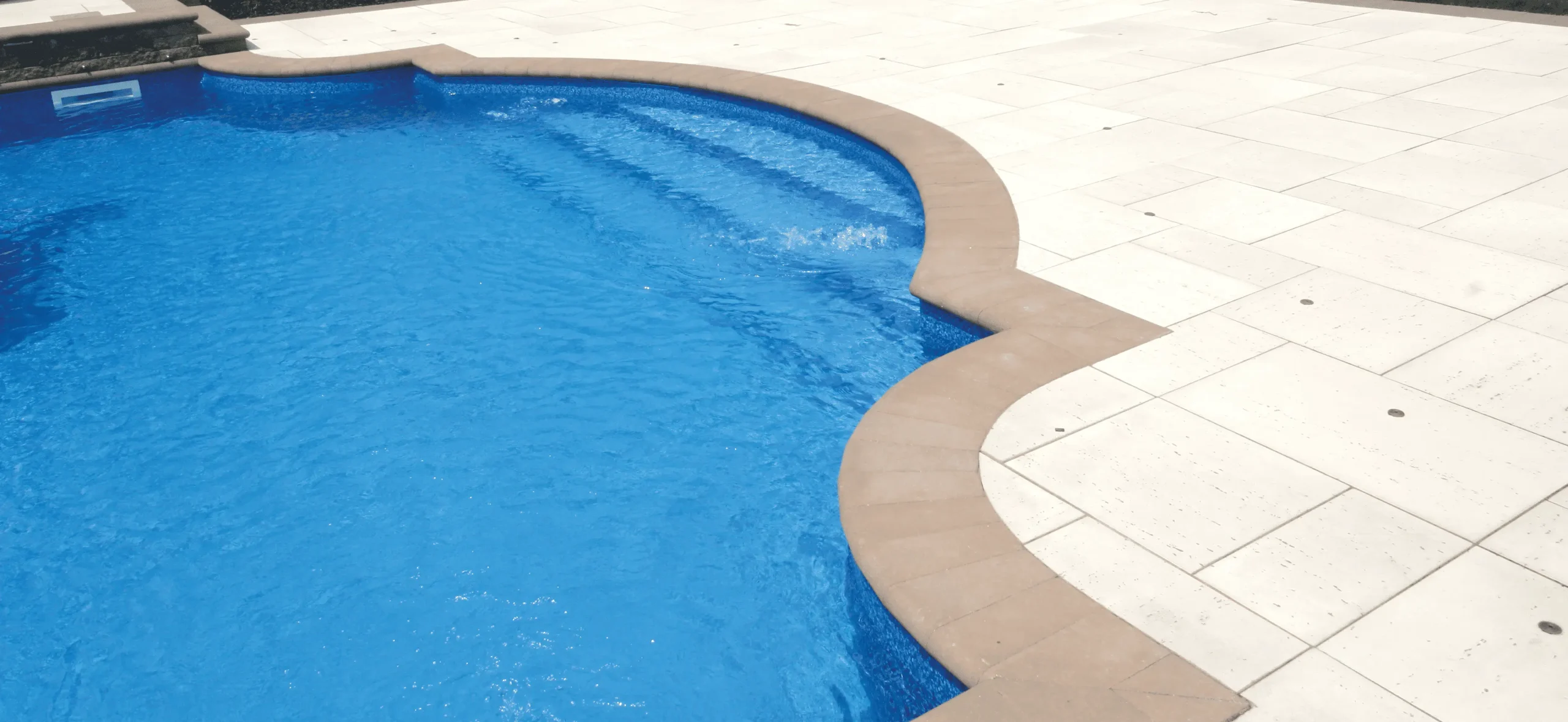
The patio is typically designed with a slight pitch so water moves away from the pool rather than collecting along the edge. From there, the design may direct water toward lawn or landscaping, drains, dry wells or another appropriate drainage area depending on the property.
The right approach depends heavily on the yard. A relatively flat property may need a different solution than a backyard that naturally slopes toward the house or toward neighboring properties.
Drainage Starts With the Existing Grade
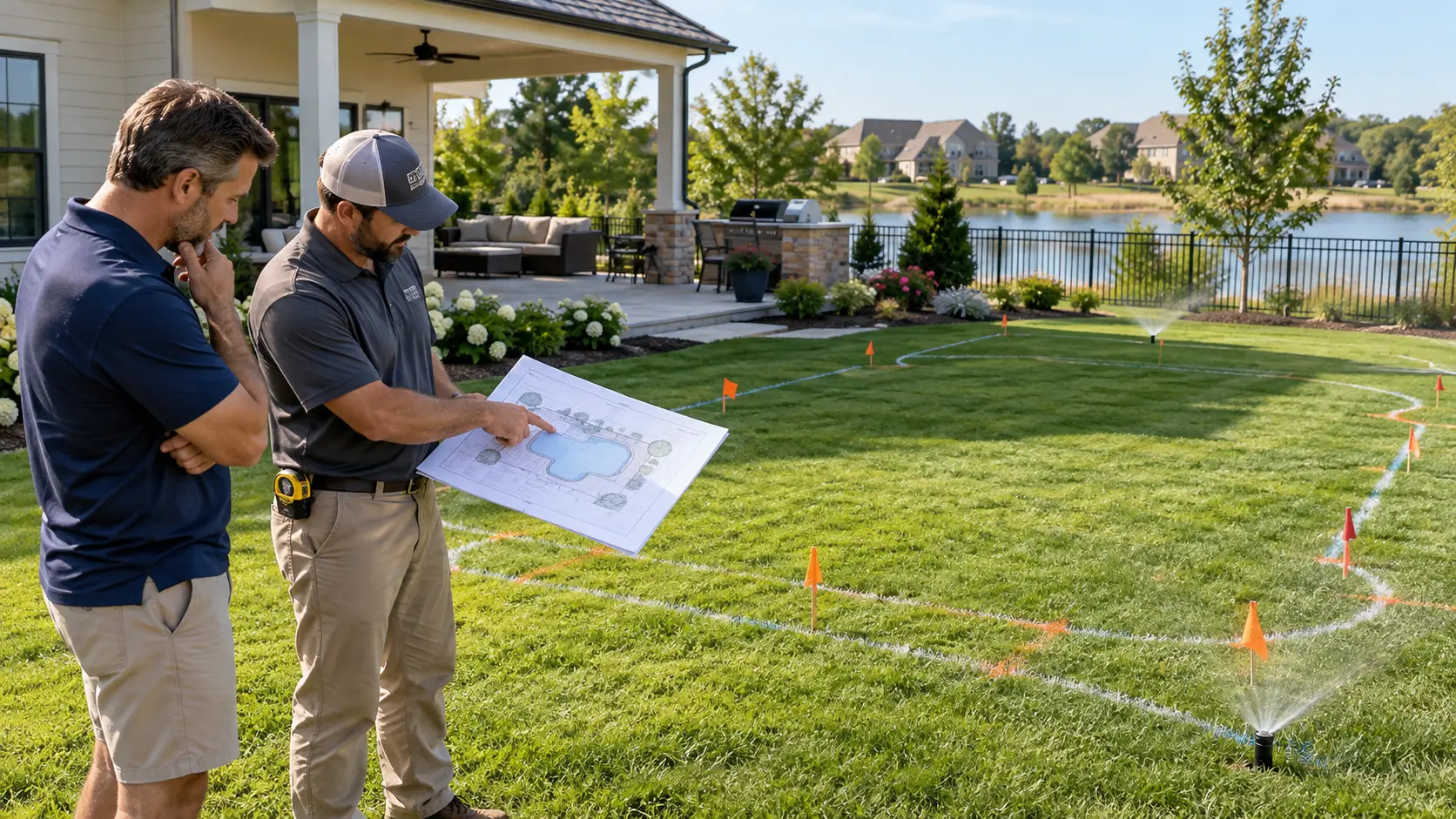
A good pool layout works with the property rather than ignoring it. Before excavation begins, the builder should consider how the yard currently drains during heavy rain. High and low points, existing slopes, the elevation of the house and the proposed patio all influence the finished drainage plan. That becomes especially important when a pool is installed close to the house.
The pool and surrounding patio should not create a new path that sends runoff toward the foundation, basement entrance, window wells or other vulnerable areas. In some yards, the pool project provides an opportunity to improve an existing drainage issue by changing grades or adding drainage where it is needed.
Surface Drains May Be Part of the Patio Design
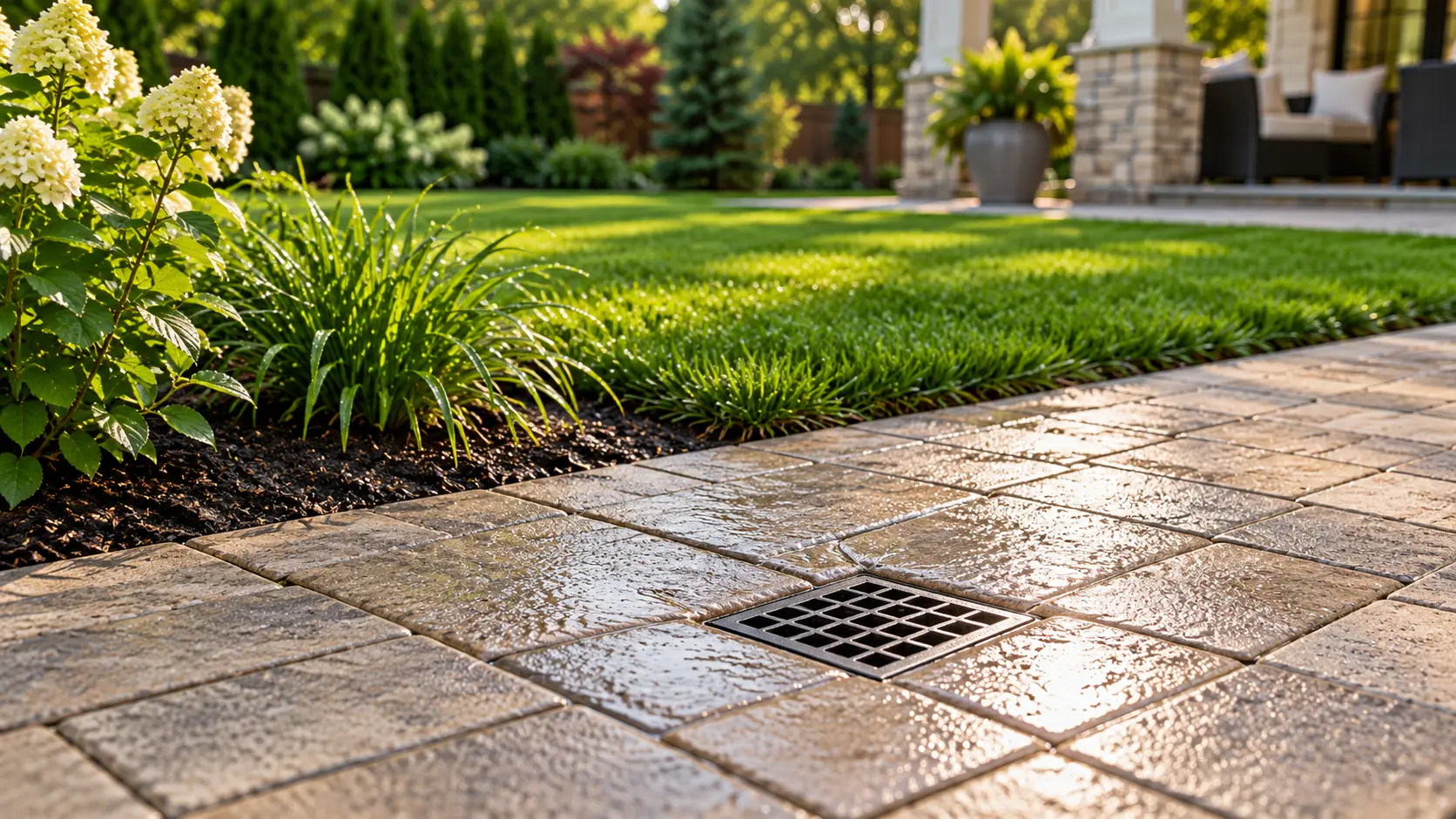
Some properties can manage rainwater primarily through grading and properly pitched hardscape. Others may benefit from drainage built directly into the patio area. Channel drains, trench drains or strategically placed surface drains can collect water before it reaches an area where it could puddle.
These are especially useful near:
- Doors and entrances
- Retaining walls
- Large patio areas
- Changes in elevation
- Low areas where water naturally collects
The important part is not simply installing a drain. The collected water also needs an appropriate place to go.
The Pool Should Not Become the Yard’s Drain
The finished grade should help keep runoff from the surrounding property from flowing into the pool. Aside from bringing dirt and debris into the water, uncontrolled runoff can carry mulch, fertilizer, soil and other materials from the yard. That can make the pool harder to maintain and affect water chemistry.
This is one reason the relationship between the pool elevation, patio elevation and surrounding landscaping matters. Landscape beds can still be placed near a pool, but their grading should complement the drainage plan rather than direct water toward the waterline.
Drainage Matters Beyond the Pool Area
Pool drainage cannot be planned in isolation because water continues moving once it leaves the patio.
A design that keeps the patio dry but sends large amounts of runoff toward another part of the property has simply moved the problem.
The complete plan should consider the house, driveway, fencing, neighboring properties, existing landscaping and any areas that already remain wet after storms.
On some properties, that may mean directing water toward an area where it can naturally disperse. On others, additional drainage infrastructure may be appropriate.
Drainage Should Be Planned Before the Patio Is Installed
Drainage problems are much easier to prevent during construction than to correct after the backyard is finished. Once patio materials, landscaping, fencing and other features are in place, changing elevations or installing drainage can mean removing finished work.
Planning drainage at the same time as the pool allows the builder to coordinate excavation, grading, patio elevations and landscaping before those decisions become difficult to change.
This is also why homeowners should consider the entire backyard when planning an inground pool, rather than treating the pool itself as a separate project.
A Better Pool Design Considers What Happens During a Storm
A beautiful backyard on a sunny day is only part of the design challenge. A well-planned pool area should also work when several inches of rain fall in a short period of time. Water should have predictable places to travel without collecting against the house, washing through planting beds or flowing across the pool patio.
At Specht-Tacular Pools, the layout of the pool, patio and surrounding property can be considered together during the planning process so the finished backyard works as a complete space.
Frequently Asked Questions
Yes. Properly designed planting beds and landscaped areas can help slow and absorb some runoff. Plants, soil and mulch can help manage smaller amounts of water, particularly when landscaping is incorporated into the grading plan. Landscaping should not be expected to handle major drainage problems on its own, however. A low planting bed that collects runoff can become waterlogged or wash mulch onto the patio during heavy storms.
Small puddles can indicate a low spot or an issue with the patio pitch. Pool patios are constructed with subtle slopes that allow water to move without making the surface feel noticeably uneven. If water repeatedly remains in one location long after surrounding areas have dried, the area may not be draining as intended. The cause should be evaluated before repeated standing water becomes a nuisance.
Usually, but it may be more complicated than installing it during construction. Existing pool areas can sometimes be improved with channel drains, catch basins, changes to landscaping or other drainage solutions. The available options depend on patio construction, elevations and where the collected water can be directed. In some cases, portions of the existing patio may need to be disturbed.
Yes. Downspouts can release a surprising amount of water during a heavy storm. If roof runoff currently enters the backyard, the location of gutters and downspouts should be considered when determining the pool and patio layout. A downspout that was harmless when it emptied onto lawn may cause problems after that same area is converted to hardscape.
It can if existing drainage patterns are not accounted for during design. If part of the yard already stays wet after rainfall, adding excavation and hardscape can alter how water reaches that area. Identifying existing drainage problems before construction allows them to be considered as part of the new backyard design instead of discovering them after the project is complete.