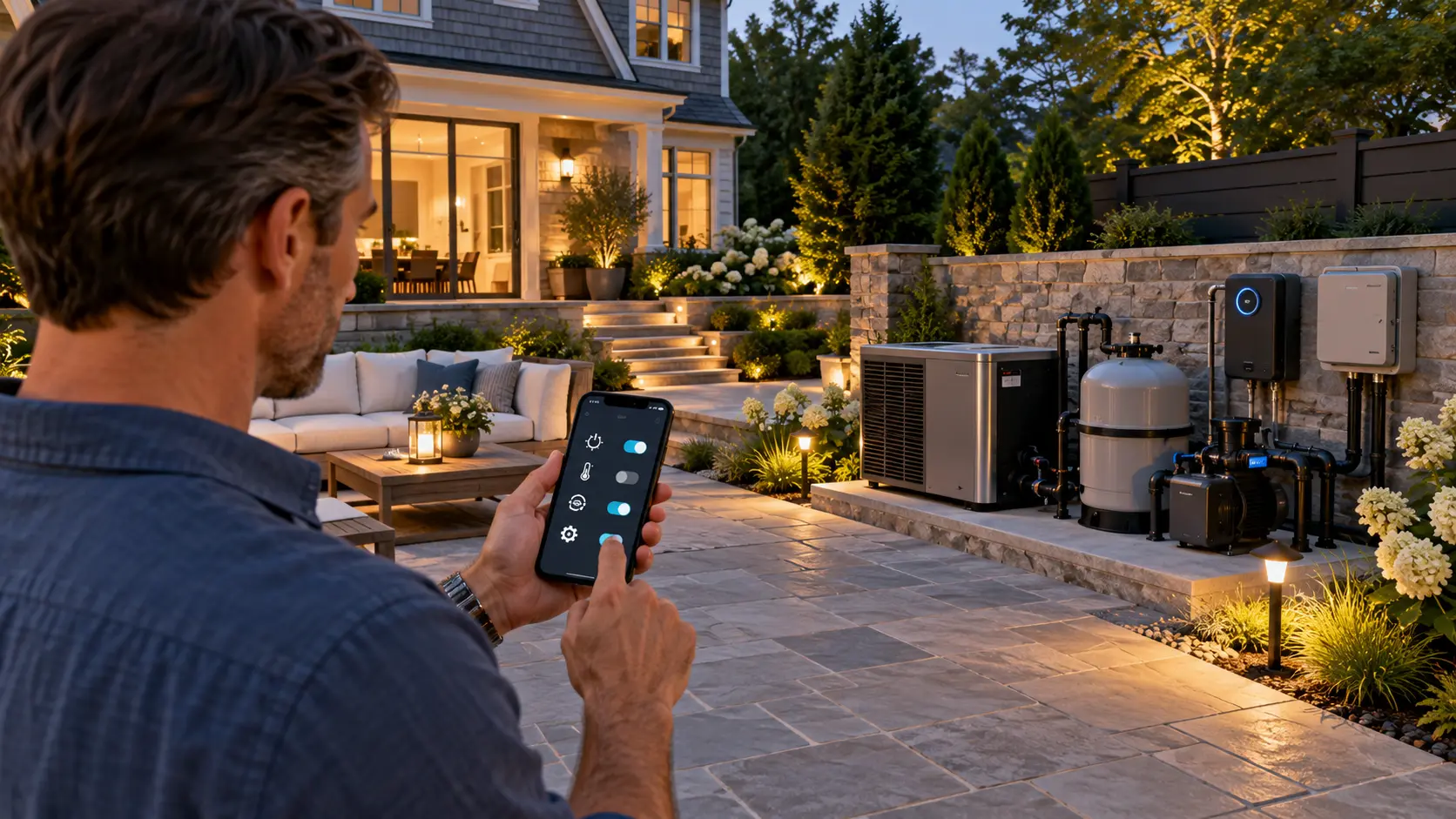
A few years ago, controlling an inground pool often meant walking out to the equipment, turning switches, adjusting timers, and checking settings manually. Today, much of that can be handled from a phone.
Pool automation and smart pool controls can put heating, filtration, lighting, water features, and other equipment into one system. Instead of thinking about each component separately, homeowners can schedule how the pool operates and make adjustments without going back and forth to the equipment pad.
For Long Island homeowners building a new inground pool, that raises an important question: Is pool automation worth adding during construction? For many homeowners, it can be, especially when the pool includes a heater, lighting, a spillover hot tub, water features, or other equipment that will be used differently throughout the day. The key is deciding what is genuinely useful to automate rather than adding technology simply because it is available.
What Is Pool Automation?
Pool automation connects compatible pool equipment to a central control system. Depending on the system and equipment selected, homeowners can use an app, control panel, or other connected device to change settings and create schedules. The benefit is not simply being able to turn something on from your phone.
Good automation reduces the number of individual controls you have to think about. Instead of separately managing a pump timer, heater, lights, spa settings, and water features, those functions may be accessible through one interface. That can make a custom pool easier to use because the equipment works more like one system.
What Pool Features Can You Control From Your Phone?
The exact capabilities depend on the automation system and the pool equipment connected to it. Modern systems may allow homeowners to control:
- Pool and spa pumps and operating schedules
- Heater settings and water temperature
- Pool and spa modes
- Pool lighting, including compatible color-changing lights
- Waterfalls, spillovers, jets, and other water features
- Automatic pool cleaners
- Certain sanitization or water chemistry equipment
- Auxiliary equipment such as compatible landscape lighting
Major pool-equipment manufacturers currently offer app-based systems with many of these capabilities. That does not mean every pool needs every feature connected. A better question is which controls would make your pool easier to use.
Why Smart Pool Controls Can Be Especially Useful on Long Island
Long Island has a defined swimming season, and homeowners often want to make the most of the comfortable days on either side of peak summer. That is where convenient control of features like heating can become particularly useful.
Imagine deciding on a cool spring morning that you want to use the pool later that afternoon. Instead of remembering to walk outside and adjust the equipment, a connected system may let you check or change the heater settings remotely. The same applies when you are entertaining. Lighting can be scheduled for the evening. A waterfall can be turned on when guests arrive. A spillover hot tub can be prepared without repeatedly visiting the equipment controls. None of these features is essential to owning a pool. They simply remove some of the small steps that can get in the way of enjoying it.
Is Pool Automation Worth Adding During Construction?
If you are already building a new inground pool, the design stage is a particularly good time to consider automation. A new pool involves planning the plumbing, electrical service, equipment location, lighting, heater, pumps, and any water or spa features. Thinking about automation at the same time allows the components to be planned as part of the complete system.
This is one of the reasons we believe pool design and construction should begin with how the homeowner expects to use the finished backyard. Someone building a straightforward pool with few additional features may decide that extensive automation is unnecessary. Someone planning a heated pool with lighting, a spillover hot tub, waterfalls, or multiple backyard features may get much more value from centralized controls. There is no reason to automate something you rarely expect to use.
What Should Be Automated When Building a New Inground Pool?
Start with the equipment you will interact with most often.
Pump and filtration scheduling is a logical starting point. Instead of relying on separate manual timers, compatible equipment can operate according to programmed schedules.
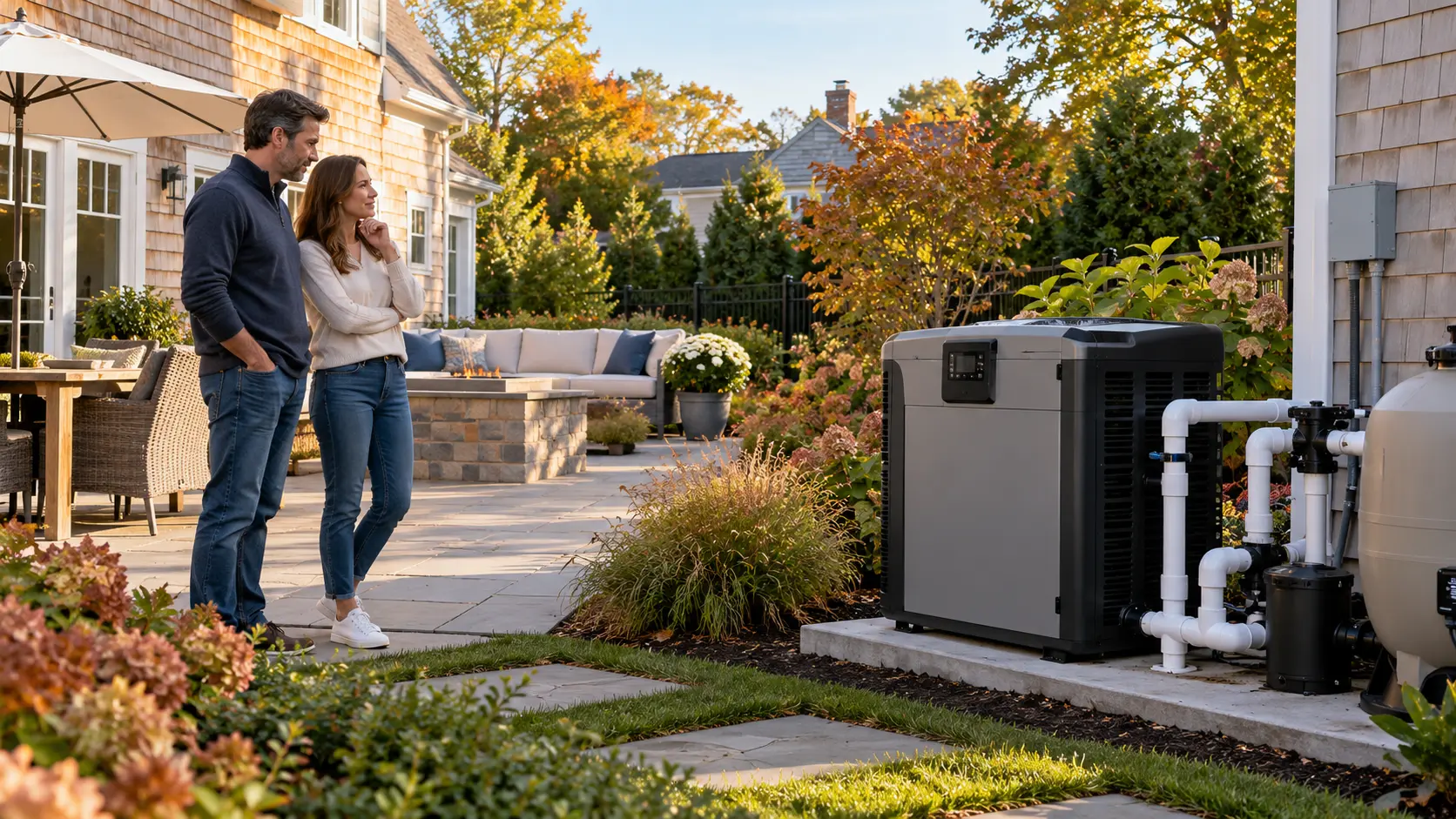
Heating is another feature many Long Island homeowners may want connected. Being able to check and adjust temperature without going to the equipment pad can make a heater much more convenient to use.
Pool lighting works particularly well with automation. Homeowners who use their backyard after sunset can schedule lights or change compatible lighting settings without manually operating switches.
If the design includes a spillover hot tub, automation becomes even more useful because there may be temperature, valve, pump, and spa-mode settings involved.
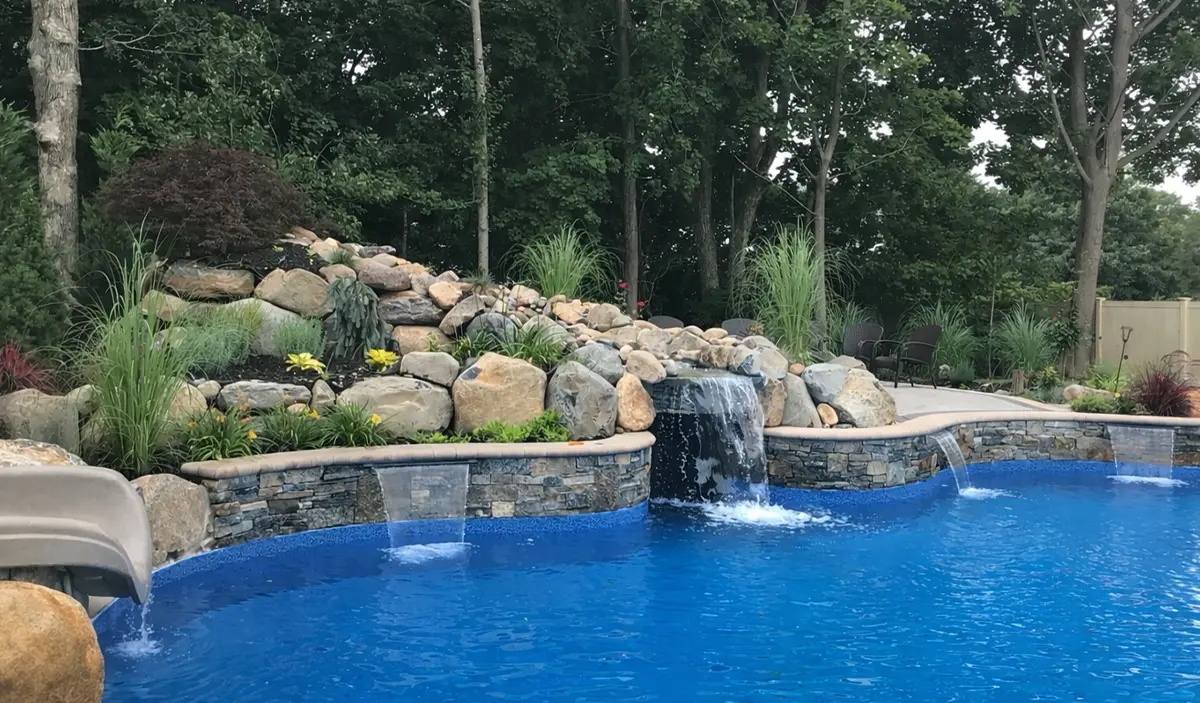
Waterfalls and other water features are also good candidates. You may enjoy a waterfall while entertaining but not want it operating continuously. Smart controls can make that kind of occasional use easier.
The goal should be simplicity. The features you use frequently are generally the ones that deserve the most attention.
Pool Automation Can Make a More Complex Backyard Feel Simpler
There is an interesting tradeoff with custom pool design. The more features a backyard includes, the more there is to manage. A heater adds another setting. Lighting adds controls. A spillover hot tub adds additional equipment. Waterfalls and other features may involve pumps or valves. Without thoughtful planning, a beautiful backyard can end up with multiple switches, timers, controllers, and instructions. Automation can bring many of those functions together.
That is especially valuable when the goal is to build a backyard that feels relaxing. Homeowners generally do not want to feel as though they are operating a mechanical system every time they step outside. The technology should disappear into the experience.
Does Pool Automation Save Energy?
Automation should not be treated as a guarantee of lower energy bills. What it can provide is better control over when compatible equipment operates. Scheduling can help prevent lights, water features, pumps, or other equipment from operating simply because someone forgot to turn them off. Some systems also provide equipment information that makes it easier to see what is running.
Actual energy use still depends on the equipment, settings, pool size, weather, desired temperature, operating schedule, and how the pool is used. For most homeowners, convenience and control are better reasons to consider automation than expecting a specific amount of energy savings.
When Might Smart Pool Controls Not Be Worth It?
Not every inground pool needs an elaborate automation system. If you are building a simple pool without a spa, water features, extensive lighting, or multiple pieces of equipment you expect to adjust frequently, your needs may be fairly basic. Budget matters too.
If the choice is between technology you may rarely use and a feature that will change how your family enjoys the pool every day, the everyday feature may deserve priority. This is why automation should be discussed as part of the overall pool design rather than treated as an automatic upgrade.
Think About Future Pool Features Too
Even if you do not plan to automate everything immediately, it is worth talking about what you might add in the future. Perhaps you want landscape lighting later. Maybe a water feature is part of a second phase. You could eventually want additional outdoor living features around the pool.
Automation systems vary in their capacity and compatibility. Thinking beyond the first summer can help you avoid designing a control system that already feels limiting when the backyard evolves. This is another reason to discuss equipment and features early in the pool design and construction process. The backyard you want today matters, but so does the backyard you may want several years from now.
A Smart Pool Should Still Start With Smart Design
Pool automation can make an inground pool easier to manage, but it cannot make up for poor pool design. The right pool still needs to fit the property. The patio needs enough room. Traffic patterns need to make sense. Landscaping should provide the right balance of privacy and openness. Lighting, heating, water features, and outdoor living spaces should support the way the family wants to use the backyard. Automation comes after those decisions. When everything is planned together, smart controls can make a well-designed pool easier to enjoy.
For Long Island homeowners considering a new custom inground pool, Specht-Tacular Pools can help plan the pool, equipment, features, patio, landscaping, and surrounding backyard as one complete project. Because the smartest backyard is not the one with the most technology. It is the one that is easiest to enjoy.
Frequently Asked Questions
Losing your internet connection generally affects remote app access rather than making the pool unusable. Most systems provide another way to operate equipment locally, although exact capabilities vary by manufacturer and system. This is worth discussing when selecting the controls so you understand how the equipment operates during an internet outage.
A reliable connection near the equipment can be important for systems that depend on Wi-Fi for remote access. Equipment pads may be some distance from the house, so Wi-Fi coverage should be considered before installation rather than discovered after the system is set up.
The equipment and controls should be planned together. Compatibility can vary between pumps, heaters, lighting, sanitization systems, and automation platforms. Making those decisions as part of one equipment plan can help avoid unnecessary limitations.
It can be worthwhile if you expect the backyard to evolve. A homeowner who may eventually add a spa feature, additional lighting, water features, or other equipment should mention those plans during design so the appropriate system capacity can be considered.
Some automation systems can control compatible auxiliary equipment in addition to the core pool equipment. What can be integrated depends on the selected control system, wiring, and equipment, so outdoor lighting and future backyard features should be discussed during the planning stage.