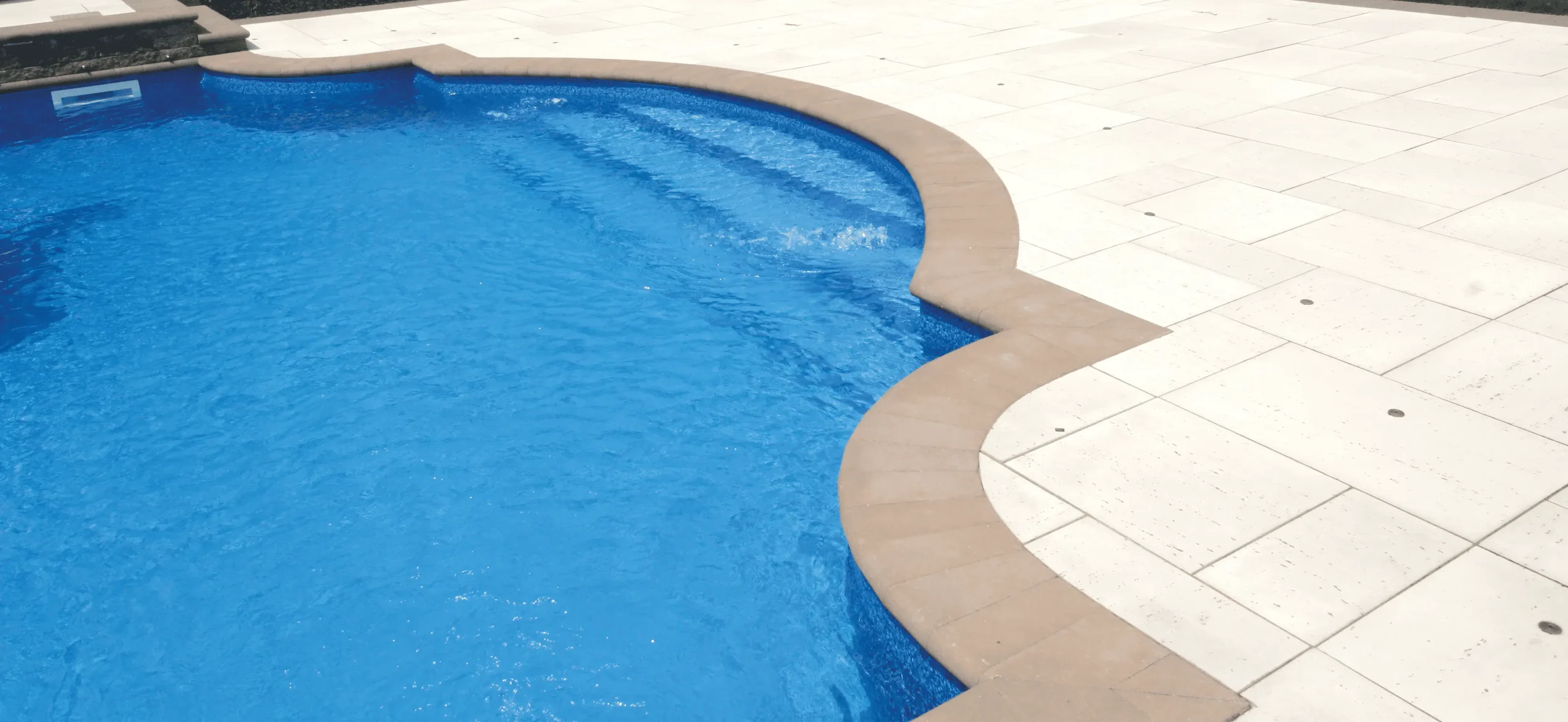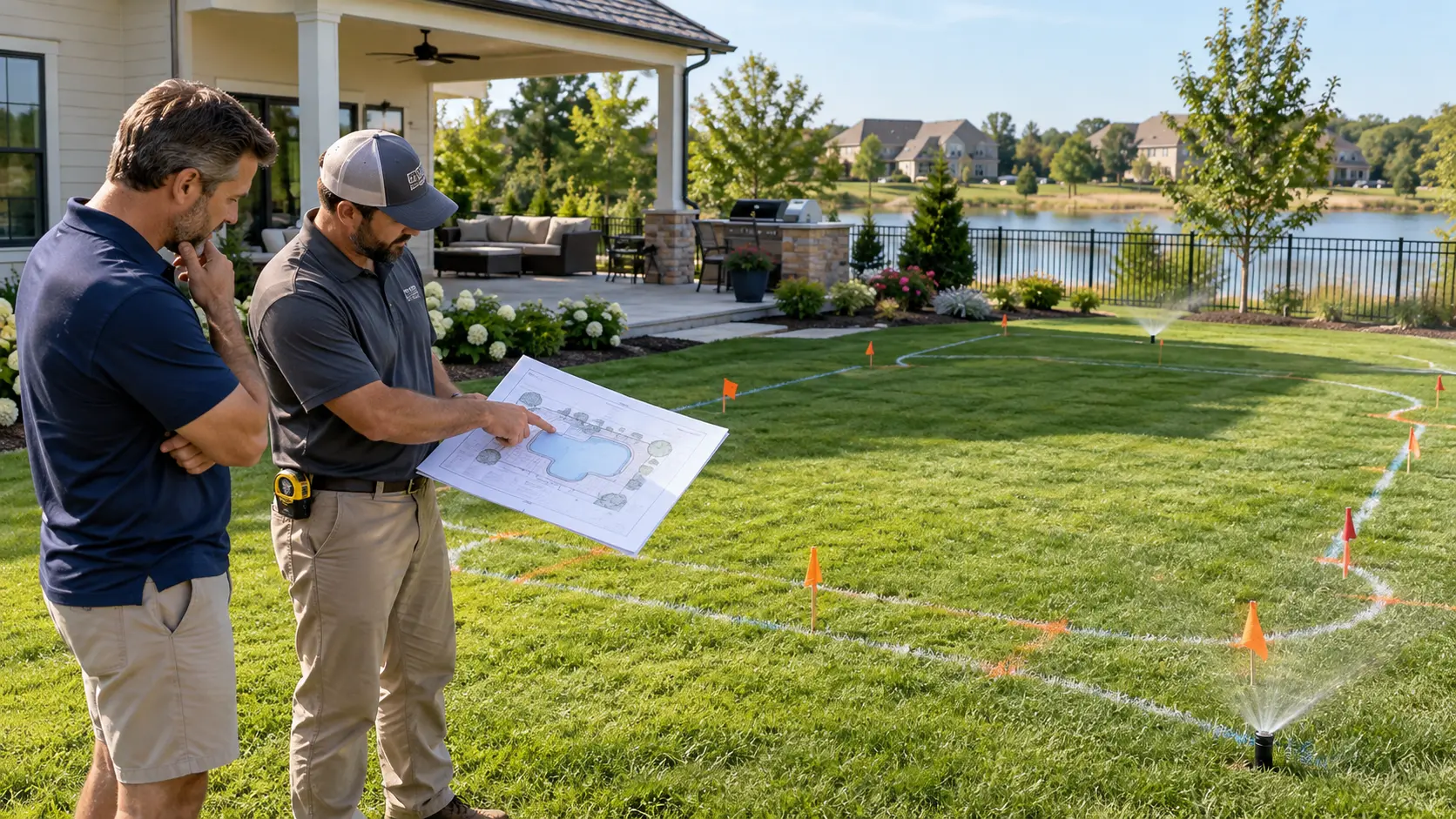
If you already have an underground sprinkler system and are planning an inground pool, there is a good chance at least part of that irrigation system will need to change. In most cases, sprinkler lines, heads or entire zones located within the pool construction area are disconnected, capped, removed or rerouted. Once the pool, patio and new landscaping are in place, the irrigation system can be adjusted to fit the new backyard layout. That does not necessarily mean your entire sprinkler system has to be replaced.
What needs to change depends on where the pool will sit, where the existing irrigation lines run, how much patio is being added, how equipment will enter the yard and what the finished landscaping will look like. For Long Island homeowners planning a pool, the important thing is to think about irrigation before excavation starts rather than discovering the issue after the backyard has already been dug up.
Why Does an Inground Pool Affect a Sprinkler System?
Most of an irrigation system is invisible. You may know where the sprinkler heads are, but underground lines connect those heads to valves and other parts of the system. Some of those lines may run directly through the area where your new pool will be excavated. The pool itself is only part of the construction footprint.
A new inground pool project may also involve:
- Excavation around the pool
- Access for construction equipment
- New patio or decking
- Changes in grading
- Drainage improvements
- New planting beds
- Walkways
- Pool equipment
- Fencing
- Lawn restoration
Any of these can affect an existing irrigation layout. This is why looking only at the outline of the swimming pool does not tell the whole story.
Will the Pool Excavation Cut Through Sprinkler Lines?
It can. If irrigation lines run through the area being excavated for the pool, those lines cannot remain where they are. Lines may need to be disconnected or capped before excavation begins and rerouted later. But excavation is not the only concern. Construction equipment may have to travel across other portions of the property. Patio excavation and grading can extend beyond the edge of the pool. New walkways, planting beds or drainage work can also cross the existing sprinkler layout.
Even sprinkler heads well outside the pool itself may eventually need to move because the finished yard will be different from the yard that existed before construction. The goal should not necessarily be to preserve every piece of the old sprinkler layout. The goal is to end up with an irrigation system that makes sense for the new backyard.
Should You Locate Your Sprinkler System Before Pool Construction Starts?
Yes, especially if you have information about the existing system. Before work begins, it can be useful to identify:
- Sprinkler heads
- Known irrigation lines
- Valve boxes
- Irrigation zones
- The controller
- Areas served by each zone
If you have an irrigation plan from when the system was installed, keep it available during pool planning. Many homeowners do not have one. That is not unusual. Even without a complete map, knowing how the existing zones operate can help determine which parts of the system are likely to be affected.
One useful step is to run the sprinkler system before construction and make sure each zone is working. That gives you a better understanding of the system before portions of the yard become a construction area.
Do You Need to Replace the Entire Sprinkler System?
Usually not simply because you are installing a pool. If the front yard and unaffected portions of the property have functioning irrigation, there may be no reason to rebuild those areas. Instead, the sections serving the backyard may be modified.
For example, imagine that one sprinkler zone originally waters a large section of lawn where the pool and patio will be built. Once the project is complete, much of that lawn no longer exists. Recreating the exact same irrigation layout would make little sense. The better approach may be to redesign that portion of the system around the lawn and landscaping that remain. That could mean fewer sprinkler heads in one area, new heads somewhere else or a different way of watering new planting beds.
What Happens to Sprinkler Zones During Pool Construction?
This is where pool construction can become more complicated than simply cutting one pipe. A sprinkler system is divided into zones so different sections of the property can be watered separately. If a pool removes part of the area served by a zone, the remainder of that zone may still need irrigation.
For example, one zone might originally water the entire rear lawn. After construction:
- Part of that lawn is now the pool.
- Another section is patio.
- A smaller section of grass remains.
- New planting beds have been added around the patio.
The original zone was designed for a completely different backyard. Rather than simply reconnecting everything, the irrigation layout may need to be reconsidered based on the finished design.
What Happens to Sprinklers Under the New Pool Patio?
This is something that should be addressed before the patio is completed. Sprinkler heads should not remain where they will eventually be covered by patio, and irrigation lines beneath future hardscape can create unnecessary complications if they need repair later. The finished backyard plan should therefore be considered before patio construction is complete.
If a line needs to be rerouted, doing so while the property is already under construction is generally much easier than discovering afterward that irrigation serving another portion of the yard runs beneath a finished outdoor living area. It is another reason the pool and surrounding backyard should be treated as one project rather than separate pieces.
Your Sprinklers May Need to Move Even If They Are Not in the Pool Area
This surprises some homeowners. Suppose an existing sprinkler head sits just outside the new patio. Technically, the pool never touched it. But the head was originally positioned to water lawn that no longer exists. If it stays in the same position, it might now spray:
- The pool patio
- Outdoor furniture
- A walkway
- The pool itself
- New landscape beds that require different watering
So a sprinkler head can survive construction perfectly and still be in the wrong place when construction is finished. The final irrigation pattern matters just as much as whether the original components survived excavation.
New Landscaping Can Change Your Irrigation Needs
An inground pool often changes more than the amount of lawn in the backyard. Many homeowners use the project as an opportunity to rethink the entire space. That may include privacy plantings, ornamental grasses, shrubs, trees or new planting beds around the pool and patio. Those plants may have very different watering requirements than the lawn they replaced. This is where coordinating irrigation with landscape design becomes valuable. Instead of asking, “How do we put the old sprinklers back?” the better question is: “What does this new backyard need?” That approach can create a more practical system for the property you will have after construction.
The New Patio Changes Where Water Should Go
A larger pool patio means less grass to irrigate, but it also creates new edges where lawn, landscaping and hardscape meet. Sprinkler placement around these areas needs to be considered carefully. You do not want to finish a beautiful new backyard only to discover that a sprinkler sprays across your patio every morning.
The position and direction of sprinkler heads may need to change so irrigation reaches lawn and planting areas without unnecessarily watering hard surfaces. Planning this around the finished design helps the backyard function better as a whole.
Grading Can Affect More Than Sprinkler Placement
Pool construction often includes changes to grading. The property needs to handle water properly around the pool, patio, house and surrounding yard. When elevations change, irrigation components that were positioned according to the old grade may also need attention.
A sprinkler head that was correctly installed at the previous lawn height could wind up too high, too low or poorly positioned after soil and lawn areas are restored.
This is why the final irrigation check should happen in relation to the finished grade rather than simply reconnecting the system as quickly as possible.
When Should the Sprinkler System Be Reconfigured?
There are really two stages to think about.
Before and During Construction
Affected irrigation may need to be identified, disconnected or capped so pool construction can proceed. The objective at this stage is primarily to keep the construction area from creating problems with the existing system and, when practical, preserve irrigation to unaffected parts of the property.
Near the End of the Backyard Project
The final irrigation layout makes more sense once the new shape of the backyard is established. At this point, it is easier to see:
- Where lawn remains
- Where planting beds will be located
- Where the patio ends
- What areas need irrigation
- Where sprinkler heads can operate without spraying hardscape
- How the finished grade affects placement
This is when affected areas of the system can be configured around the new backyard rather than the old one.
Don’t Forget About the Equipment Access Route
Homeowners naturally focus on the spot where the pool will be located. But a pool cannot be built without getting workers, materials and equipment into the backyard. That access route matters. If construction equipment has to travel across a section of lawn containing irrigation components, those parts of the system may also be vulnerable during construction. This should be part of the early discussion about the property.
A well-planned custom inground pool takes into account not only where the finished pool will sit, but how the project can be constructed on the individual property.
What If You Want to Keep Mature Landscaping?
Existing landscaping adds another layer to the planning. A sprinkler system may currently support established trees, shrubs or garden beds outside the direct construction zone. If parts of the irrigation system need to be temporarily disconnected, it is worth identifying which existing plantings depend on those zones.
That allows watering needs to be considered during construction instead of noticing stressed plants several weeks into the project. The same thinking applies after construction. Mature landscaping that remains may need to share the backyard with completely new planting areas, so the finished irrigation layout should account for both.
Should Irrigation Be Part of the Pool Design Conversation?
It should at least be considered. You do not necessarily need to design every sprinkler head while choosing the exact shape of your pool. But the broader landscape plan matters. Where will grass remain? Where will landscape beds go? How large will the patio be? Will there be new privacy landscaping? Are you changing the grade? Will walkways or outdoor living areas occupy parts of the current lawn?
These decisions determine what the backyard will eventually need from its irrigation system. That is one advantage of planning a pool as part of a complete backyard transformation.
At Specht-Tacular Pools, we design and build pools along with patios, landscaping and outdoor living spaces. Our Pool Design & Construction process looks beyond the water itself so the finished backyard feels connected to the home and the way your family will use the property.
What Should You Ask Before Pool Construction Begins?
If you already have an irrigation system, bring it up during the planning process instead of assuming it will remain untouched.
Useful questions include:
Where is the pool likely to interfere with the existing sprinkler system?
Will the patio or other hardscape cover existing irrigation areas?
What part of the system may need to be disconnected before excavation?
Can unaffected portions of the irrigation system continue operating during construction?
When should the final sprinkler modifications be made?
How will the new lawn and landscaping affect the irrigation layout?
The answers will depend on the property and the scope of the project. What matters is that irrigation is part of the conversation early enough to plan for it.
Think About the Backyard You Will Have, Not the Backyard You Have Now
This is the biggest point homeowners should understand. Your current sprinkler system was designed around your current backyard. Once you install an inground pool, that backyard may have a completely different combination of lawn, patio, planting beds, walkways and outdoor living areas. Trying to preserve the original irrigation layout exactly as it was can miss the larger opportunity. Instead, use the pool project as a chance to make sure the irrigation system works with the new design.
If you’re planning a pool, this same principle applies to many other backyard decisions. Features that seem easy to postpone can become considerably more complicated once excavation, patios and landscaping are complete. Our guide to What Pool Features Should You Install During Construction Instead of Adding Later? explains several other decisions worth making before construction begins.
Plan the Entire Backyard Before the Dig
A sprinkler system may not be the first thing you think about when planning an inground pool, but it is exactly the kind of detail that can make a backyard project easier when addressed early. Some irrigation lines may need to be removed. Others may be rerouted. Sprinkler heads may need to move. Existing zones may need to be adjusted for a backyard that now contains more patio, less lawn and different landscaping. None of that should be surprising when it is included in the plan.
Specht-Tacular Pools has been creating custom pools and outdoor living spaces on Long Island for more than 27 years. By considering the pool, patio, grading and landscape design together, we can help homeowners plan a backyard that looks intentional and functions as one complete space.
If you’re considering a new inground pool on Long Island, schedule a consultation and start planning the entire backyard before construction begins.
Frequently Asked Questions
Sometimes. Unaffected sprinkler zones may still be usable while the backyard construction area is disconnected, depending on how the existing system is configured. This is worth determining before excavation begins, particularly if you have lawn or established landscaping outside the construction area that will still need regular watering. If one irrigation line or valve serves both affected and unaffected parts of the property, modifications may be necessary before portions of the system can continue operating normally.
Technically it may be possible, but sprinkler lines usually should not determine the location of an otherwise well-designed pool. Pool placement has much larger considerations, including property setbacks, usable yard space, the relationship between the house and pool, patio space, grading, drainage, sunlight, privacy and how people will move through the backyard. Underground irrigation can generally be modified. Moving an entire pool to preserve an existing sprinkler line may compromise the much more permanent backyard design.
That is common. Many homeowners do not have a detailed map of an older irrigation system. Visible heads, valve boxes and zone operation can provide useful information about how the system is arranged, even when the exact path of every buried line is unknown. The important thing is to make the pool builder aware that an irrigation system exists and identify as much of it as practical before work begins.
It can be a good time to evaluate it, especially if major portions of the backyard irrigation already need to be changed. That does not automatically mean the entire system should be replaced. If older components are unreliable, coverage has always been uneven or your new landscape design requires substantially different irrigation, however, coordinating improvements with the pool project may make more sense than rebuilding an outdated layout and changing it again later.
Possibly. A newly configured backyard may have different watering needs from the property you had before the pool was installed. You may have less lawn, new planting beds, transplanted landscaping or newly installed sod. Those areas may not require the same watering frequency or duration. Once the backyard is complete and the irrigation system has been adjusted, the watering schedule should be reviewed based on what is now being irrigated rather than simply continuing the old settings.