As Long Island pool owners get ready to close their pools for the season, the safety cover often gets its first serious inspection in months.
Maybe the fabric looks more worn than you remember. Maybe a strap is fraying. Maybe the cover no longer seems to sit as tightly as it once did. Or perhaps you have had the same Loop-Loc safety cover for years and are starting to wonder whether it is still doing its job.
A safety cover should never be judged by age alone. The more important question is whether the cover, straps, springs, anchors and fit are still providing the secure protection they were designed to provide. If you are unsure whether your existing cover is ready for another Long Island winter, here is what to look for before it goes back on the pool.
Start With the Fabric
The condition of the cover material itself is one of the first things to inspect. Look closely for:
- Fraying or thinning areas
- Small tears or punctures
- Worn spots around straps and seams
- Areas that appear stretched or distorted
- Damage caused by rubbing against coping or other surfaces
A safety cover is designed to work as a complete system. Once the material becomes significantly weakened, the concern is not simply appearance. Damage can affect how the cover performs under load and how securely it spans the pool. Minor wear does not automatically mean the entire cover must be replaced, but extensive deterioration deserves a professional evaluation before another winter.
Check the Straps and Stitching
The straps do much of the work of keeping a safety cover properly tensioned. Look for straps that are:
- Frayed
- Stretched
- Twisted
- Separating from the cover
- Showing weakened stitching
The seams where straps connect to the cover are especially important. If the fabric still looks good but the attachment points are deteriorating, the cover may no longer distribute tension the way it should. This is one reason a quick glance from the patio is not enough. Homeowners should inspect the cover closely while it is being installed for the season.
Look at the Springs and Hardware
A Loop-Loc safety cover depends on more than the cover material. Springs, anchors and other hardware all contribute to a secure fit.
Springs should still create proper tension and should not appear excessively stretched, damaged or badly corroded. Anchors should be stable and positioned so the straps line up correctly with the cover. If an anchor is loose, damaged or no longer positioned correctly, that can affect how the entire cover sits across the pool.
Problems with the hardware do not always mean the cover itself needs replacement, but they should be corrected before the cover is relied upon for winter protection.
Pay Attention to How the Cover Fits
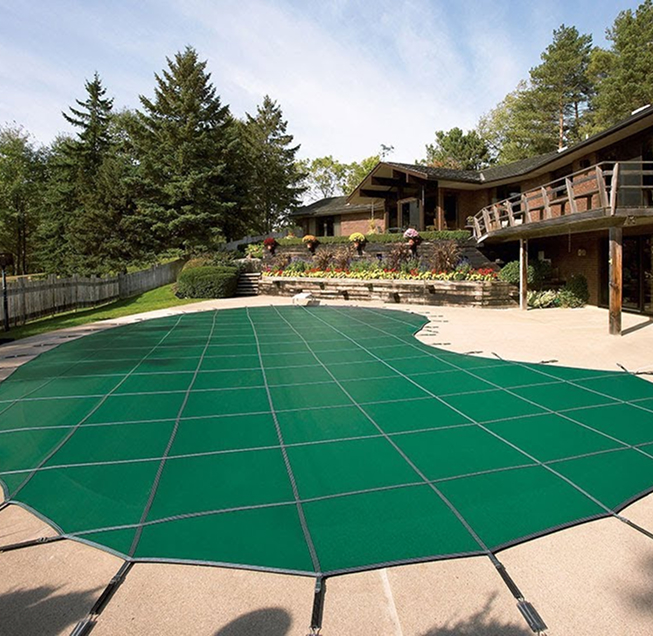
One of the clearest signs of a problem may be the way the cover sits once it is installed. A properly fitted safety cover should have consistent tension across the pool. Watch for:
- Excessive sagging
- Areas that seem unusually loose
- Straps that cannot be tensioned properly
- Sections that no longer align with the anchors
- Gaps around unusual pool features
A cover can look fine when folded up for the summer but reveal fit problems once it is stretched across the pool. If the cover no longer fits the way it once did, it is worth finding out why.
Has the Pool Changed Since the Cover Was Made?
Sometimes the problem is not that the cover has worn out. The pool itself has changed. Homeowners may add or modify:
- Steps
- A spillover spa
- Raised walls
- Water features
- Coping
- Patio areas
- Other structural features
A cover made for the original pool configuration may no longer provide the correct fit after significant changes.
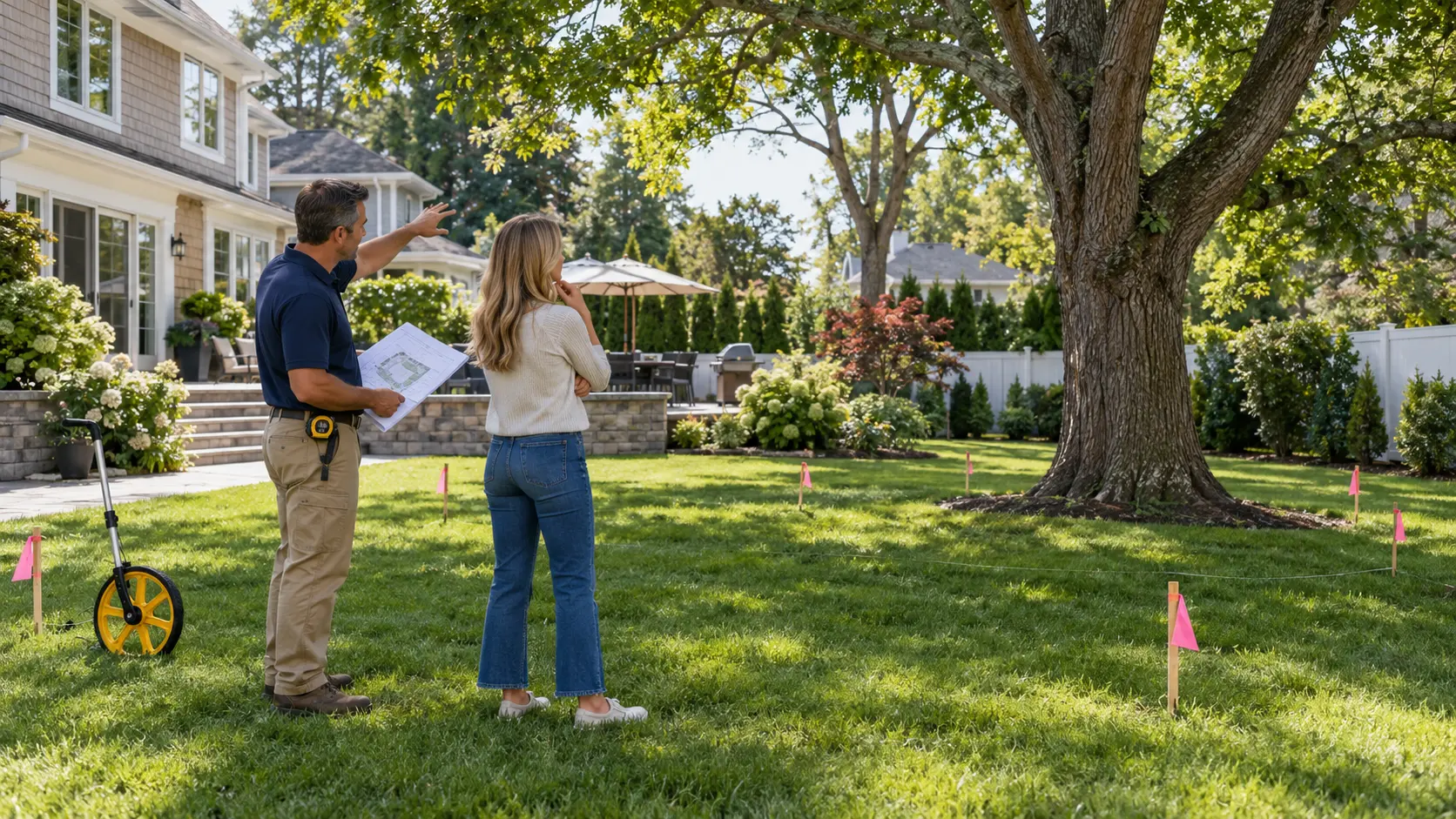
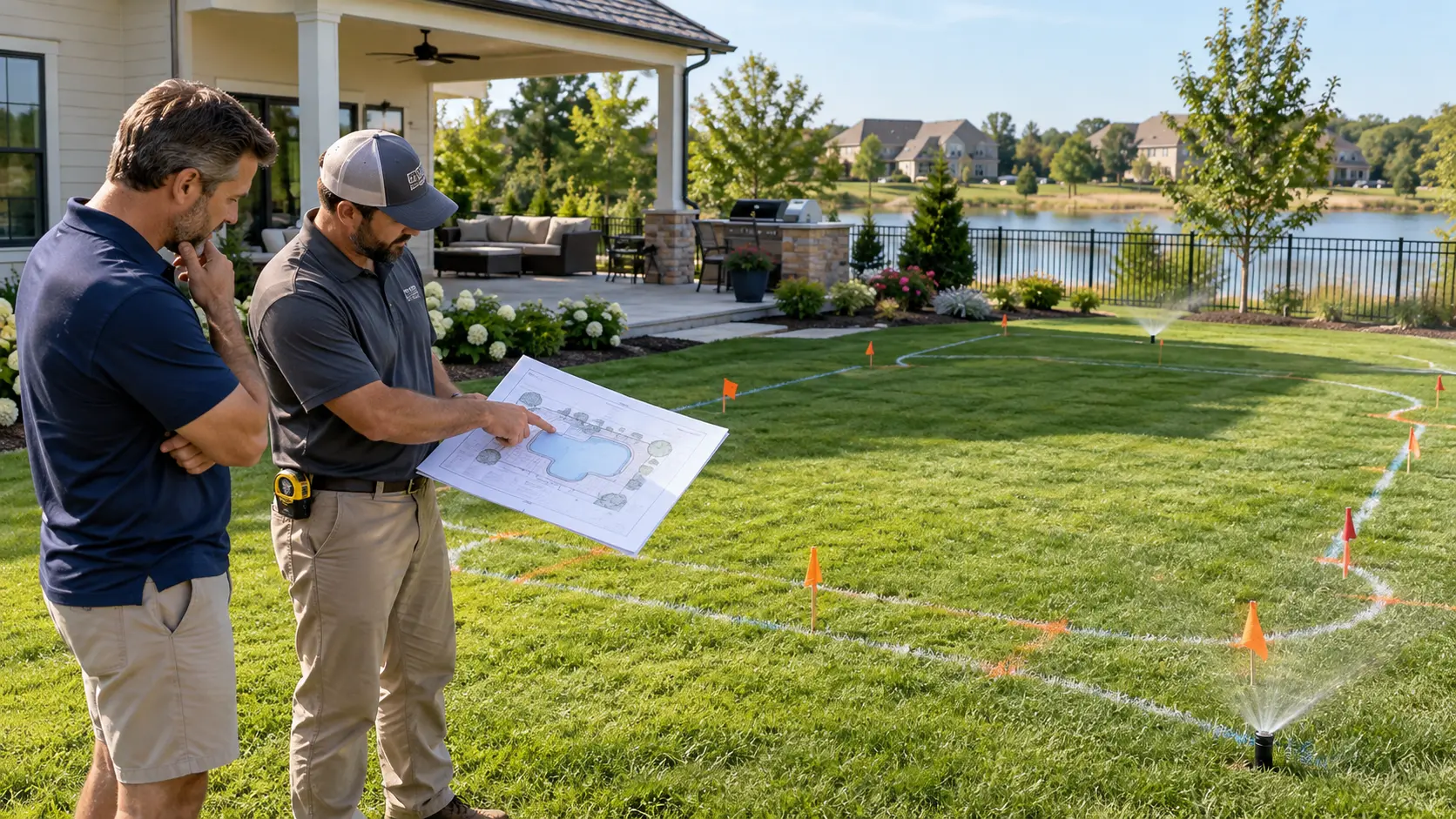
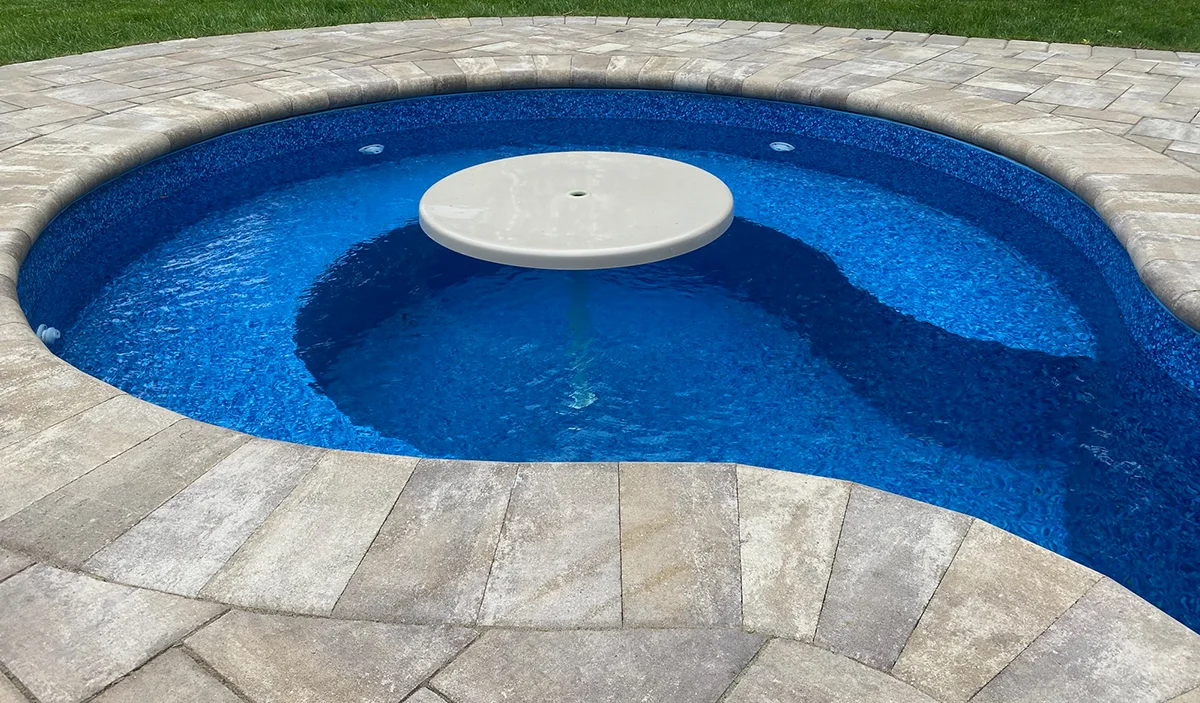
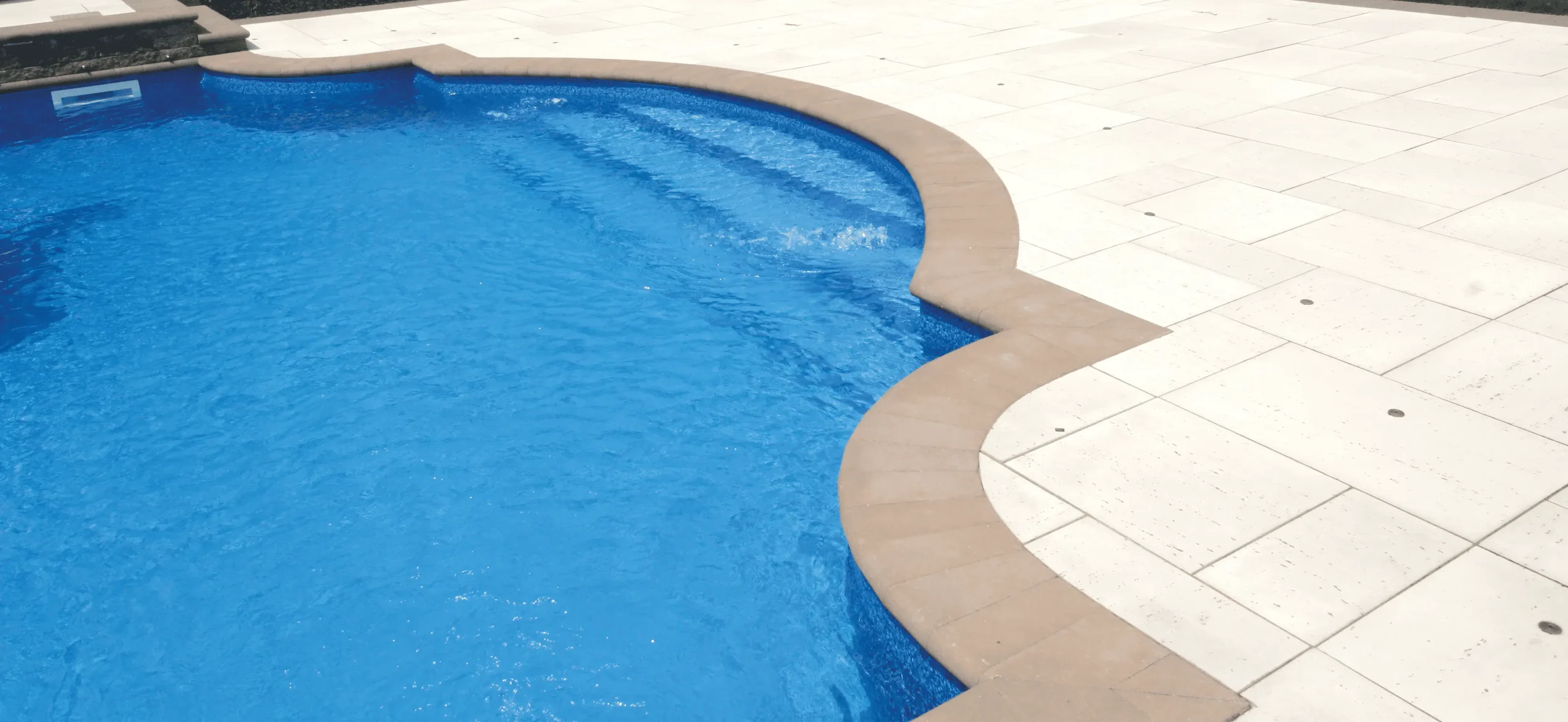
Specht-Tacular builds both geometric and freeform custom pools, and the shape and features of the pool can influence how a safety cover needs to be measured and configured. If the pool has been renovated since the existing cover was made, this is a good time to determine whether the old cover still works with the updated design.
Do Not Wait Until the Day the Pool Is Being Closed
The worst time to discover that a safety cover needs replacement is when you are ready to put it on. If the cover looks questionable, inspect it before pool-closing day. That gives you time to determine whether:
- The existing cover can still be used
- Hardware needs attention
- A replacement cover should be measured
- Changes to the pool require a newly fitted cover
This is especially important in the fall, when many Long Island homeowners are dealing with the same seasonal timing.
Should You Repair the Cover or Replace It?
That depends on the nature and extent of the problem. A localized issue is very different from widespread fabric deterioration, weakened attachment points or a cover that no longer fits the pool correctly. The decision should consider:
- Where the damage is located
- How extensive it is
- Whether the surrounding material is still sound
- The condition of straps and seams
- Whether the cover still fits correctly
- Whether the pool configuration has changed
The goal is not to squeeze another season out of a cover simply because it can still be stretched across the pool. The goal is to make sure the cover can continue to perform as intended.
Why Custom Fit Matters
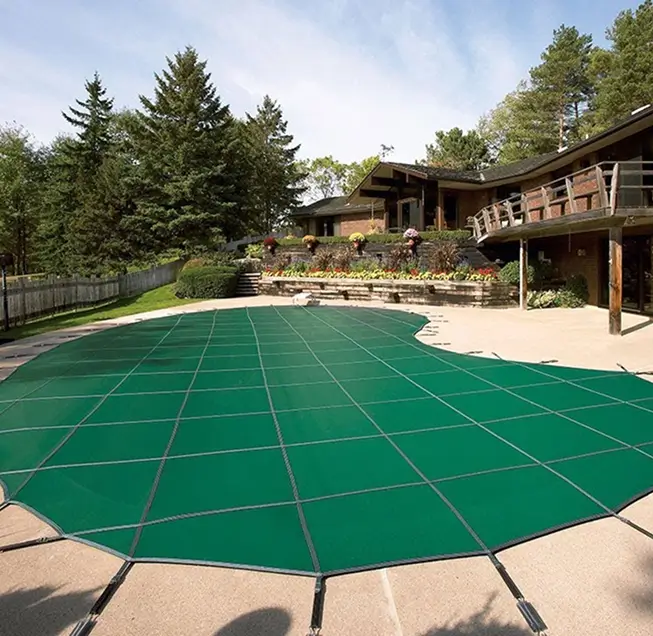
A safety cover is not simply a tarp placed over the water. The cover must work with the exact dimensions and features of the pool. That becomes especially important with custom pools that may include curves, unusual corners, steps, spas or other design elements.
Specht-Tacular provides Loop Loc Safety Covers that are tailored to the shape of the pool and professionally installed. A properly fitted cover helps maintain consistent tension and allows the straps, springs and anchors to work together as a complete system.
Fall Is the Right Time to Evaluate Your Safety Cover
You do not need to replace a Loop-Loc safety cover simply because it has reached a certain age. What matters more is its condition.
Before your pool is covered for another Long Island winter, look closely at the fabric, straps, seams, springs, anchors and overall fit. If anything appears worn, stretched, damaged or different from prior seasons, it is worth having the cover evaluated before depending on it for off-season protection. Catching a problem now is much easier than discovering it after the pool is already closed.
Frequently Asked Questions
Yes, sometimes. If the existing anchors are still in good condition and their locations work with the replacement cover, they may be able to remain in use. However, a replacement cover needs to be measured with the existing anchor layout in mind. If the new cover design, pool configuration or anchor condition creates a problem, some anchors may need adjustment or replacement.
Sometimes, but the pool itself may still need to be verified. An existing cover can provide useful information, but relying only on an older cover can be risky if it has stretched, if the pool has been modified or if the original fit was not ideal. Confirming the pool dimensions and important features helps ensure the replacement is made for the current pool rather than simply reproducing an old problem.
It should be addressed rather than ignored. A loose anchor can prevent the connected strap from maintaining proper tension. The correct repair depends on the patio material, the condition of the anchor and what caused it to loosen. Because all of the attachment points work together, even one problem area can affect how evenly the cover is tensioned.
Yes. It should be clean, dry and protected from damage. Allowing a cover to remain wet, dirty or exposed to pests during storage can shorten its useful life. It should be cleaned as appropriate, allowed to dry and stored where sharp objects, rodents and other sources of damage cannot reach it. Proper storage also makes it easier to inspect the cover before reinstalling it in the fall.
Occasional leaves are normal, but heavy buildup should not be ignored. Accumulated organic debris can hold moisture against the cover and add unnecessary weight. Keeping the cover reasonably clear also makes it easier to spot damage, tension problems or other issues during the off-season.