By the end of summer, Long Island homeowners usually know exactly what they liked about their pool area and what bothered them. Maybe the backyard never felt private enough. Perhaps water collected near the patio after heavy rain. A planting bed may look too sparse, a walkway may feel awkward, or an area that looked fine in spring became overgrown by August. Fall is a good time to look at those issues while they are still fresh in your mind.
Some pool landscaping projects can be completed during the cooler months, while others are worth designing and planning now so they are ready for the next outdoor season. The goal is not simply to make the yard look better before winter. It is to use what you learned from the summer to make the pool area more functional, comfortable, and complete.
Improve Privacy Where You Needed It Most
Privacy problems become much easier to identify after you have spent an entire summer using the pool. You may have discovered that a neighbor has a direct view of the patio, that a seating area feels too exposed, or that one side of the yard could use more screening. Fall is a useful time to evaluate those sightlines and decide where landscaping can make the biggest difference. That does not necessarily mean surrounding the entire yard with tall plants. Strategic screening is often more effective. Trees, shrubs, layered plantings, and landscape features can be positioned where privacy is needed most while keeping other parts of the backyard open.
If you are planning new plantings, the final design should also consider mature size, maintenance, sun exposure, and how the landscaping will interact with the pool and patio over time.
Address Drainage Problems You Noticed During Summer Storms
Drainage is one of the least exciting parts of pool landscaping until it becomes a problem. If you noticed water pooling near the patio, soil washing out of planting beds, soggy lawn areas, or runoff moving toward the pool, fall is a good time to have those conditions evaluated. By this point in the year, you have probably seen how the yard responds to summer thunderstorms and heavy rain.
Pool-area drainage problems can be related to grading, hardscape elevations, planting beds, slopes, or the way different areas of the yard connect. A thoughtful landscape design should consider where water goes, not just where plants go. Correcting drainage and grading can also make future landscaping more successful. There is little benefit in installing a beautiful new planting bed if runoff continually washes soil away or leaves the area saturated.
Redesign Planting Beds That Did Not Work
Some planting areas look promising in spring and disappointing by late summer. Plants may have become too large for the space. Others may not have provided enough coverage, color, or privacy. You may also discover that a planting bed is simply in the wrong place for how your family uses the pool area.
Fall gives you an opportunity to reconsider those beds based on a full season of real-world use. That may mean expanding a narrow bed, simplifying an area that became difficult to maintain, changing the mix of plant heights, or creating a stronger visual transition between the patio and lawn.
The objective should not be to add more plants just because space is available. Each area should contribute something useful, whether that is privacy, structure, softness, seasonal interest, or a better connection between different parts of the yard.
Fix Walkways That Interrupt the Flow of the Backyard
After a season of carrying towels, food, drinks, toys, and pool equipment back and forth, you probably know whether your walkways work. A route that seemed reasonable during the design stage may feel inconvenient once people begin using the backyard every day.
Maybe guests cut across the lawn instead of using the intended path. Perhaps the walkway between the house and pool feels too narrow, or access to another part of the yard requires an awkward detour. These are useful observations.
Fall is a good time to think about whether a walkway should be widened, repositioned, extended, or visually connected more effectively to surrounding landscaping. Walkways are not just decorative features. They influence how naturally people move through the backyard.
Add Landscape Lighting Where You Needed It
Once the days start getting shorter, lighting problems become much more obvious. Think back to how your pool area felt after sunset during the summer. Were important walkways too dark? Did seating areas disappear visually once the sun went down? Were there trees, stonework, or other features that could have looked better with subtle lighting?
Landscape lighting can improve both appearance and usability. The best plans do not simply flood the entire yard with brightness. Lighting can be layered to help define paths, highlight landscape features, create depth, and make outdoor living areas feel more comfortable after dark. Fall is an especially useful time to evaluate lighting because you do not have to wait until late at night to see where the backyard needs improvement.
Plan Spring Planting Before Spring Arrives
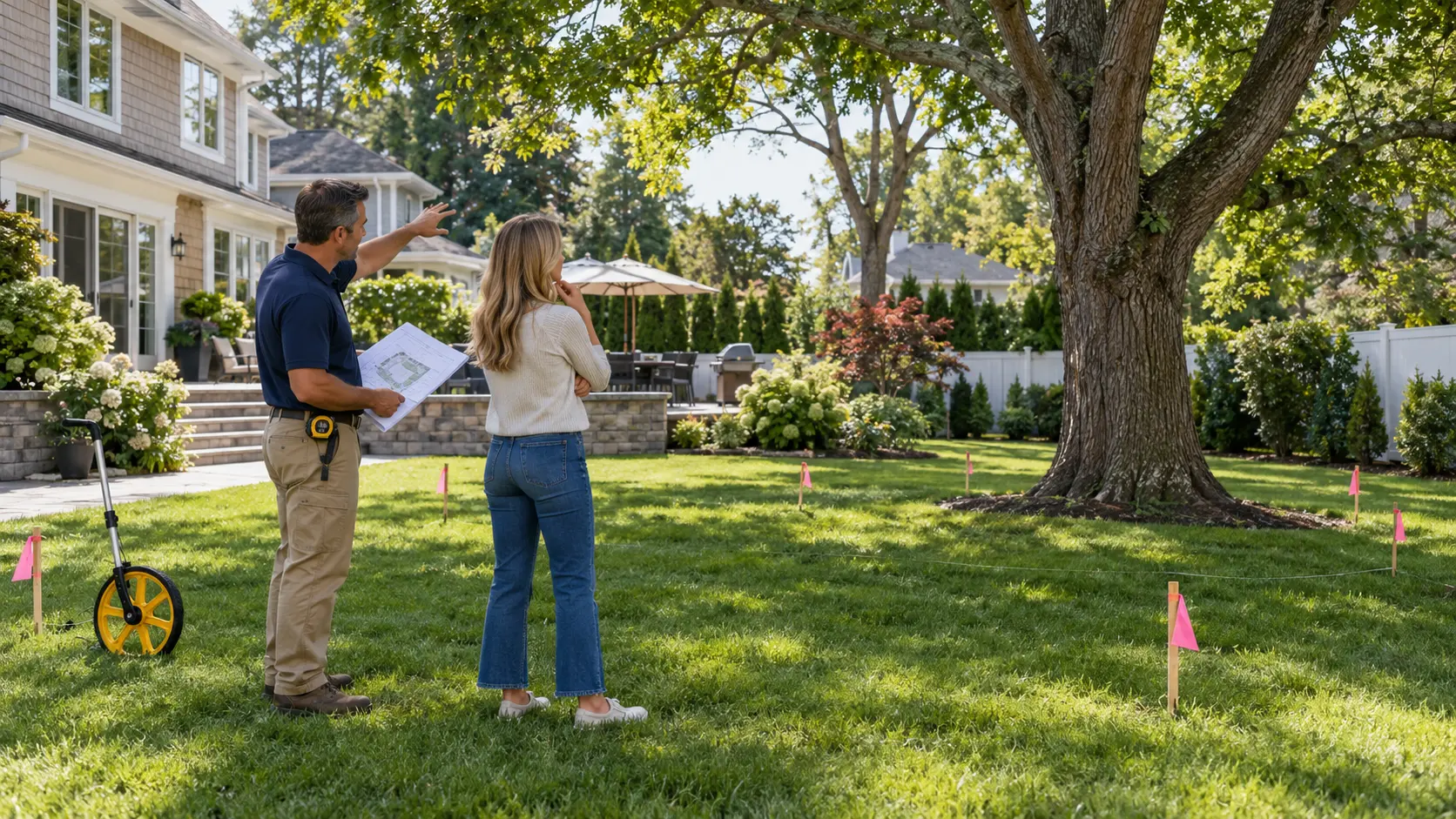
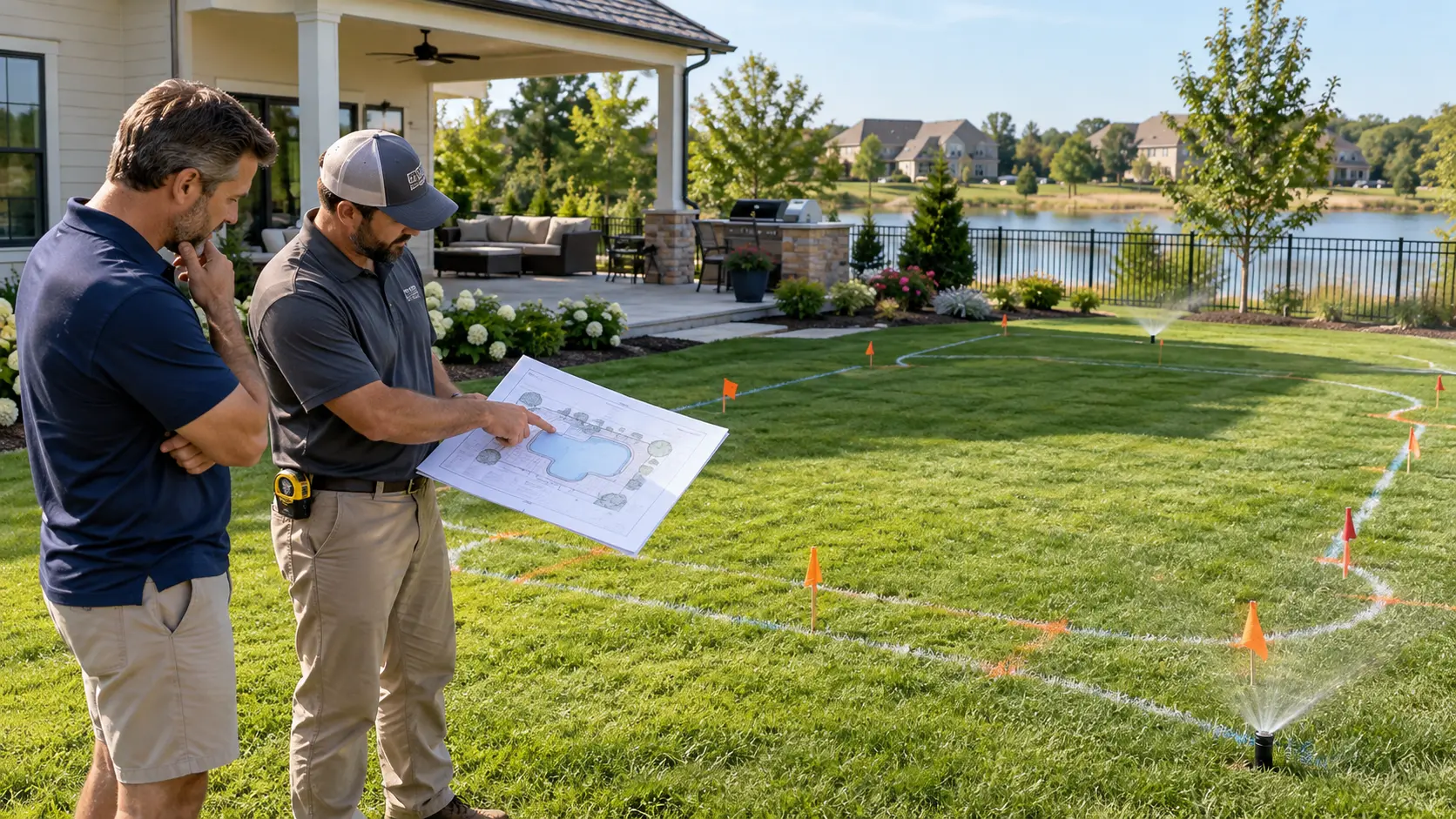
Not every fall landscaping project has to be completed immediately. Some of the most useful work you can do now is planning. If you already know that you want new privacy planting, more color, redesigned beds, or other improvements next year, developing the layout in fall gives you time to think about the complete space instead of making hurried decisions once warm weather returns.
You can determine where beds belong, which views need screening, how plantings should relate to the patio, and whether grading or hardscape work needs to happen first. This is especially helpful for pool areas because landscaping often needs to work around fixed features such as fencing, equipment, walkways, patios, and the pool itself. The earlier those relationships are considered, the easier it is to create a finished yard that feels intentional.
Consider Larger Patio or Backyard Improvements
Sometimes the issue is bigger than planting. You may have realized during the summer that the patio is too small for the furniture you use, that the entertaining area is disconnected from the pool, or that an unused section of the yard could serve a better purpose. Fall is a good time to begin planning larger improvements such as:
- patio expansions
- new seating areas
- walkways
- retaining features
- outdoor living areas
- integrated landscaping
- lighting
- water features
If you are considering significant changes, it helps to look at the entire backyard rather than treating each improvement separately.
Specht-Tacular Pools designs custom inground pools and complete backyard environments, allowing landscaping, patios, grading, outdoor living features, and pool construction to be considered as parts of one plan. That approach is especially useful if you are thinking about a larger project for the following season.
Use Summer Problems as Your Fall Project List
Some of the best fall landscaping ideas do not come from a catalog. They come from the things that annoyed you all summer. Think about questions like:
- Did the pool area feel too exposed?
- Did the patio get unbearably hot because there was no shade nearby?
- Did water collect somewhere after storms?
- Did people constantly cut through the same section of lawn?
- Was there nowhere attractive to look once the pool lights came on?
- Did plants drop too much debris near the water?
- Did one area become overgrown while another looked unfinished?
Those observations are valuable because they are based on how you use the backyard. Instead of making changes solely for appearance, you can solve specific problems that affected the way your family enjoyed the space.
Fall Landscaping Should Make Next Summer Better
The best reason to work on pool landscaping in the fall is not to prepare the yard for winter. It is to make the next outdoor season better. You have already had months to see how the pool area performs. You know where privacy is lacking, where people naturally walk, how the yard handles rain, which plants worked, and which areas still feel unfinished. That makes fall an excellent planning season.
Some improvements can be completed during the cooler months. Others can be designed now and scheduled when conditions are right.
For additional ideas about designing the space around an inground pool, see our guide to poolside landscaping ideas for Long Island inground pools.
Specht-Tacular Pools provides custom landscape design for Long Island properties, including planting, grading, stonework, walkways, lighting, and landscaping coordinated with pool and patio projects. Whether you want to correct one problem area or rethink the entire backyard, fall is a good time to start planning what you want the space to become.
Frequently Asked Questions
Yes. Many pool landscaping improvements can be made around an existing inground pool without changing the pool itself. Planting beds, privacy screening, walkways, lighting, grading, and other surrounding features can often be redesigned while leaving the pool structure in place. The best approach depends on the existing patio, fencing, drainage, equipment locations, and how much of the backyard you want to change.
Not necessarily. Existing plants and landscape features can often be incorporated into a new design if they are healthy, appropriately located, and still fit the way the space is used. A redesign does not have to mean starting over. Mature trees, established shrubs, stonework, or other features may provide valuable structure. The important question is whether each element still supports the overall design rather than creating maintenance, visibility, drainage, or space problems.
Yes. Thoughtful landscaping can make a compact pool area feel more open and organized. Keeping important sightlines open, controlling plant scale, defining clear pathways, and avoiding overcrowded beds can help a smaller backyard feel less confined. Strategic privacy planting can also screen neighboring properties without creating a solid wall of greenery around the entire pool.
Yes. Shorter fall days make it easier to see where additional lighting could improve the pool area. Homeowners can evaluate dark walkways, seating areas, landscape features, and transitions between the house and pool earlier in the evening. Planning lighting around actual use patterns can result in a more comfortable and purposeful design than simply adding fixtures wherever space is available.
When both need work, planning them together can help create a more cohesive backyard. Patio dimensions, walkways, planting beds, grading, drainage, seating areas, and lighting all affect one another. Coordinating them before construction begins can reduce awkward transitions and help the finished pool area feel like one connected outdoor space rather than several separate projects.