When you are planning an inground pool on Long Island, a heater can feel like one of those upgrades you could either live without or wonder why you did not add from the beginning. So, is a pool heater worth it?
For many Long Island homeowners, it can be. A pool heater does more than make the water warmer on a chilly day; it can give you more usable swimming days, make the pool more comfortable during cooler mornings and evenings, and reduce how much your swimming season depends on a stretch of perfect summer weather.
Whether it makes sense for your pool comes down to how often you plan to swim, how warm you like the water, when you want to use the pool, and how important it is to get as much use as possible from your backyard investment.
Why Pool Heating Can Make Sense on Long Island
Long Island gets plenty of hot summer weather, but air temperature and pool temperature do not always move together.
You might have a beautiful warm day in late spring while the pool water still feels too cold to enjoy. The same thing happens toward the end of summer. September afternoons can be warm enough for swimming even as overnight temperatures begin pulling heat out of the water. A pool heater gives you more control.
Instead of waiting for several consecutive sunny days to warm the pool naturally, you can maintain a more comfortable water temperature and use the pool during portions of the season when an unheated pool might otherwise sit unused.
That can be particularly valuable when you have invested in a custom inground pool design that is intended to become one of the main ways your family enjoys the backyard.
Does a Pool Heater Really Extend the Swimming Season?
It can. A heater will not turn a Long Island backyard into a year-round outdoor swimming environment, but it can make the beginning and end of the normal pool season considerably more usable.
Think about the difference between owning a pool that is comfortable primarily during the hottest part of summer and having one you can begin enjoying during warm stretches earlier in the season and continue using as temperatures start to cool.
How much additional use you get will depend on the weather, the type of heater, the temperature you want to maintain and how you operate the pool. For families who swim frequently, those extra weeks can make the heater feel much more worthwhile.
A Heater Can Also Make Summer Swimming More Comfortable
Extending the season is only part of the reason homeowners choose an inground pool heater. Long Island summer temperatures can fluctuate considerably. A string of cool nights, a period of cloudy weather or several rainy days can lower the water temperature even when warmer weather quickly returns.
That can leave you looking at a sunny 80-degree afternoon while nobody wants to get into the pool. Heating lets you maintain a more predictable swimming temperature rather than letting the weather make that decision for you.
It can also make a difference if you enjoy:
- swimming early in the morning
- using the pool after work in the evening
- entertaining on cooler summer nights
- having younger children or older family members who prefer warmer water
- swimming regularly rather than only on very hot days
For homeowners who want the pool available whenever they have time to use it, temperature control becomes a practical feature rather than simply a luxury.
Gas Pool Heater or Heat Pump?
Two of the options homeowners frequently consider are a gas pool heater and an electric pool heat pump. They both heat pool water, but they do it differently.
Gas Pool Heaters
Gas heaters are often appealing when faster heating is important. Instead of maintaining the same temperature continuously, a homeowner may want to raise the water temperature before a weekend, party or other occasion. That ability to heat the pool relatively quickly can make gas attractive to people who use their pools intermittently rather than every day.
Pool Heat Pumps
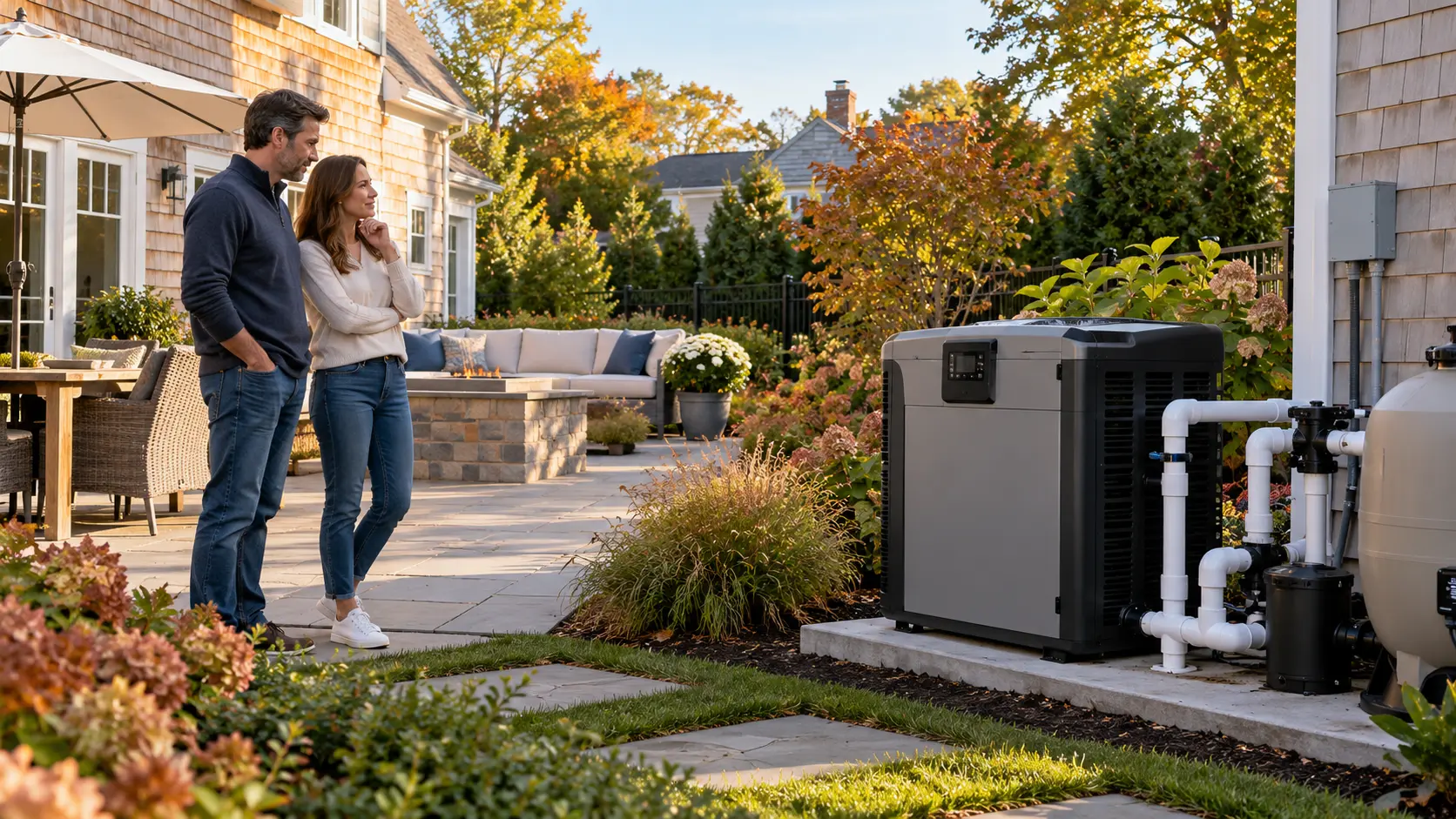
A pool heat pump works differently. It transfers heat from the surrounding air into the pool water instead of producing heat through combustion. Heat pumps are often well suited to homeowners who want to maintain a comfortable pool temperature for longer stretches of the swimming season rather than repeatedly heating cold water from scratch.
Their performance is affected by outdoor conditions, so the best choice depends on how and when you expect to use the pool.
There is no single heating system that is right for every Long Island pool. Pool size, desired temperature, equipment location, available utilities and swimming habits should all be considered before choosing one.
How Much Does It Cost to Heat an Inground Pool?
There is no useful single answer because operating costs can vary dramatically from one pool to another.
Some of the biggest factors include:
- pool size and water volume
- the temperature of the water before heating
- the temperature you want to maintain
- outdoor air temperature
- wind exposure
- how frequently the heater runs
- whether the pool is covered when not in use
- the type and efficiency of the heating equipment
- current gas or electricity costs
The difference between maintaining a moderately warmer pool and trying to keep the water extremely warm during cool weather can be significant. This is why the better question is often not simply, “How much does a pool heater cost to run?” It is, “How do we expect to use the heater?”
A homeowner who wants comfortable water on selected weekends may operate a system very differently from someone who wants the pool maintained at a consistent temperature throughout the season.
Can You Reduce Pool Heating Costs?
Yes. One of the biggest goals is preventing heat you have already paid for from escaping unnecessarily. Pools naturally lose heat, particularly overnight and when cooler air or wind moves across the water.
Using an appropriate pool cover when the pool is not being used can help retain heat. Your desired temperature also matters. Raising the thermostat several degrees means the heating system has to work harder to reach and maintain that temperature.
It is also worth thinking about the property itself. A pool in a sunny, sheltered backyard may behave differently from one in a heavily shaded or wind-exposed location.
These are some of the reasons pool equipment decisions should be made as part of the overall backyard design rather than treated as completely separate choices.
Should You Plan for the Pool Heater When Building the Pool?
Ideally, yes. Even though heaters can sometimes be added to existing pools, planning for one during the original pool design and construction process gives the builder an opportunity to account for the equipment from the beginning.
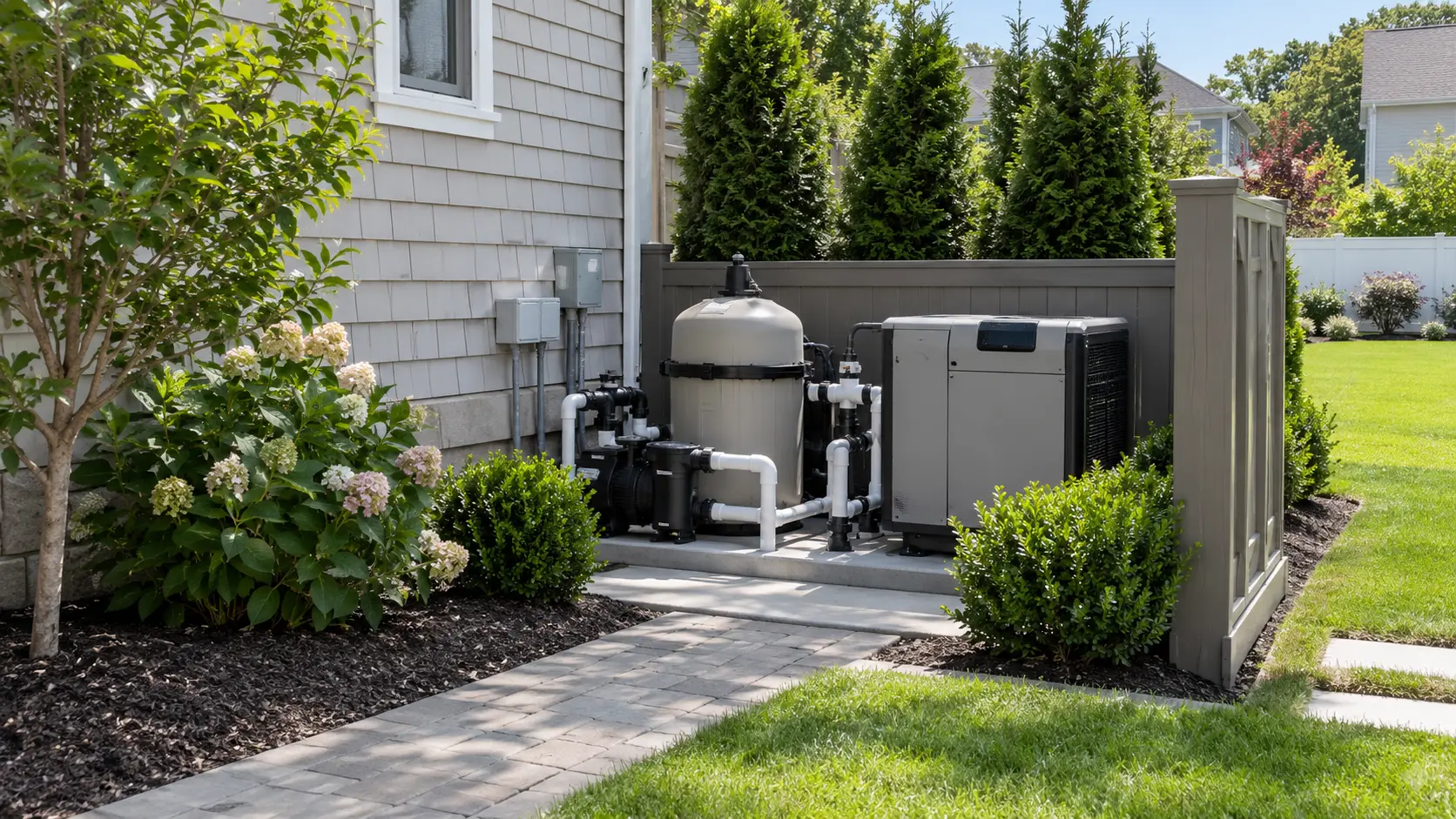
That may include the equipment layout, plumbing, electrical requirements, gas availability when applicable, controls and how everything fits within the equipment area.
You can also think through the heater as part of your overall pool budget rather than deciding later that you want a feature that was never included in the original plan.
This is the same reason it helps to discuss steps, benches, lighting, automation, water features and other options before construction begins. Good pool planning considers how you want to use the finished pool, not just what it will look like.
Is a Heater More Valuable Than Other Pool Upgrades?
That depends on what matters most to you. Some pool upgrades primarily change appearance. Others change the way you use the pool. A heater falls heavily into the second category.
You may not notice it while standing inside the house looking at the backyard, but you will notice it when the weather is beautiful and the water would otherwise be too cold for anyone to swim.
If you are deciding where to put your pool budget, think about frequency of use.
Would you get more enjoyment from another decorative feature, or from being able to comfortably use the pool more often?
There is no wrong answer. The important part is choosing features based on the way your family will live with the pool rather than adding upgrades simply because they are available.
So, Is a Pool Heater Worth It for a Long Island Inground Pool?
If you want to maximize the number of days you can comfortably use your pool, a heater can be one of the more practical upgrades to consider. It is especially worth discussing if you want to swim earlier or later in the Long Island pool season, frequently use the pool in the morning or evening, prefer warmer water, or simply do not want your swimming plans controlled entirely by the weather.
If you expect to use the pool only during the hottest summer afternoons, heating may be less important. The decision should ultimately be part of the larger conversation about what you want from your backyard.
Specht-Tacular Pools designs custom inground pools around the way each homeowner plans to use the space. That includes thinking about the pool itself, surrounding outdoor environment and features that can make the finished backyard more enjoyable throughout the season.
If you are planning a new Long Island inground pool, deciding whether a heater belongs in the project is something worth considering before construction begins.
Frequently Asked Questions
Yes, in many cases a heater can be added to an existing inground pool. The existing plumbing and equipment configuration need to be evaluated along with the available gas or electrical service, equipment-pad space and the type of heater being considered. Some installations are relatively straightforward, while others may require additional plumbing, electrical or utility work.
Yes. Pool heating systems can be used with vinyl liner inground pools. The pool should be operated according to the equipment and liner manufacturer's specifications, including recommended water temperature and water chemistry. Proper system sizing and professional installation help ensure that the pool equipment works together correctly.
Many modern pool systems can integrate heating with pool automation. Depending on the equipment selected, homeowners may be able to adjust temperature settings, schedules and other pool functions through an app or centralized automation system. If remote control is important to you, discuss it while selecting the pool equipment so compatible components can be planned together.
It can. Pools that receive less direct sunlight may warm more slowly on their own. The amount of shade changes throughout the day and season, so every property is different. Trees, the house itself and neighboring structures can all reduce solar warming. If your proposed pool location receives limited sunlight, heating may become a more important part of maintaining the water temperature you prefer.
Generally, heater sizing needs to account for the amount of water being heated, but pool volume is only one factor. The desired temperature increase, local conditions, type of heating system and how quickly you expect the pool to warm can all affect equipment sizing. Choosing a heater should therefore be based on the actual pool and the way you intend to use it rather than simply selecting equipment based on pool dimensions alone.